In the Lee of the Palatinate Forest
Climate
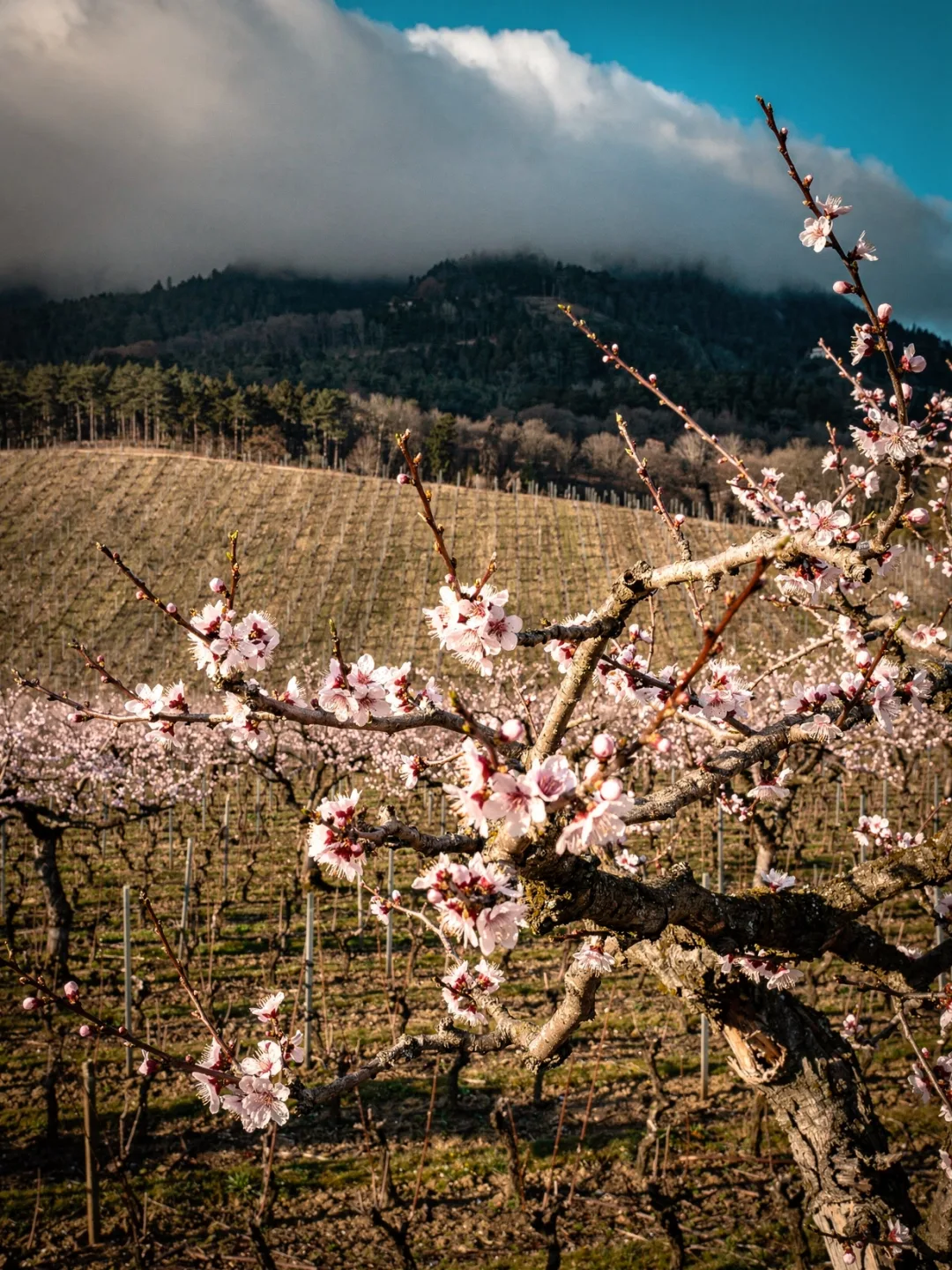
In March, the almond trees blossom in Gimmeldingen. It happens right in the middle of Germany, weeks before any other fruit trees nearby. This is no coincidence and no clever breeding, but a direct result of location. The Palatinate Forest to the west catches rain clouds and cold air before they reach the vineyards along the Haardt edge. It acts much like a roof keeping a balcony dry.
The effect can be captured in numbers. While many German wine regions receive eight hundred to nine hundred millimeters of rainfall a year, along the German Wine Route it's often only around five hundred, and in places even less. Add to that up to 1,800 hours of sunshine a year, a figure otherwise matched by only a few German regions, with noticeable effects on everything else that grows here: figs, kiwis, even the occasional lemon outdoors.
The annual average temperature is around eleven degrees Celsius, with mild winters and summers that regularly climb past thirty degrees. This makes the Palatinate one of Germany's warmest wine regions. For Riesling, that means a long ripening period without fear of an early autumn. Unlike on the Mosel, where every sunny day counts, a Palatinate winegrower can, if needed, push the harvest back by weeks.
Along the Haardt edge itself, a second, smaller effect comes into play. Downslope winds sweep over the Palatinate Forest and dry the vines faster after rain than in the open Rhine Valley, making fungal diseases rarer. The villages along the German Wine Route, from Bockenheim to Schweigen, almost all lie within this narrow, sheltered strip between forest and plain.
Climate change is shifting these conditions further. Where winegrowers once harvested in October, picking today often begins as early as late August. In especially hot years, acidity drops faster than some estates would like. Some producers are therefore planting again at higher, cooler sites in the Palatinate Forest, an idea that would have occurred to no one thirty years ago.