Dry as a Principle
Production
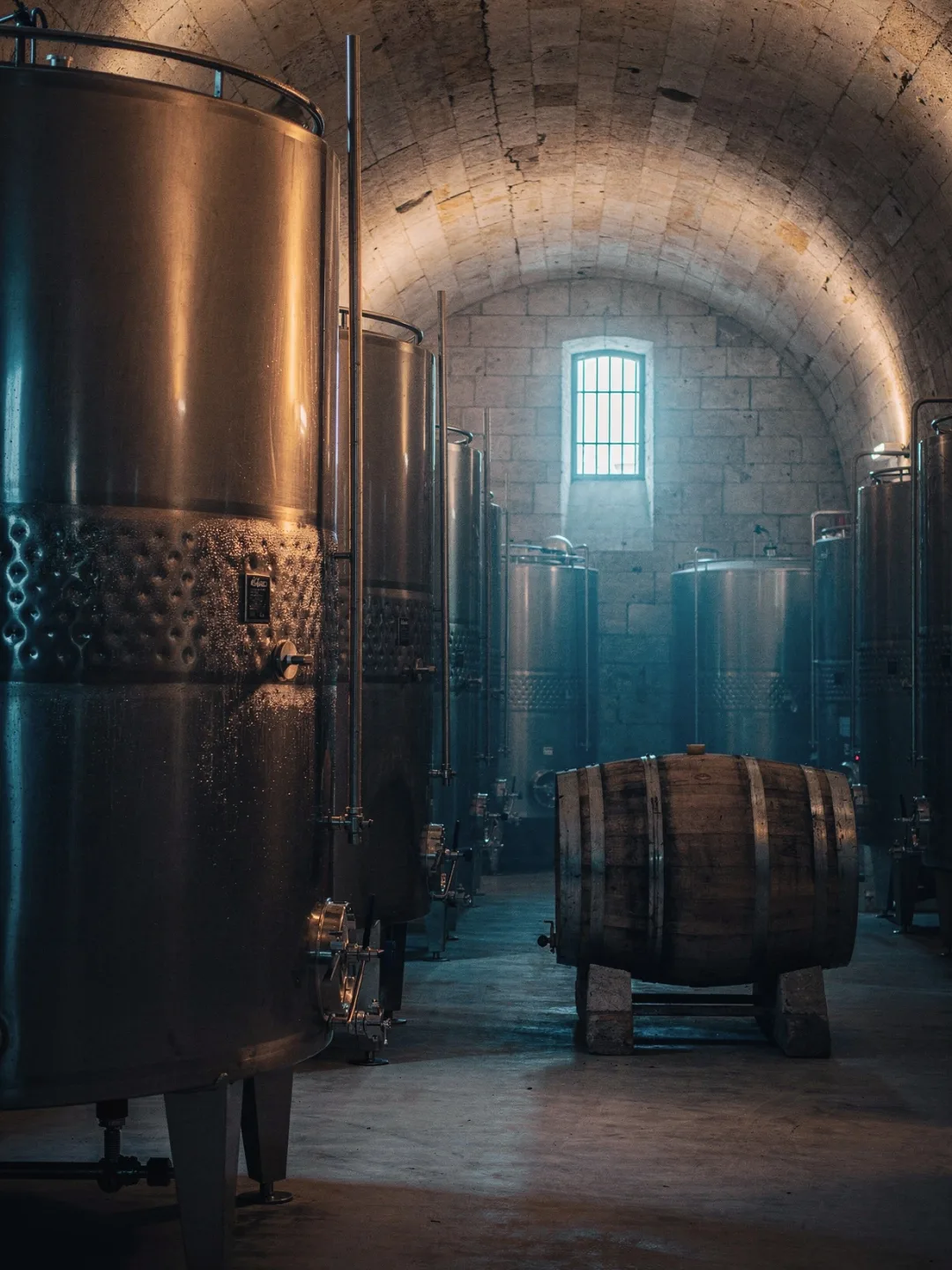
Palatinate Riesling passes through remarkably little in the cellar. After harvest, the grapes are pressed and the clear juice goes into stainless steel tanks. Fermentation runs cool and slow, often over several weeks, so the delicate fruit aromas don't cook off. Oak barrels play practically no role here: a Palatinate Riesling should taste of peach and stone, not vanilla.
The Palatinate is considered one of Germany's driest wine regions, and dry here means two things: little rain and plenty of dry-finished wine. Since 2002, the Association of German Prädikat Wine Estates (VDP) has classified its finest dry single-vineyard wines as Grosses Gewächs, refined since 2012 into a fixed pyramid of estate wine, village wine, Erste Lage and Grosse Lage.
Traditional Mittelhaardt estates such as Bassermann-Jordan, founded in 1718, or the House of Buhl, based in Deidesheim since 1849, rank among the finest. They developed their best sites accordingly. Their Grosses Gewächs wines ferment dry down to the last gram of sugar. They usually age for almost a year on the fine lees and can only be released for sale afterward. Buy a young vintage, and you can happily let it rest for a good ten years before its full depth emerges.
Red wine follows a different path. Dornfelder, the Palatinate's most widely planted red variety, is something of a special case. Even its juice is tinted red. Unlike most red wine grapes, its color sits solely in the skin. Winegrowers long used this to deepen the color of paler wines; today, the variety mostly stands on its own. The must often stays on the skins for only a few days before pressing, so the mild, fruity wine doesn't turn too heavy or bitter. Pinot Noir, by contrast, more delicate and paler in color, demands longer maceration and frequently an oak barrel to support its fine structure.