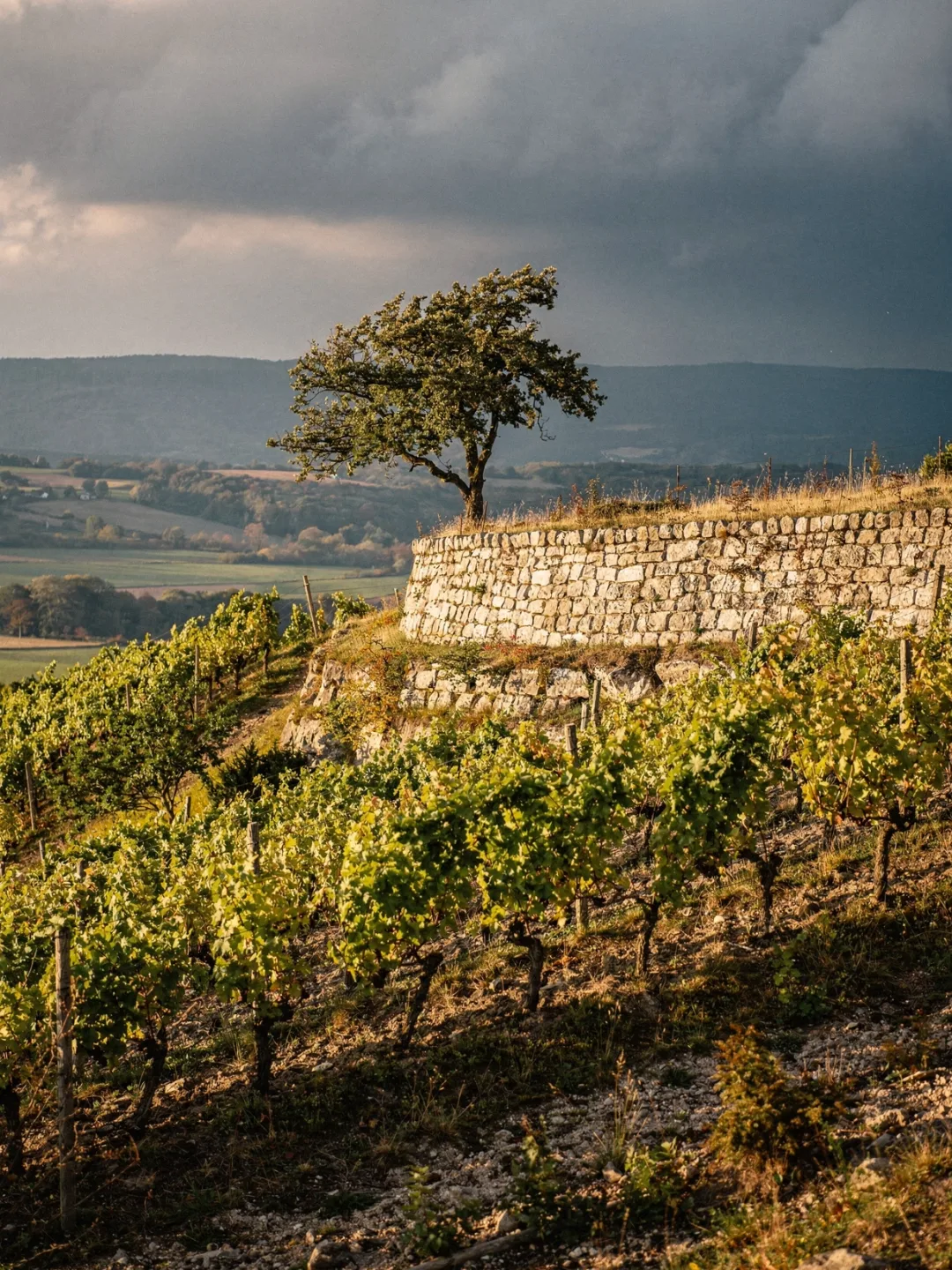
In the rain shadow of the Harz
Climate
Saale-Unstrut sits at the 51st parallel, making it Germany's northernmost quality wine region. Further north, hardly any wine with an official designation of origin grows in Europe at all. That grapes ripen here regardless is owed to a single factor: the Harz mountains.
The Harz intercepts the rain clouds rolling in from the west, leaving Saale and Unstrut in a rain shadow. Only around 500 millimeters of precipitation fall here each year, less than in almost any other German wine region, alongside roughly 1,600 hours of sunshine. Dry and bright — a rare combination for vines in central Germany.
Even so, the average annual temperature is only 9.1 degrees Celsius, noticeably cooler than in most other wine regions. That's why the vines grow almost exclusively in the river valleys of the Saale and Unstrut, where warmth collects on the shell-limestone slopes. These valleys act like islands of warmth in an otherwise too-cold landscape.
Steep, south-facing slopes are therefore not a preference but a necessity. Only there does the soil catch enough sun to offset the short growing season, and only there does the cold air from the valleys stay out. Where a slope faces north, winegrowing ends — often just a few hundred meters further on.
Frost remains the enemy nonetheless. A cold snap in May can destroy the young blossoms in a single night, and the brutal winter of 1986/87 wiped out four in every ten vines across the entire region. Along the Saale and Unstrut, winegrowing remains, to this day, an annual race against a winter that lasts longer here than anywhere else in Germany.