Rain Shadow of the Erzgebirge
Climate
The Erzgebirge stands like a wall to the south. That's exactly what keeps the Elbe Valley's climate so dry. Moist air from the west sheds its rain against the mountains before ever reaching the valley, leaving behind a continental climate with cold winters and mostly mild, dry summers. Between 600 and 700 millimeters of rain fall here each year — one of the lowest totals among Germany's wine regions.
And yet it's brighter here than you'd expect at this latitude. The region logs around 1,570 to 1,600 hours of sunshine a year, nearly as much as warmer regions further southwest. What's missing is the warmth itself. Average annual temperatures sit between 9.2 and 10.4 degrees Celsius — cool enough that only early-ripening varieties reliably make it through.
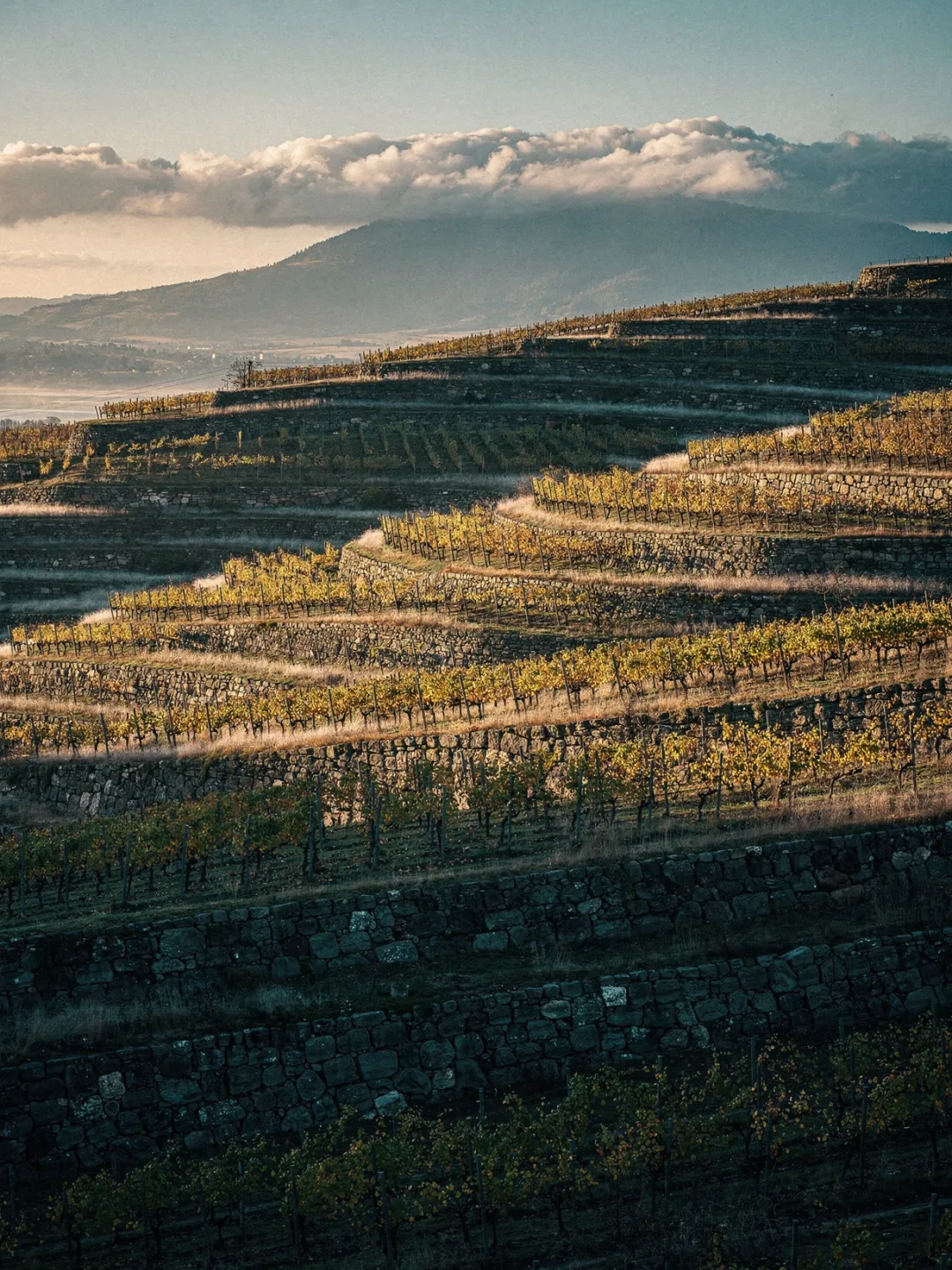
The Elbe compensates to some degree. The water stores heat and releases it slowly, keeping the slopes right along the river milder than the surrounding land just a few kilometers away. The dry stone walls of the terraced vineyards add to this effect, heating up during the day and pushing that stored warmth back toward the lowest vine leaves at night.
Spring is where the danger lies. Because cold air pools in the valley floor during the continental climate's frigid nights, late frosts threaten Meissen and other areas well into May. A single frost can wipe out half the harvest before it even begins. That's why the best sites are almost never on the valley floor, but on the slopes above, where cold air can drain away.
This tightrope between too little warmth and too much cold explains why so many early-ripening varieties grow in Saxony. Müller-Thurgau and Goldriesling are already in the cellar before other wine regions have even started harvesting. Even Riesling here is picked noticeably earlier than along the Rhine. Making wine in Saxony means working within a much shorter window than almost anywhere else in Germany.