Gipskeuper & Muschelkalk
Soils
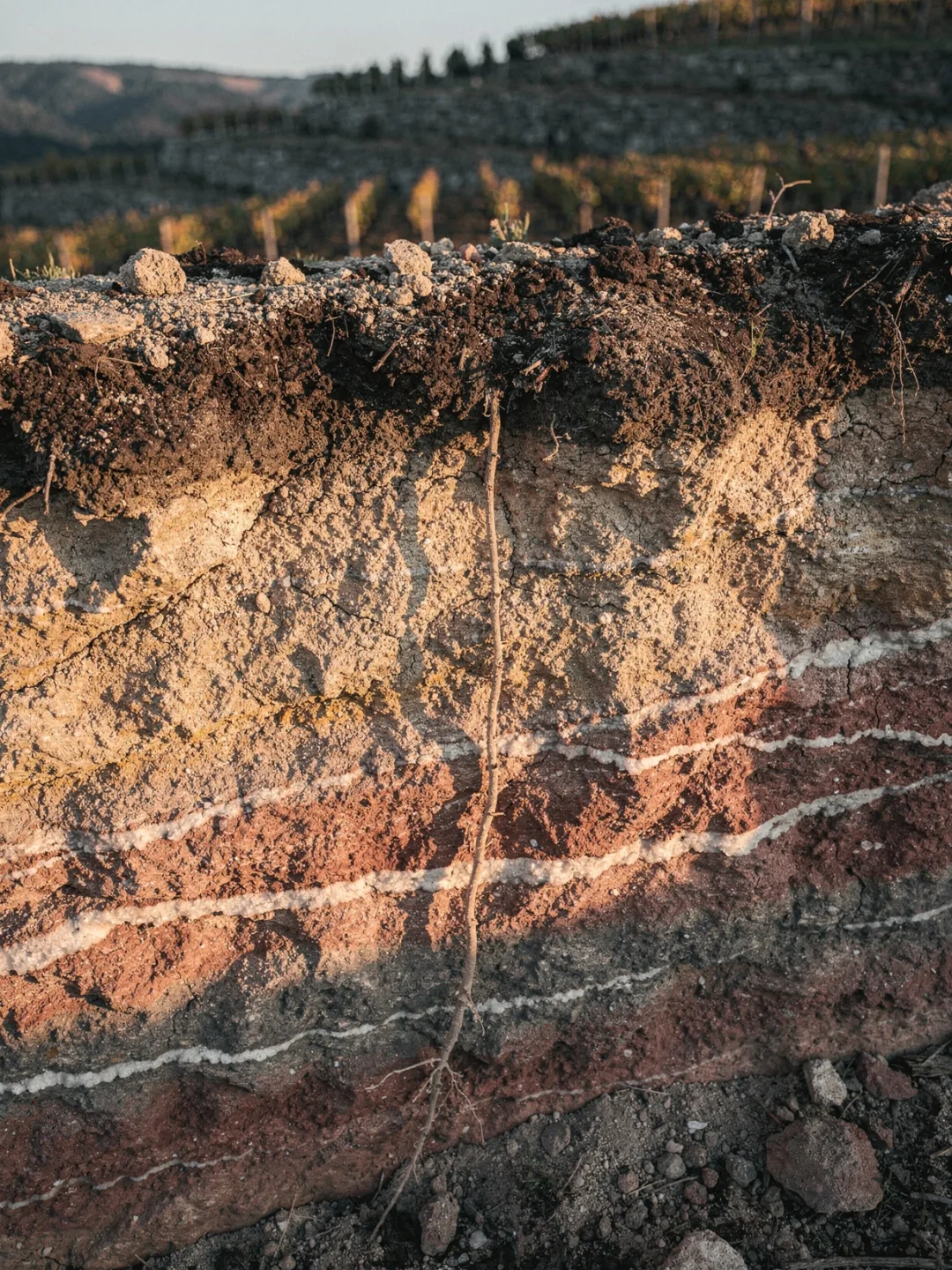
Dig a hole in a vineyard in the Zabergäu. After a hand's width, the dark humus layer ends: beneath it appears a pale, fine-grained sandstone that almost crumbles to sand when rubbed between your fingers, named after the reed-like plant imprints trapped in its sand around 225 million years ago. This is Schilfsandstein.
It lets water and roots pass through easily. In spring it warms up quickly and passes that warmth on to the vine. That's why many of the spicy, powerful Lemberger and Riesling sites around Stuttgart and the Remstal stand on it, even though the loose layer dries out quickly in the heat of August, forcing the roots to search deeper.
Deeper down lies Gipskeuper: a reddish-grey marl, laced with fine white veins of gypsum, densely packed. It holds back water like a sponge with a lid, while the sandstone above lets everything drain through. Vines that manage to reach this far still find moisture even in the driest summer. This constant but scarce supply forces them to produce small, concentrated berries.
In the Weinsberg valley and the Stromberg-Heuchelberg area, the heartland of Lemberger, this Gipskeuper lies especially close to the surface. Wines from there are considered the spiciest and most concentrated of the variety. Their structure is firm, sometimes almost salty on the finish. A Lemberger from loose Schilfsandstein, by contrast, often feels rounder and more approachable, with more fruit and fewer rough edges.
On the Neckar terraces near Hessigheim and Mundelsheim, a third element comes into play: weathered shell limestone (Muschelkalk). Its broken stones have been stacked into dry-stone walls since the Middle Ages to make the steep slopes plantable at all. The pale limestone stores almost no water but plenty of warmth. Rieslings from there often taste tighter and more mineral than those from the softer Keuper a few kilometers away.
A thin, dark layer of decomposed leaves and organic matter. The first thing to dry out in a hot summer.
The root: This is where the fine roots sit, drawing moisture the moment rain falls, and the first to go thirsty again.