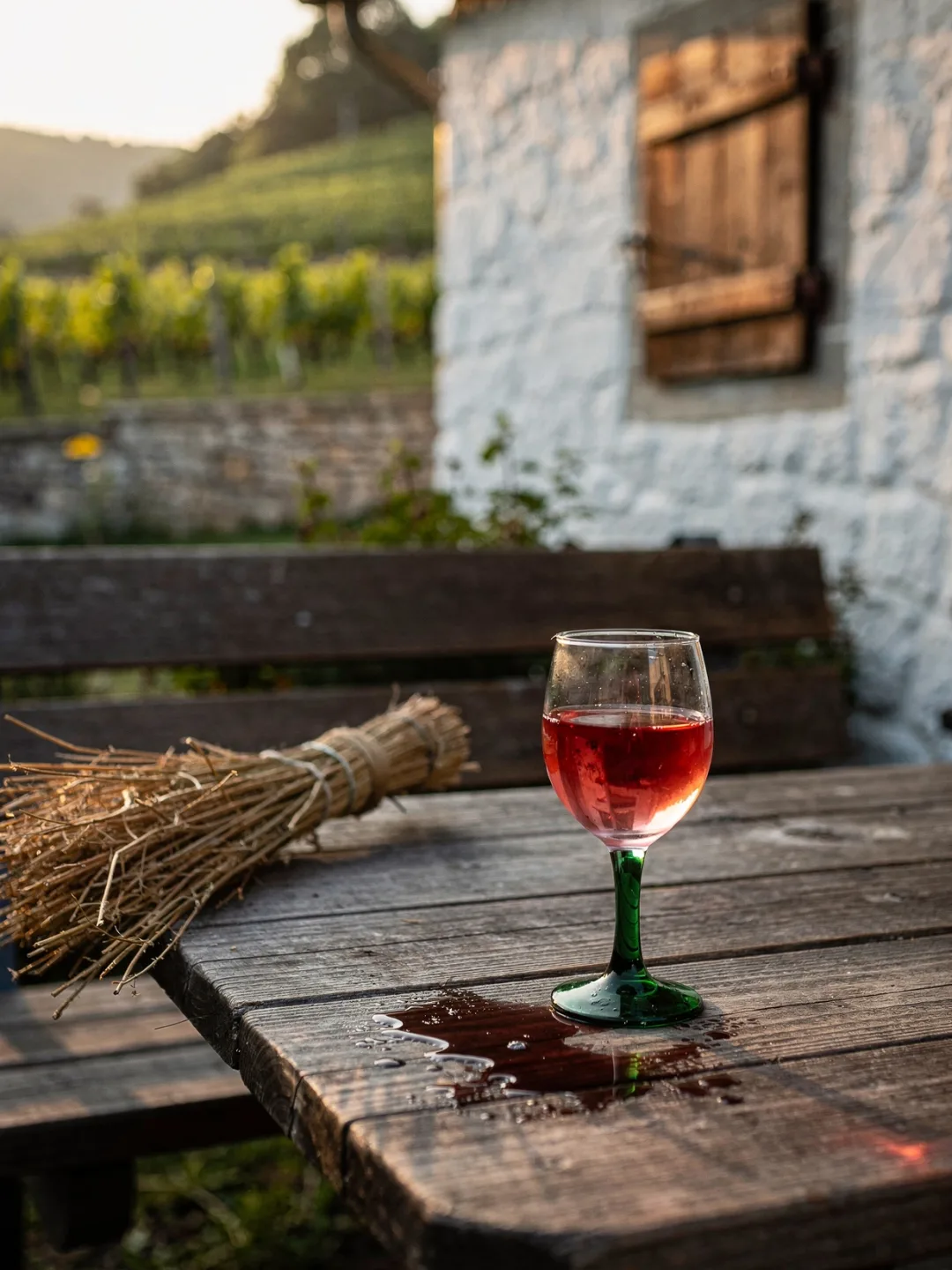
The Green Viertele
Glassware
In a Besenwirtschaft, you'll almost never get your wine in a large balloon glass. What's served is the Viertele, a small goblet, usually with a green stem, for a quarter liter, the very glass generations of Wengerter have drunk their own Trollinger from. The glass is plain, sturdy, dishwasher-safe, built for everyday use rather than for a display case, and that's exactly right for the wine it holds.
For Trollinger, this simple glass is genuinely enough. The variety has low tannin and high acidity, its scent of red cherries and berries is open and fleeting, and a narrow goblet with a wide opening neither traps nor loses any of it. Trollinger doesn't want contemplation, it wants to quench thirst, and a glass that feels too serious for it would be wrong for the wine.
Lemberger, on the other hand, benefits from more room. It carries darker fruit, pepper, and sometimes toasty notes from the barrique. A more bulbous-bodied goblet, the kind used for Pinot Noir, lets these layers unfold one after another instead of rushing all at once into the nose. With an aged, barrique-matured Lemberger, even half an hour in a carafe pays off. Only then does the oak aroma merge with the fruit instead of masking it.
Schillerwein needs a discerning eye rather than its own glass. Its pale, shimmering color, somewhere between rosé and old gold, comes across best in a plain, straight-sided goblet. Nothing there bends the light, nothing distorts the color. It's served chilled, cooler than Trollinger, to keep its lean acidity fresh.
Temperature is where most mistakes happen, especially on a summer terrace. Trollinger and Schillerwein belong in the range of twelve to fourteen degrees Celsius, almost white-wine temperature. A barrique-aged Lemberger, by contrast, can handle sixteen to eighteen degrees without turning flabby. A Viertele filled right to the brim looks generous, but it robs the wine of exactly the space its aroma needs to gather.