Neckar Versus Continental
Climate
Unlike the vineyards along the Rhine, Württemberg lies in the middle of the country, far from the sea, and you can always taste that here. The entire wine region sits in a transition zone between Atlantic and continental climates, closer to the continental end than any other major German wine region. Summers turn hot, winters can be bitterly cold. These very winter frosts still cause noticeable yield losses in some years, a risk winegrowers along the milder Rhine barely know.
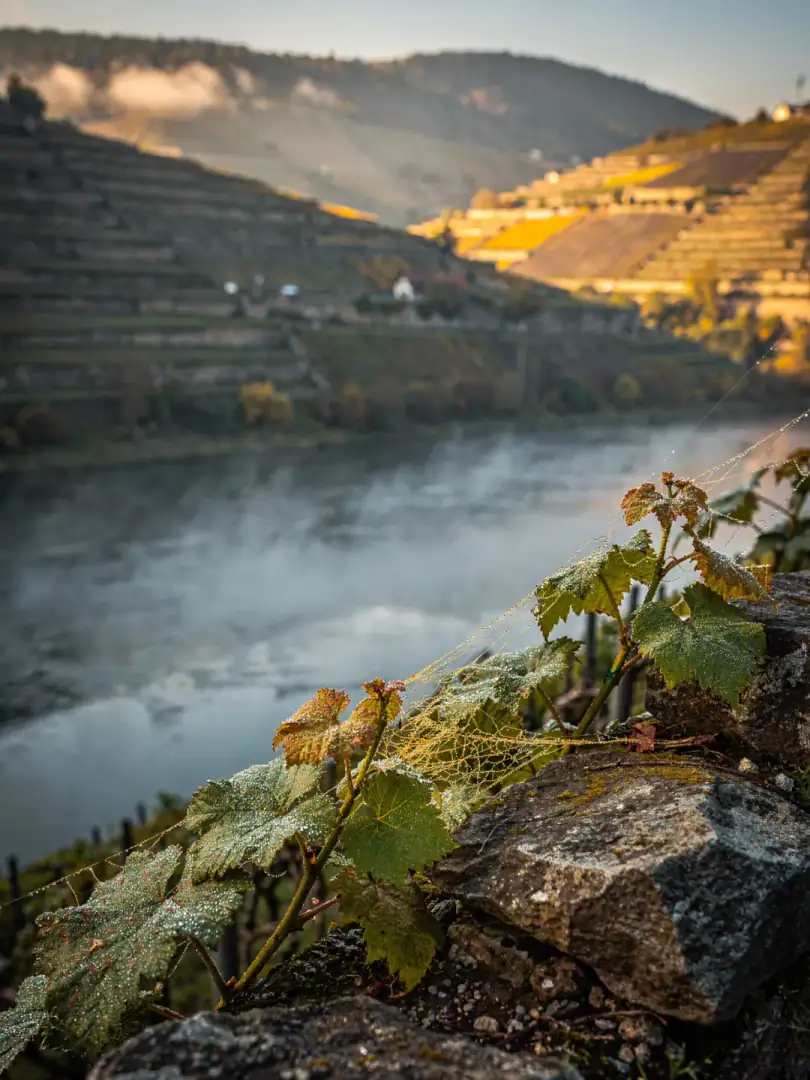
The Neckar itself compensates for some of this. Its broad band of water stores warmth and releases it back on cool nights, like a natural stove, benefiting the steep slopes directly above the river in particular. Where dry-stone walls of shell limestone support the terraces, a second effect kicks in: the stones heat up during the day and radiate that warmth back into the vines at night. Anyone who places a hand on such a wall in October can still feel the afternoon sun at midnight.
In summer, the thermometer in the Neckar basin around Heilbronn and Stuttgart regularly climbs past thirty degrees Celsius. In the higher-lying Oberer Neckar area near Tübingen, by contrast, it stays noticeably cooler. This range determines which variety grows where. Trollinger needs warmth and ripens late, which is why it grows almost exclusively in the warm Unterland. Lemberger is less demanding but can't tolerate spring frost, since its buds break early. Riesling, on the other hand, tolerates cooler sites and often delivers the leaner, more racy wines there.
At Lake Constance, in the small corner that still counts as part of Württemberg by wine-growing geography, the lake itself moderates the climate. Nothing like this exists anywhere else in the region. Only a few hectares lie there, but they show how varied a single wine region can be, from frosty nights in the Weinsberg valley to almost mild lake winters near Lindau. Climate change has been pushing the harvest earlier for years. The old risk remains, though: a single cold snap in April can still cut an entire vintage's harvest in half in Württemberg.