Press House & Cooperative
Production
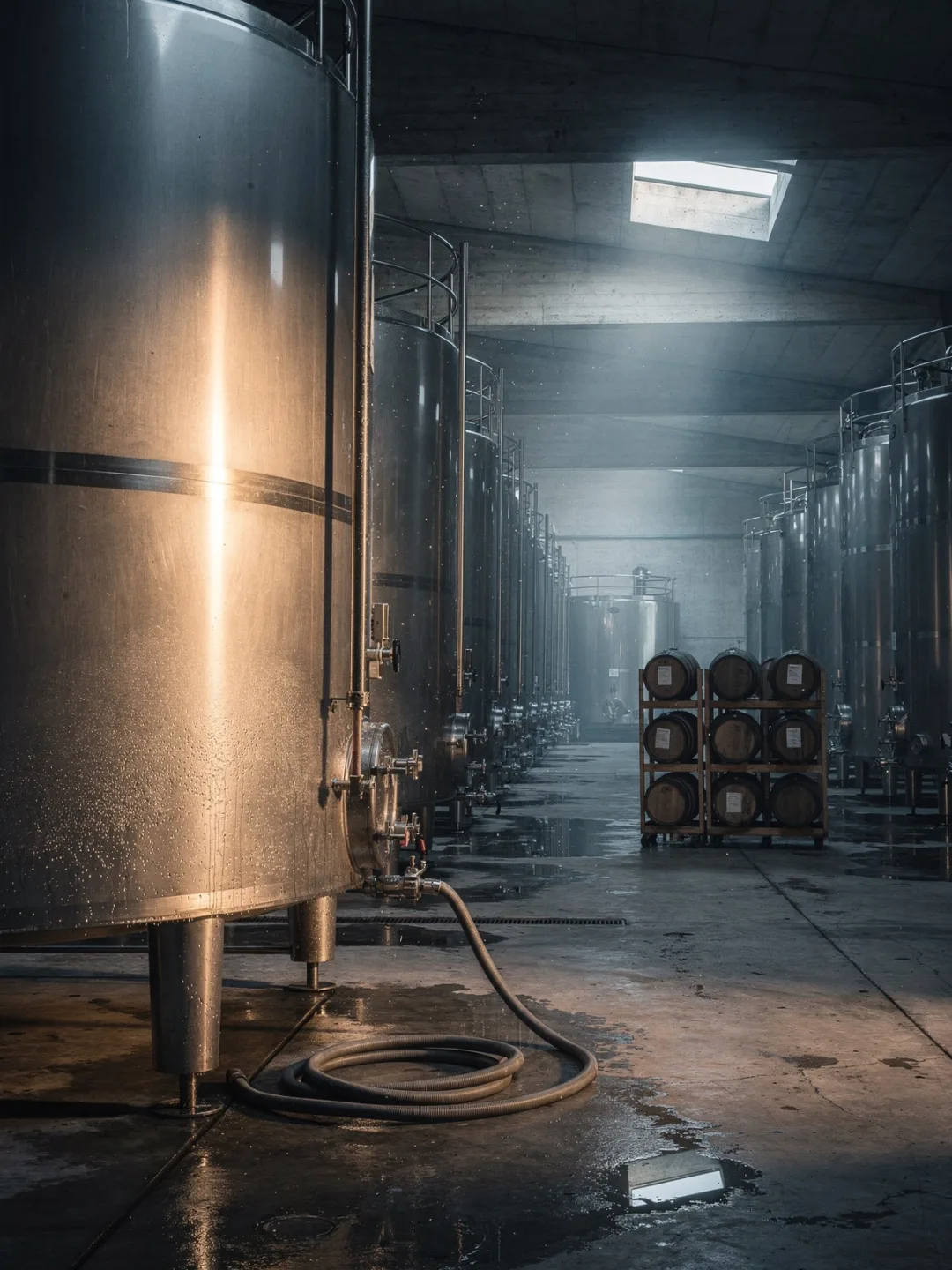
More than three-quarters of Württemberg's grapes don't end up in a private cellar but in a cooperative. There are more than fifty of them across the region, and together they market around eighty percent of the wine, more than anywhere else in Germany. The largest, the Zentralgenossenschaft in Möglingen, presses and stores wine for more than eleven thousand winegrowing families, many of whom tend just a few ares of vines as a sideline. Without this system, Württemberg's wealth of tiny individual sites would likely have vanished long ago.
The work is simplest with Trollinger. It's left briefly on the skins, fermented in stainless steel, and usually bottled as early as the spring after harvest. There's no oak contact at all, to preserve the fresh fruit. Lemberger takes more time: two to three weeks on the skins for color and tannin. After that it often matures for a year or longer in small oak barrels. Only since the 1990s have more producers turned to this barrique aging; before that, barely four hundred hectares were even planted with Lemberger.
One specialty can legally carry this name only here: Schillerwein. Red and white grapes are harvested together from the same plot, pressed together, and fermented together, unlike a rosé, which is blended only after the wines are already finished. This mixed mash produces the shimmering color between pink and old gold that gives the wine its name. The designation is tied to the Württemberg wine region and requires at least Qualitätswein mit Prädikat b.A. status; elsewhere in Germany, the same wine may only be called Rotling.
Kerner requires a different kind of care. It builds up plenty of sugar and acidity early and simultaneously. Picked too late, it turns flabby and alcoholic; picked too early, it loses its lightly muscat-scented character. Many cooperatives therefore harvest it in several passes, plot by plot, exactly when acidity and sugar are in balance. Fermentation is kept cool to preserve that very character.
In the end, most Württemberg wines don't come from one big winery with a famous name, but from an alliance of small holdings barely bigger than a football pitch. This shapes the style too: reliable rather than spectacular, built for drinkability rather than stature. Even so, individual single-vineyard wines at the top now compete with those from Germany's more famous wine regions.