Cool and Narrow
Glassware
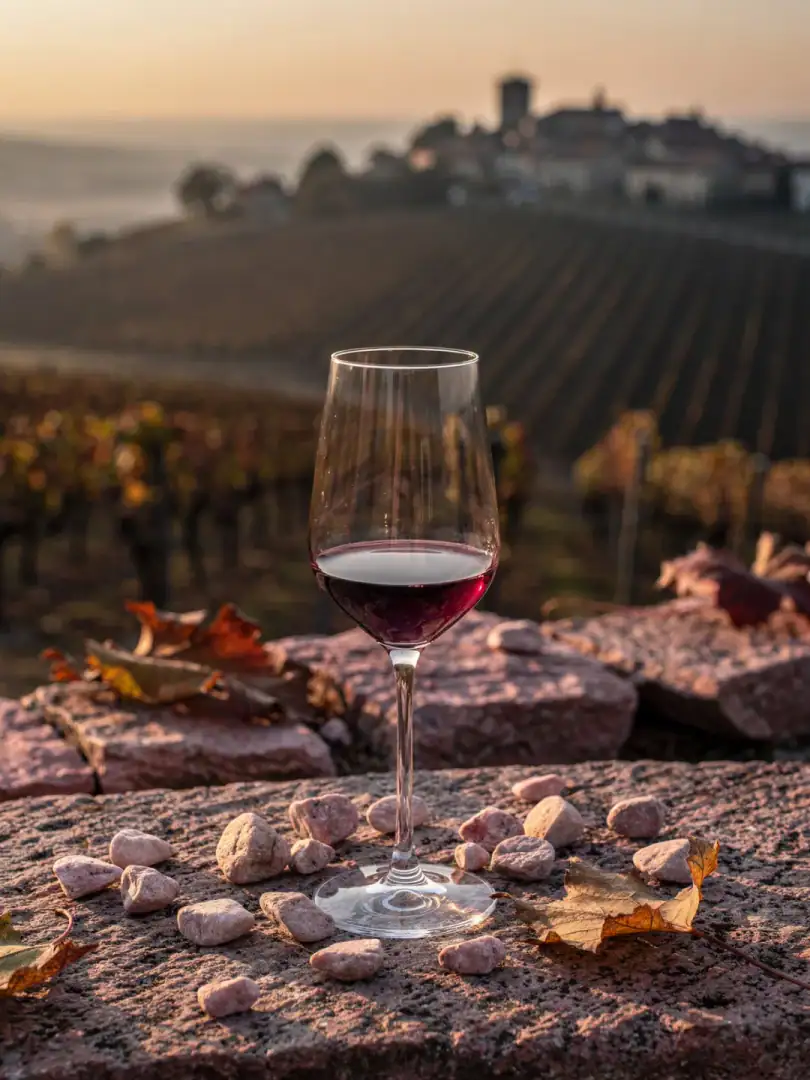
With Gamay, the shape of the glass matters more than usual. This holds truer here than for most other red wines. The variety is pale in color, low in tannin, and rich in fine, volatile aromas. A big, bowl-shaped Burgundy glass, the kind used for heavier wines, spreads those aromas over a surface that's too wide for Gamay; some of it evaporates before it even reaches the nose.
You're better off with a smaller, narrower glass, similar to the official INAO tasting glass. The narrow opening keeps the aromas concentrated. The slim bowl still gives the wine enough contact with air to open up. A side benefit: in a smaller glass, the wine stays cool for longer — and that matters especially with Gamay.
Serving temperature varies widely across the Beaujolais tiers, more so than with most other French red wines. Beaujolais Nouveau tastes best at around 12°C (54°F), fridge-cold, almost like a white wine. A simple Beaujolais or Beaujolais-Villages sits at 13 to 14°C (55–57°F), while the more structured crus like Moulin-à-Vent, Morgon, or Juliénas can handle 15 to 17°C (59–63°F) — for bottles over three years old, even the upper end is fine.
A common mistake: leaving the wine in the fridge overnight. After more than an hour there, Gamay turns dull. Its fruit retreats, and in the end it tastes like little more than acidity. Twenty minutes in an ice bucket is plenty for most bottles, and if you don't have one on hand, a few ice cubes straight in the glass will do in a pinch — for a wine built on freshness anyway, that's not a sacrilege, it's just logical.