Coolness From the River
Climate
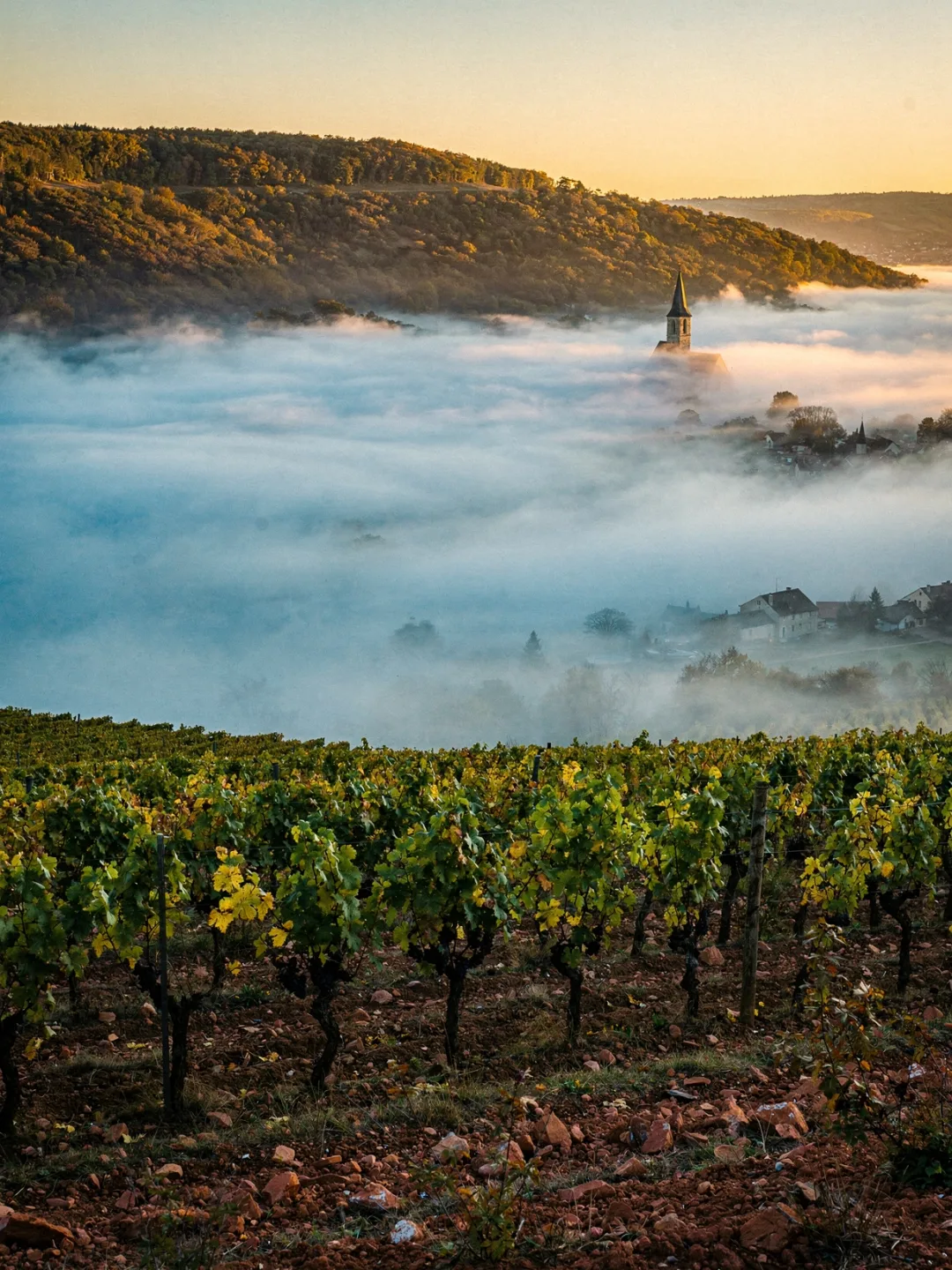
Beaujolais sits on a weather divide. From the west comes Atlantic moisture. From the south comes Mediterranean warmth, and both meet a continental base climate of cold winters and hot summers. The Saône in between acts like a buffer. It softens the sharpest swings and, on clear mornings, sends a mist into the valley floor that doesn't lift until around midday.
That very mist decides where good Gamay grows. Standing in the valley means losing precious morning sunlight hours. Standing on an east-facing slope, high enough to sit above the fog layer, means getting light and warmth from as early as eight in the morning — which is why almost all ten crus, from Fleurie to Morgon, face east or southeast rather than south, as one might expect.
With around 1,900 hours of sunshine a year, the area around Mâcon is one of the brighter corners of eastern France, with annual rainfall of about 830 millimeters spread fairly evenly across the season. Dry enough for healthy grapes, wet enough that thin-skinned Gamay doesn't shrivel. That balance is tighter than it sounds, and in hot vintages it can tip the wrong way fast.
Granite intensifies the effect of altitude even further. It stores daytime heat less well than limestone. But it also releases it faster, so nights in the crus turn noticeably cooler than in the flatter south. That difference locks acidity into the berry. For a variety as light as Gamay, acidity is the backbone without which the wine falls apart.
That's why harvesting is done by hand. No machine is allowed through the rows here. The appellation rules require whole, undamaged grapes, since they need to stay intact for fermentation in a closed tank — more on that in the next section. Come September, pickers still move through the slopes just as the climate has always demanded, only the timing has shifted two or three weeks earlier in hot years.