Room for Tannin
Glassware
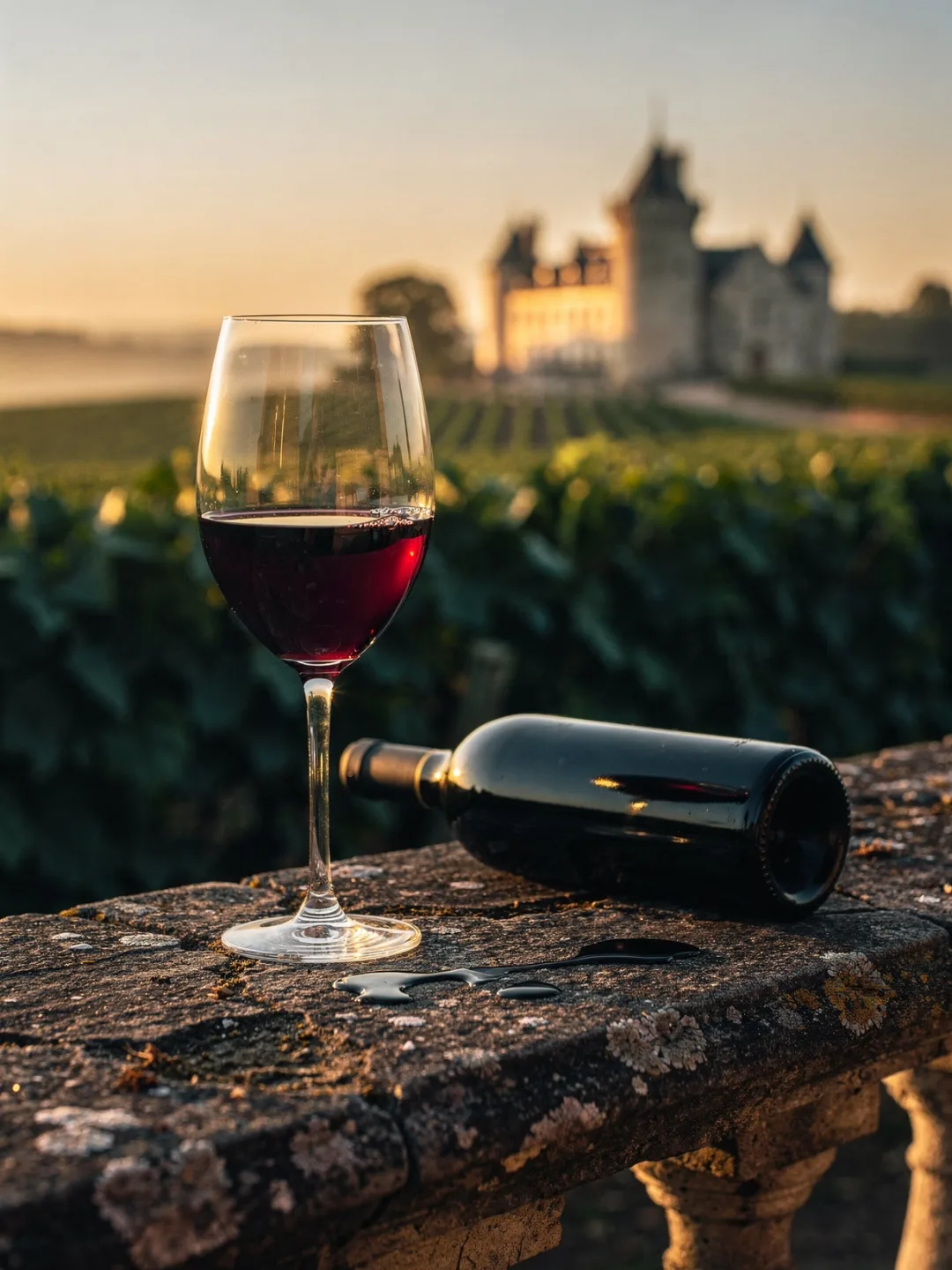
A glass suited to Bordeaux needs to do one thing above all: create room for air. The powerful red wines of the left bank are loaded with tannin, the rough, furry substance from the grape skin that leaves a rough feeling on the gums. It needs oxygen. Only then does it soften before it even reaches the tongue.
That's why the classic Bordeaux glass is the go-to choice: tall, with a straight bowl and a comparatively wide opening, larger than almost any other wine glass in the cabinet. The large surface area lets plenty of wine come into contact with air. At the same time, the shape directs the wine toward the middle of the tongue rather than the sensitive tip.
With young, tannic Cabernet Sauvignon-based wines from the Médoc, the glass alone often isn't enough. A decanter helps more. An hour or longer in the decanter noticeably rounds out the tannins and opens up the fruit that would otherwise hide behind the harshness. Older vintages are decanted more carefully, usually over a candle, so the sediment stays in the bottle instead of sliding into the glass.
Merlot-driven wines from the right bank, from Saint-Émilion or Pomerol, are naturally rounder. They rarely need as much air. Twenty or thirty minutes is usually enough. All red Bordeaux is best served at sixteen to eighteen degrees Celsius, cooler than most living rooms.
It's a completely different story with sweet Sauternes from Yquem and its neighboring estates. It's served chilled, at eight to ten degrees, in a smaller, narrower glass that concentrates its dense sweetness rather than spreading it out. A small sip is usually enough, since Sauternes is rich and heavy and meant to be enjoyed in small amounts, not poured by the glassful like a light summer wine.