Blending & Barrique
Production
In Bordeaux, each grape variety ferments separately at first, often even each individual parcel fermented apart in its own tank or barrel. Blending happens later. Usually in winter after harvest, a small group made up of the winemaker and the owner tastes through each batch individually and decides what proportion of Merlot, Cabernet Sauvignon, or Petit Verdot will ultimately go into the bottle — this blend is called the assemblage, the word around which almost everything here revolves.
This decision is made fresh every year. A château doesn't stick to a fixed formula but responds to what the vintage delivers. In a cool, wet year, Merlot carries more weight; in a warm, dry year, more Cabernet Sauvignon from the Médoc comes to the fore. Whatever's left over and doesn't make it into the top wine is often bottled as a second wine under its own name, more affordable and usually ready to drink sooner.
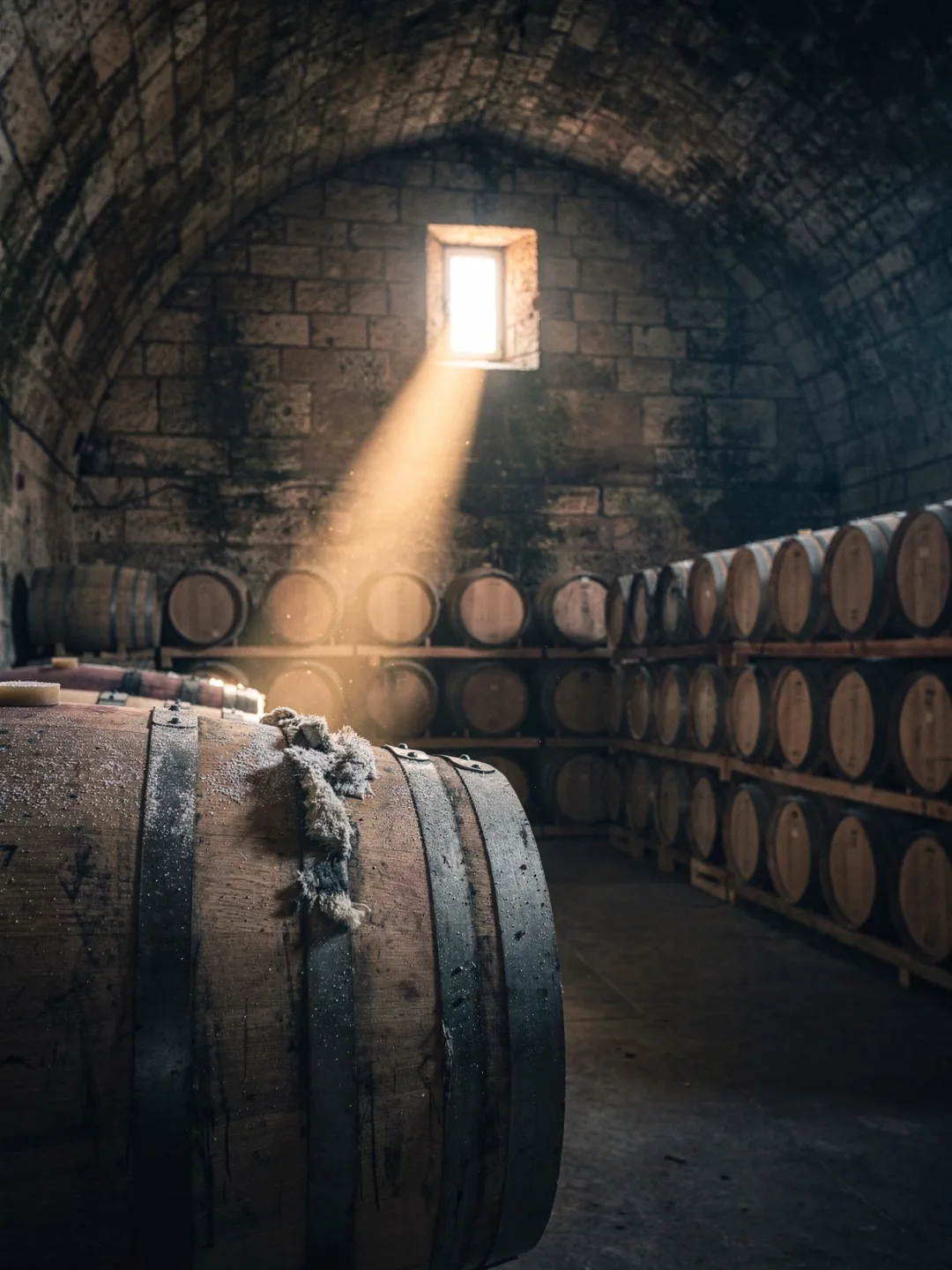
After that, the chosen blend ages in barriques, small oak barrels holding exactly 225 liters. Bordeaux's négociants fixed this measurement in the nineteenth century. Originally it was purely a practical shipping size for export to England, not a matter of flavor. New oak imparts vanilla and toasted notes while slowly letting oxygen reach the wine. After three or four years, a barrel is usually spent for this purpose and moves on to an estate with a smaller budget.
The regulations only set minimum aging times, not a fixed method. A simple Bordeaux Supérieur must age at least twelve months, as must a Saint-Émilion Grand Cru, along with a capped yield of forty hectoliters per hectare and the requirement to bottle at the estate itself. Some estates still leave their wine in the cellar twice as long anyway. Voluntarily.
With Sauternes, the work is completely different. Instead of harvesting once, pickers pass through the same rows five or six times, and in difficult years, considerably more often. They pick only individual berries that the noble rot fungus Botrytis cinerea has already shriveled into raisins. This takes weeks and many hands. In the end, a single vine often yields just one glass of wine, concentrated and honey-sweet.