Atlantic & Estuary
Climate
Bordeaux sits less than a hundred kilometers from the Atlantic, and that shapes almost everything here. A temperate maritime climate keeps winters mild, around seven and a half degrees Celsius in January, and summers warm without turning hot. In July and August, the average sits around twenty-two degrees. Extremes are rare.
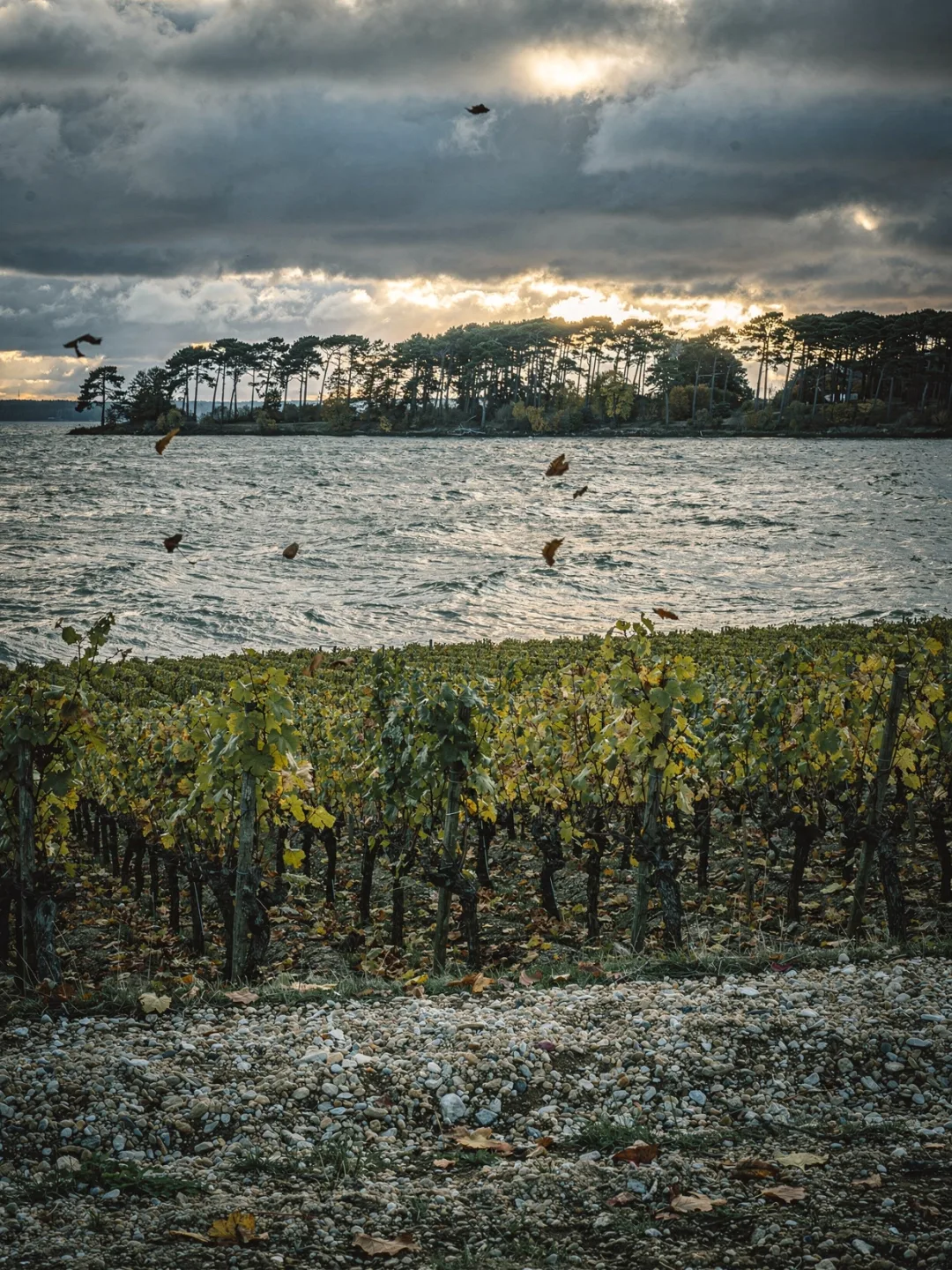
Two rivers cool the region's climate further, as the Garonne and Dordogne converge at Bordeaux to form the Gironde, the largest estuary in Western Europe, whose vast surface of water stores heat during the day and releases it back to the banks at night. This protects many vineyards from spring frost. Not always, though: in February 1956, the cold was still enough to nearly wipe out an entire grape variety.
To the west, the Forêt des Landes, one of Europe's largest pine forests, shields the vineyards from the sharpest winds off the open Atlantic. Without it, autumn storms would pose a constant threat to ripening grapes. With around nine hundred millimeters of rain a year, falling mostly in winter and autumn, Bordeaux stays fairly wet overall — wetter than most of France's other major red wine regions.
This very dampness gives each vintage its own character. Rain shortly before harvest dilutes the sugar in the berries. Rot spreads before anyone can even bring in the crop. But if it stays dry and mild into October, Merlot and Cabernet Sauvignon ripen evenly all the way through. That's why a simple saying holds true in Bordeaux more than almost anywhere else: the vintage matters more here.
Even within the region, there are noticeable differences. The left bank of the Gironde, where the gravel lies, stores solar heat during the day and gives it back to the vines at night — a small but crucial advantage for late-ripening Cabernet Sauvignon. The right bank, with its clay and limestone soils, stays cooler and damper, which suits the earlier-ripening Merlot better.