Loess, granite, shell limestone
Soils
Dig a hole in an Alsatian vineyard. Walk two hundred meters up the slope and dig again, and you might strike something completely different both times: granite here, marly limestone there, and perhaps a band of sandstone in between. Nowhere else in France does the bedrock change so often.
The reason lies deep in geological history. Around fifty million years ago, the Rhine Graben collapsed, and with it a huge strip of land between the Vosges and the Black Forest sank, unevenly, in separate blocks. Ancient bedrock and much younger layers that had originally lain above it ended up side by side at the surface. That still shapes every slope today.
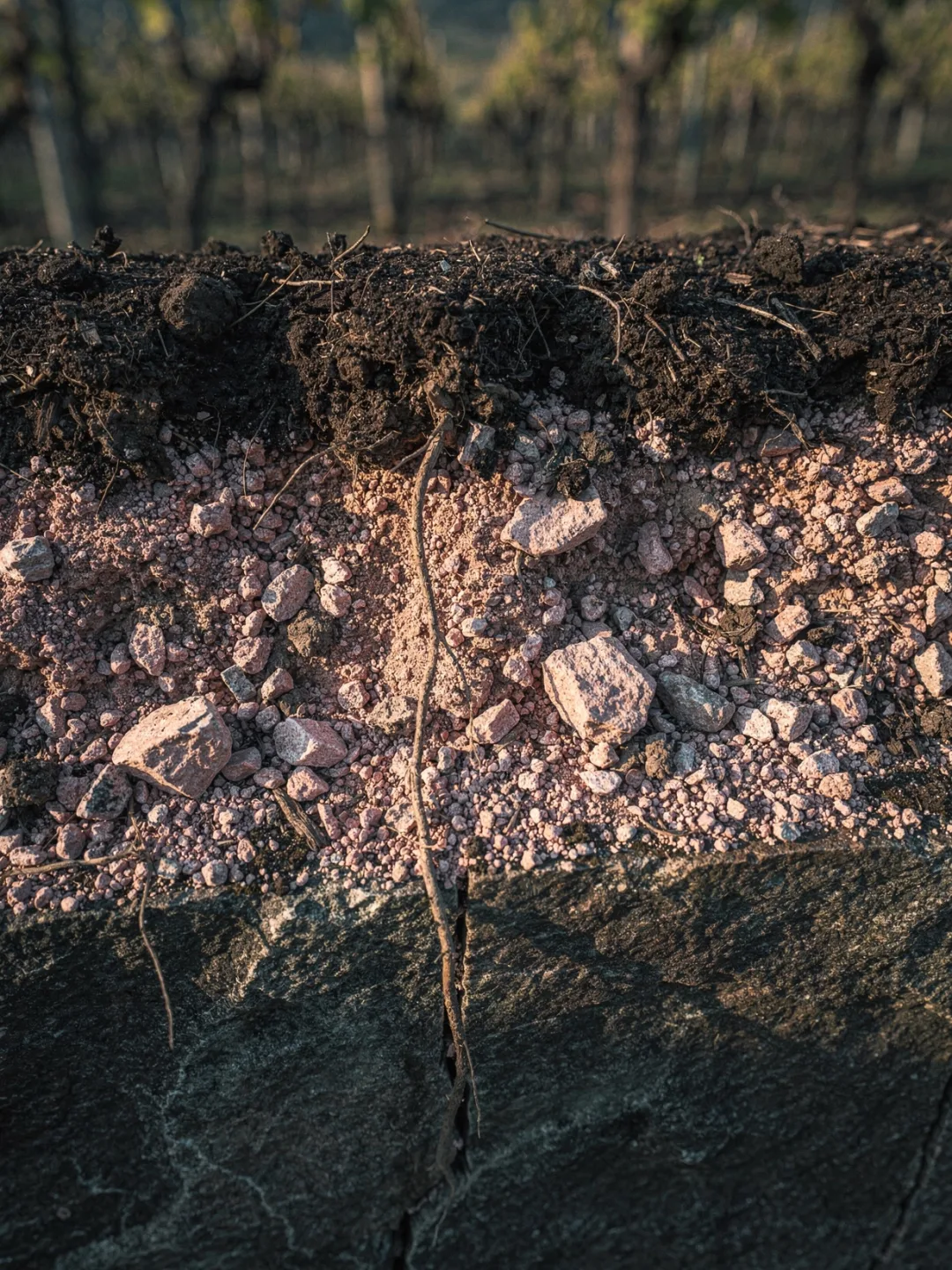
Higher up sits granite. It's the oldest rock in the area, three hundred million years old and heavily weathered, storing almost no water and so forcing the roots deep. That's exactly where much of the Riesling stands today, including on the Schlossberg near Kientzheim, recognized in 1975 as the very first Grand Cru.
Then comes sandstone. This is the famous grès rose des Vosges, the same pink stone used to build Strasbourg Cathedral, and in the vineyard it holds water better than granite, releasing it slowly again during dry summers. A completely different job from the one higher up the slope.
Further down come marly limestone and shell limestone. These heavier soils hold moisture for weeks, and Gewürztraminer and Pinot Gris thrive here especially, because the soil gives their wines an acidity that lingers long in the finish. A completely different tone from what granite produces.
At the very bottom lies loess. Fine, yellow dust, meters thick in places, deposited by the wind during the ice ages, where the slope levels out into the fertile Rhine plain. Wines from loess taste soft and floral, well suited to Sylvaner and Muscat, but this is no soil for a Grand Cru.
A thin layer of loess and weathered fine material clinging between the granite boulders, barely a hand's width deep.
The root: This is where the fine roots sit, drawing whatever the rain has just brought. In midsummer, they're the first to run dry.