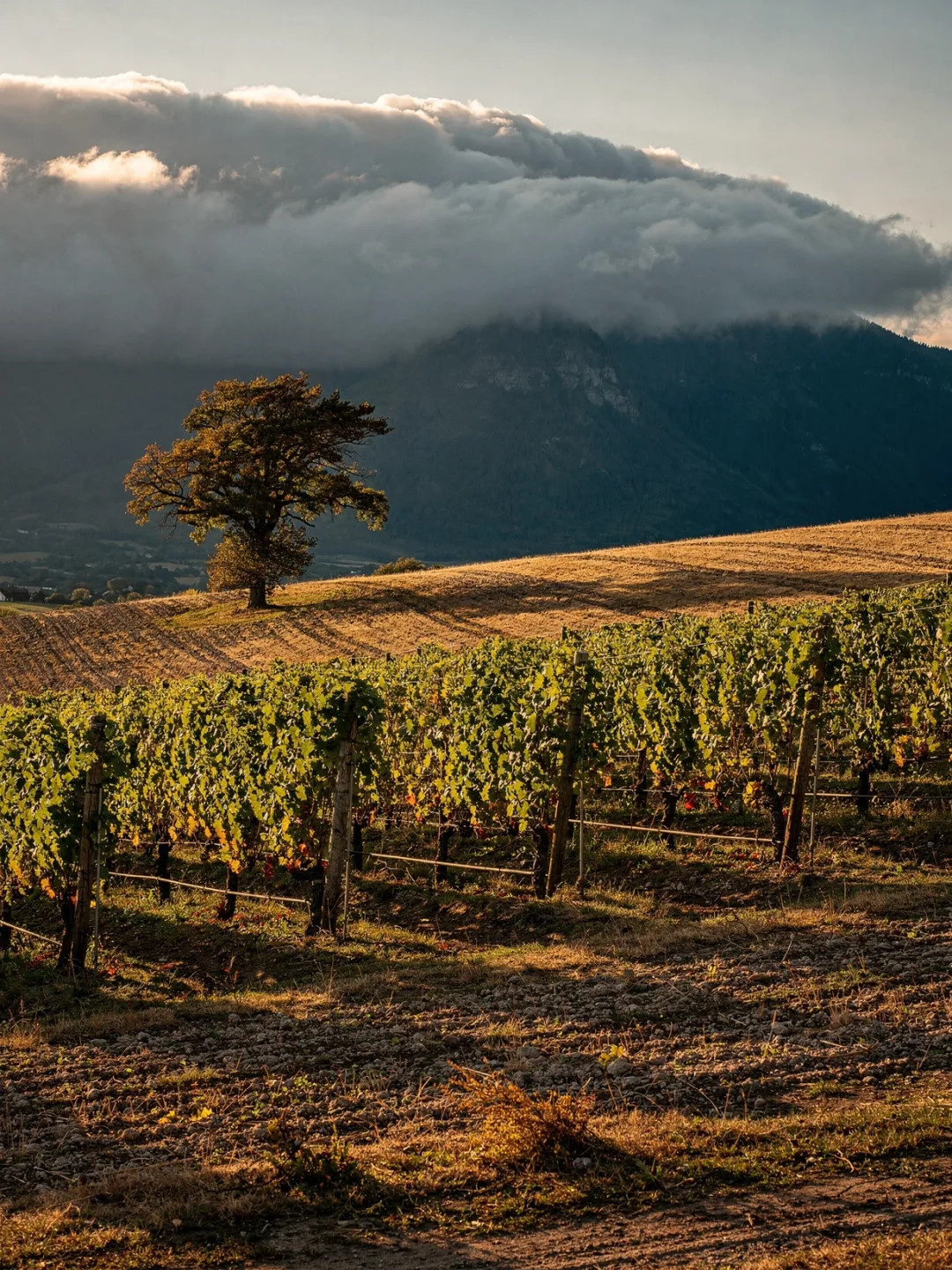
Rain shadow of the Vosges
Climate
The Vosges stand like a wall to the west. That wall decides almost everything in the Alsatian vineyard, because moist Atlantic air moves in from the west, piles up against the slopes, drops its rain there, and comes back down dry and warmed on the eastern side. Meteorologists call this the foehn effect.
Colmar sits right in this rain shadow. The city averages only around five hundred millimeters of rain a year, making it France's driest city, a figure you'd sooner expect in southern Spain than at the edge of the Vosges. For the vines, that's a blessing. Little rain means little fungal pressure, and the grapes stay healthy right through to harvest.
Then there's the sun. Colmar logs more than seventeen hundred hours of sunshine a year, more than some Mediterranean towns, and combined with the dry climate, that creates the conditions that let late, demanding varieties like Gewürztraminer and Riesling ripen fully in the first place. Both need a long time on the vine.
Cold, dry winters give the vines the rest they need. Warm, stormy summers let the grapes build sugar quickly, and climatologists call this interplay semi-continental. Temperatures swing noticeably between day and night, especially in autumn. That swing locks the acidity into the berry even as the aromas keep ripening.
Towering over it all is the Grand Ballon. At fourteen hundred and twenty-four meters, it's the highest peak in the Vosges, and on clear days you can see it plainly from the vineyards, often still capped with snow while spring has long since arrived down in the valley. No vineyard here lies far from a mountain rising above a thousand meters.