Single varieties in the cellar
Production
Almost every dry white wine begins the same way. The whole grape, often destemmed, goes straight into the press, gently and quickly, before the skin has much chance to sit in contact with the juice. That keeps the wine pale in color. It also protects the delicate fruit aromas that would otherwise be masked by tannins from the skin.
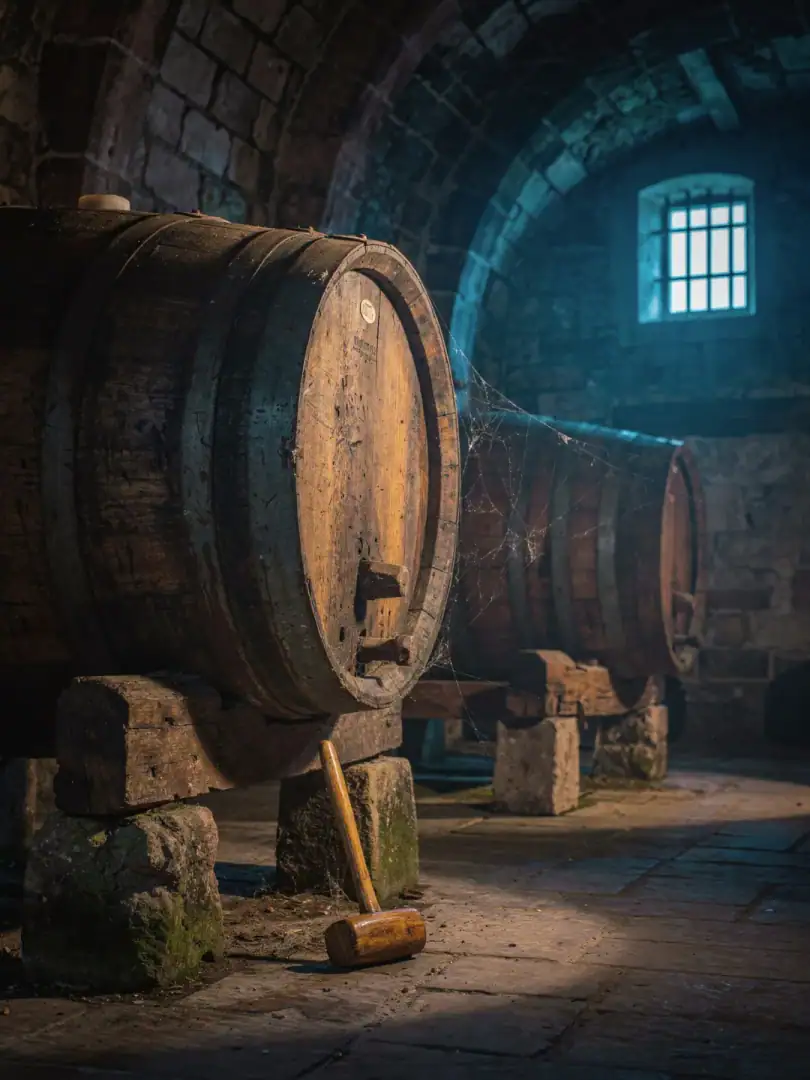
After that, it's decided where the must will ferment. Many cellars still swear by old foudres made of oak from the Vosges, often from the Darney forest, which impart little aroma of their own. In the cellar of the house of Hugel in Riquewihr, some foudres have been in use for more than three hundred years. Others rely on temperature-controlled steel tanks, because too much fermentation heat destroys the delicate aromatic compounds.
Under three grams of sugar per liter, and a wine legally counts as dry. Most Alsatian wines reach that mark today. Anyone who wants to put a grape variety on the label must have pressed the wine entirely from that single variety; even a small addition of another grape means the varietal name can no longer appear.
Stricter rules apply to a Grand Cru. Harvesting is done exclusively by hand, and the maximum yield is fifty-five hectoliters per hectare. Until 2022, only four varieties were allowed to carry the name: Riesling, Gewürztraminer, Pinot Gris, and Muscat. That year, Pinot Noir was added as a fifth. An exception is the Grand Cru Kaefferkopf, where blends of several varieties have been permitted since 2007, as long as Gewürztraminer makes up the largest share.
For a Vendange Tardive, pickers pass through the same vineyard several times. They harvest only what's ripe enough or affected by noble rot, known as tries successives, and adding sugar or acid is strictly forbidden. The wine is only released once an INAO panel has tasted it blind, at the earliest eighteen months after harvest.
Sparkling wine takes a different path. Crémant d'Alsace, its own appellation since 1976, undergoes a second fermentation in the bottle, just like Champagne, usually made from Pinot Blanc, and must rest on its lees for at least nine months before disgorgement. That time gives it the fine, creamy mousse of a good Crémant.