Cooler Than You'd Think
Glassware
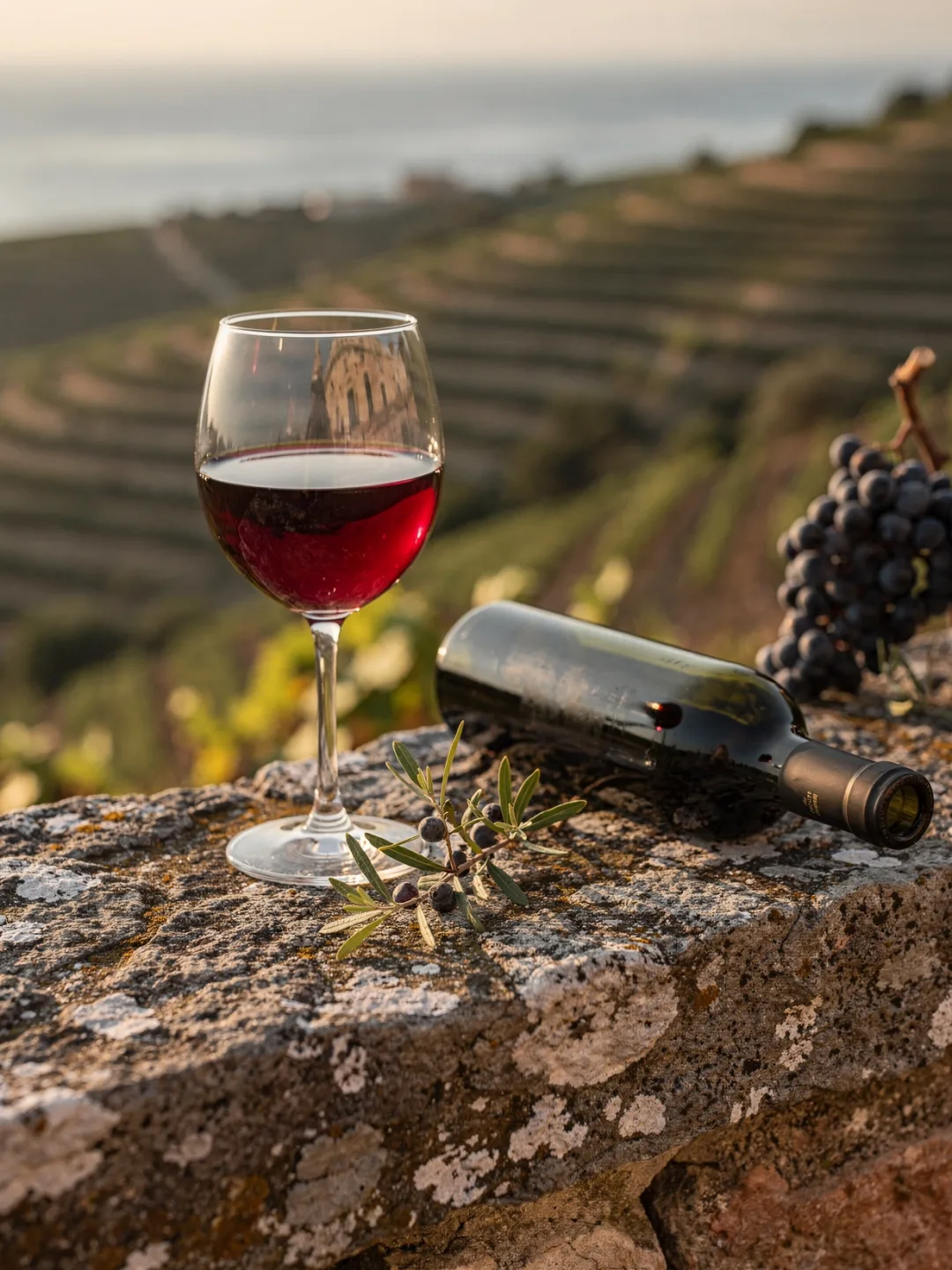
A glass plays its part in how much of Niellucciu and Sciaccarellu actually reaches the palate. In Corsica there's a third factor too, one many other wine regions don't have to reckon with quite the same way: the heat itself, which creeps into the glass fast in summer.
For Niellucciu, with its high acidity and firm tannin, a glass with a medium, slightly tapered bowl suits best. It resembles its Tuscan cousin, just with a somewhat narrower opening. Sciaccarellu-driven wines from Ajaccio bring additional pepper and fruit that you don't want dissipating too quickly, since too wide a glass amplifies exactly that sharpness rather than capturing it.
Temperature is where most mistakes happen on the island. The surroundings are already Mediterranean-warm even in spring. A Niellucciu from Patrimonio wants sixteen to eighteen degrees Celsius, not a room at twenty-seven — out on a terrace on an August evening, otherwise the glass warms past its fruit's sweet spot within twenty minutes. Rosé, which accounts for over half of Corsican production, needs to be served even cooler, eight to ten degrees. A slimmer, smaller glass concentrates its freshness rather than dispersing it.
Vermentinu needs a narrow, tall glass with little bowl. Its floral notes of hawthorn and broom are fleeting. A wide glass lets them dissipate before they even reach the nose. Served cool, around ten degrees, it holds its freshness longest.
For Muscat du Cap Corse, a small glass of perhaps sixty milliliters is enough. It's a wine to close out a meal, not to drink in long draughts. A standard-sized white wine glass would only make the concentrated sweetness feel cloying, rather than carrying it well.