Maceration Time & Mutage
Production
Red wine here begins like any red wine. The skins stay in the juice during fermentation, since that's where color and tannin reside, not in the flesh. With Niellucciu this is delicate work, because its berry skin is thin. Too long on the skins and the wine turns bitter instead of structured. Too short, and it stays thin. The region tolerates no shortcuts here: ninety percent of every red blend in its most important appellation must come from precisely this grape.
Patrimonio imposes unusually strict rules on its growers. Enriching the must with sugar is forbidden, as are oak chips in the barrel or activated carbon for fining. Malolactic fermentation, in which sharp malic acid converts to softer lactic acid, must run to completion in the reds. The wine then ages in the cellar until at least February 15 of the following year before it may reach customers starting March 1. White and rosé wines, by contrast, age only until mid-December of the same year and may be sold starting January 1 of the following year. In Ajaccio, where Sciaccarellu rules instead, similar rules apply: no sugar, no oak chips in the barrel, plus a yield cap of forty-five hectoliters per hectare.
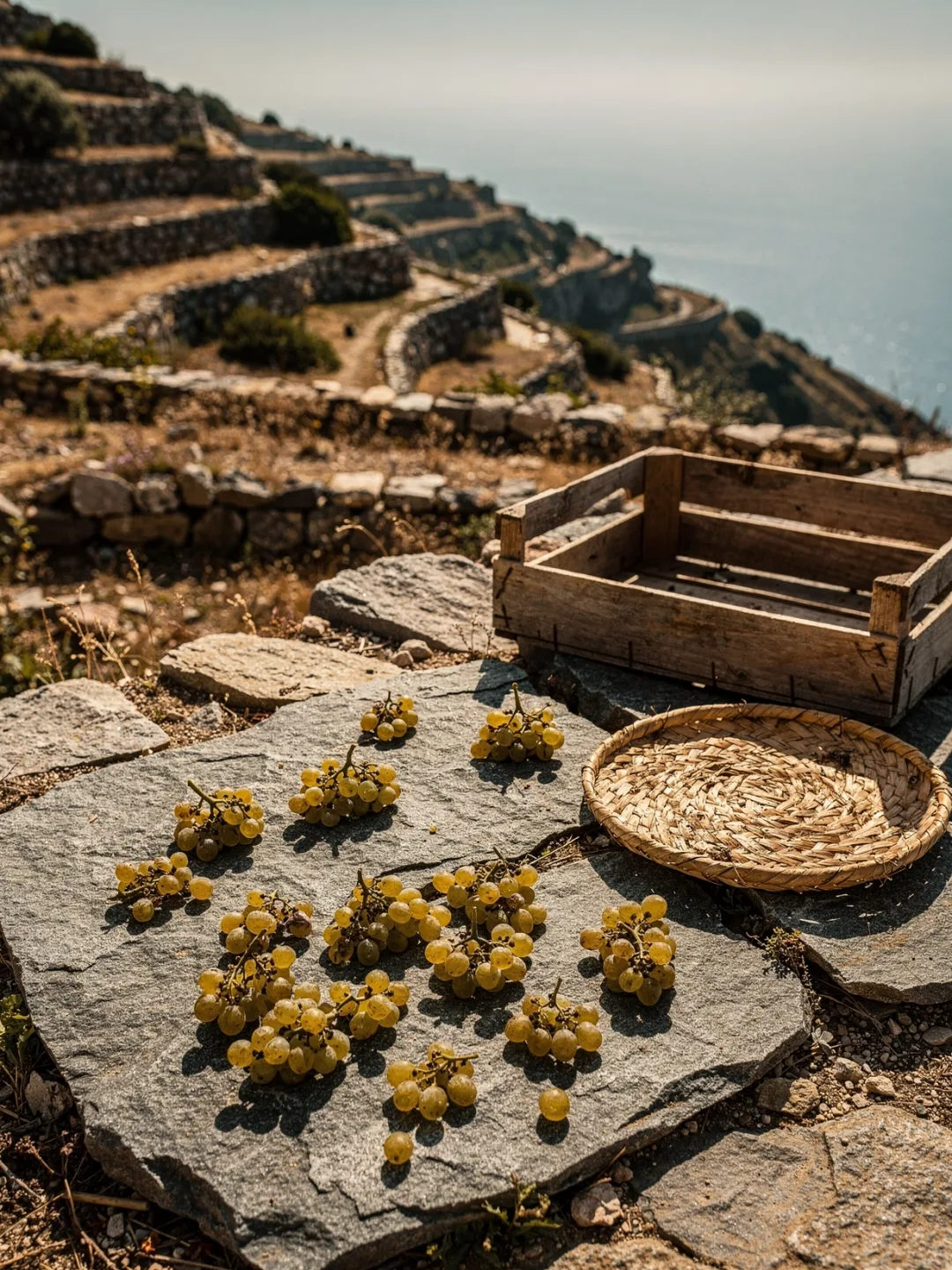
A Corsican specialty lies in Muscat du Cap Corse, a sweet wine whose fermentation is halted with added alcohol before all the sugar has fermented out. The small-berried Muscat grapes are sometimes left to wither beforehand on slate slabs in the sun, a loss of water that concentrates the sugar even before fermentation begins. This centuries-old method only received its own appellation in 1993, and after a lost legal dispute, it was granted again in 1997.
What stays roughly the same almost everywhere is the size of the operations. There are a handful of cooperatives. But above all there are dozens of small caves particulières, individual estates often under ten hectares, that vinify and sell their own wine. It's a legacy of the 1990s, when the island shifted from volume to provenance.