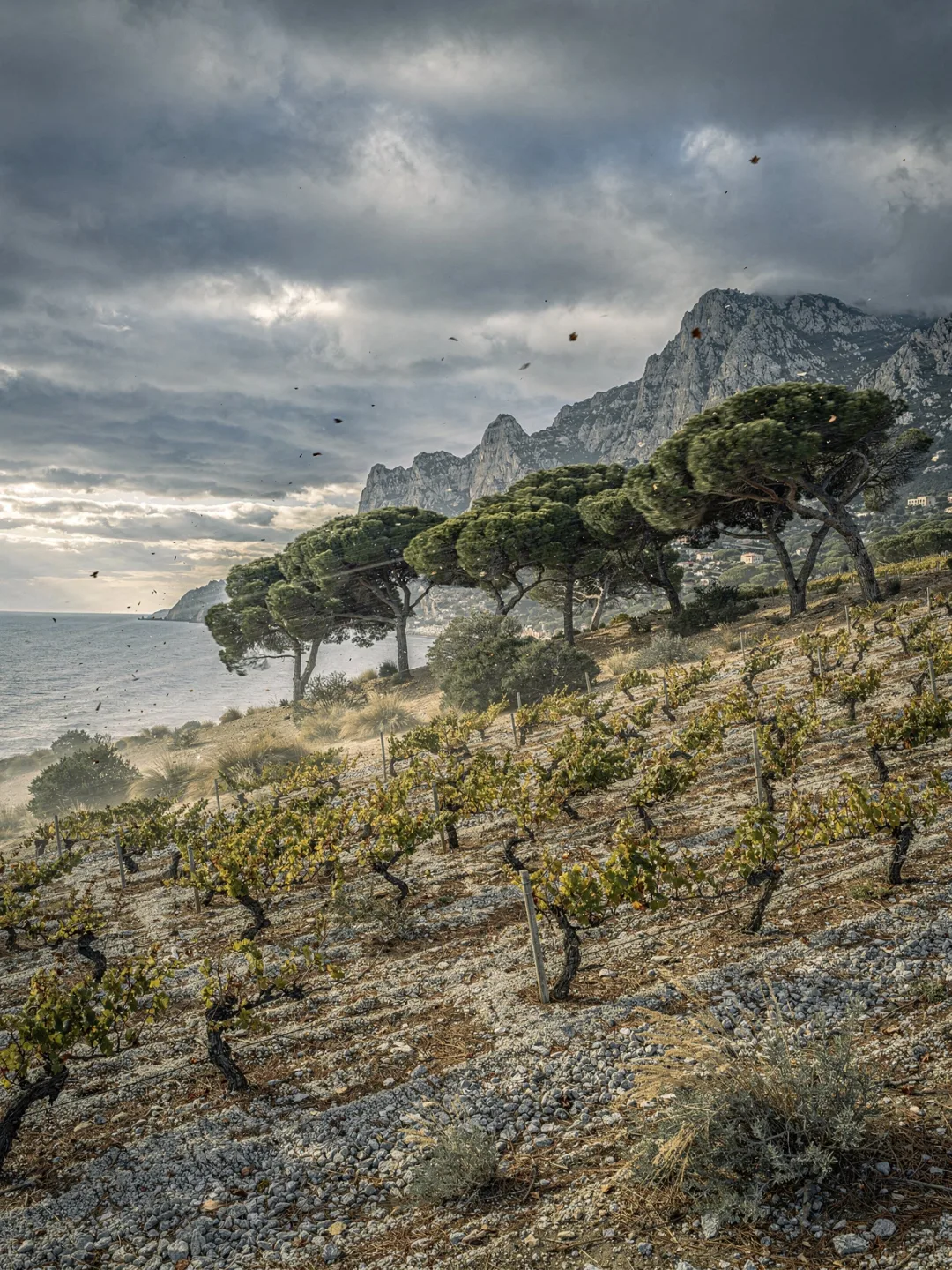
Wind Instead of Rain
Climate
Corsica is often called a mountain range in the sea. For the vineyard climate, that's almost literally true. From the 2,706 meters of Monte Cinto down to the coast, sometimes only twenty kilometers separate the two as the crow flies. The Mediterranean climate gives the island up to 2,885 hours of sunshine a year; in Ajaccio the long-term average is 2,726. Rain falls mainly in winter; in September, the harvest month, the average there comes to only about 58 millimeters.
What really shapes the weather through the summer is the wind — three of them, in fact, each with its own name, with the northwesterly Mistral dominating the other two, the northerly Tramontane and the southwesterly Libecciu. They dry the grapes within hours of any rain and keep the foliage healthy. This is precisely what makes it possible for a third of Corsica's vineyard area to be farmed organically, one of the highest shares of any wine region in France.
Coast and hinterland behave quite differently. Down below, rarely above two hundred meters, sea breezes and damp autumn mists move in, and the day-night temperature swing stays small. Just a few kilometers further inland, some vineyards climb to four hundred meters and beyond. There, nights cool markedly more. It's at precisely this altitude that Sciaccarellu finds its best ripeness.
Around Patrimonio, a basin of its own opens toward the sea. It's known as the Conca d'Oro, the golden bowl. Its hills block part of the wind, yet still let it sweep through the vine rows. Many growers in the region consider this interplay of shelter and airflow their true asset. Irrigation, in any case, is off the table: in Patrimonio it's forbidden outright, and even in the more open Ajaccio it's permitted only when persistent drought seriously threatens the grapes' ripening.