Niellucciu & Co.
Grape Varieties
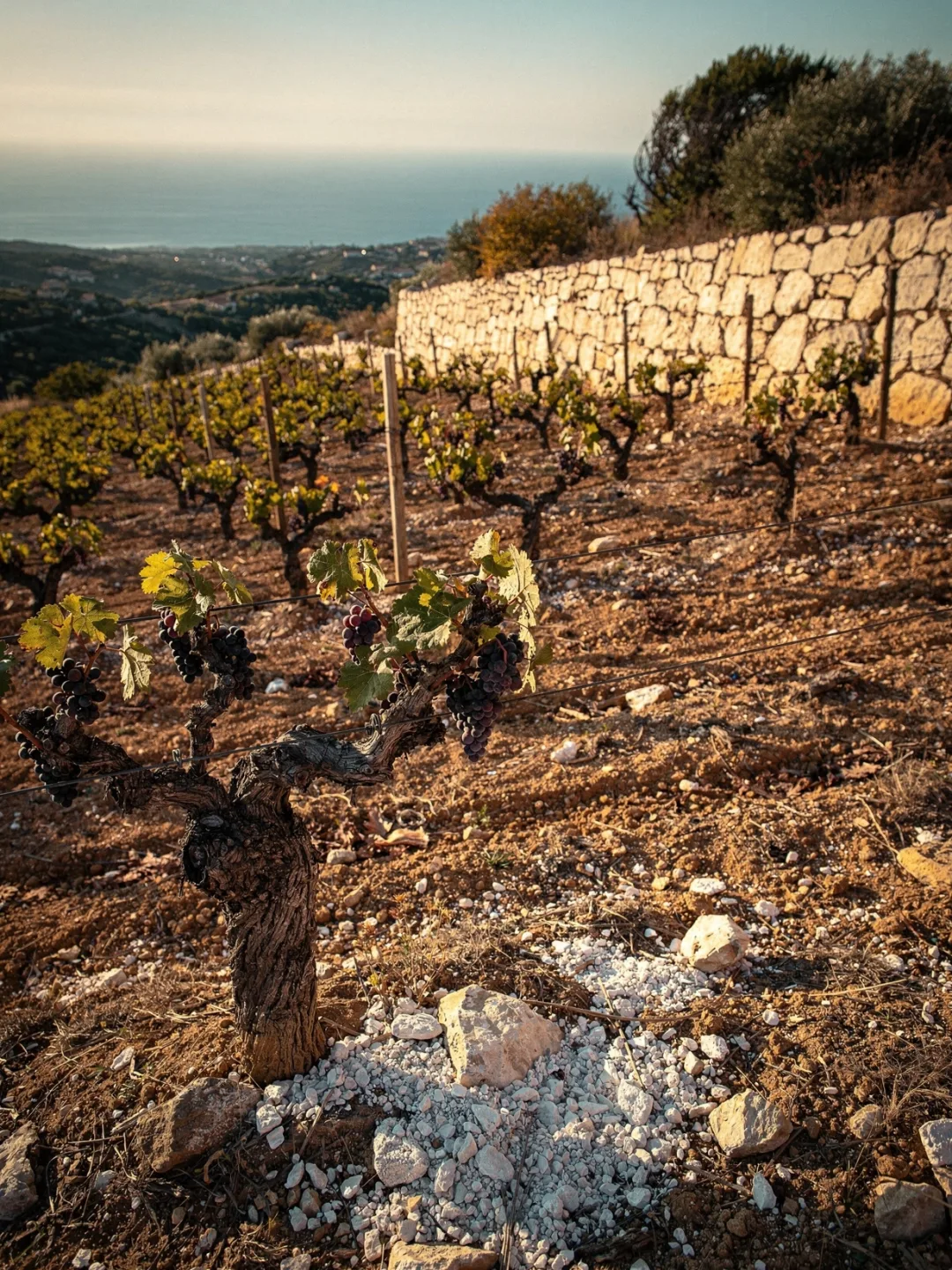
A single grape defines a good third of Corsica's vineyards: Niellucciu. Genetically it's the same Sangiovese grown in Tuscany, just ripened under another name and on different soil. The name comes from the Corsican word for black, niellu, on account of its nearly blue-black berries. Yet it rarely produces very dark wines. Its skin is thin, while its acidity and tannin run high, and in Patrimonio it must make up at least ninety percent of every red blend.
In the south of the island, around Ajaccio, another variety takes the lead role: Sciaccarellu. The name means roughly 'crunching one,' because the berries are said to crackle between the teeth when chewed. It grows almost nowhere else in the world. Even so, it must account for at least forty percent of both red and rosé Ajaccio, yielding powerful wines despite their pale color. Pepper, almond, blackcurrant — and more alcohol than the pale color would suggest.
Vermentinu carries almost the entire white wine production of the island and is often sold as Malvoisie de Corse, though it's not actually related to true Malvasia. Young, it smells of hawthorn and broom. In Patrimonio, it is the only white grape permitted in the glass — one hundred percent, no other white variety allowed.
Beyond that lie the nearly forgotten varieties. Biancu Gentile almost disappeared entirely after phylloxera. Only since the 2000s has it been replanted, genetically unique, unrelated to any other vine in the world. Genovese fills small gaps in white blends. Among the reds, Carcaghjolu Neru and Minustellu, together barely a tenth of the planted area, have stood on the same plots for generations. And for the sweet Muscat du Cap Corse there is only a single permitted variety, the small-berried Muscat, whose grapes are left to wither in the sun for days before pressing.