Wide, Cool, Slender
Glassware
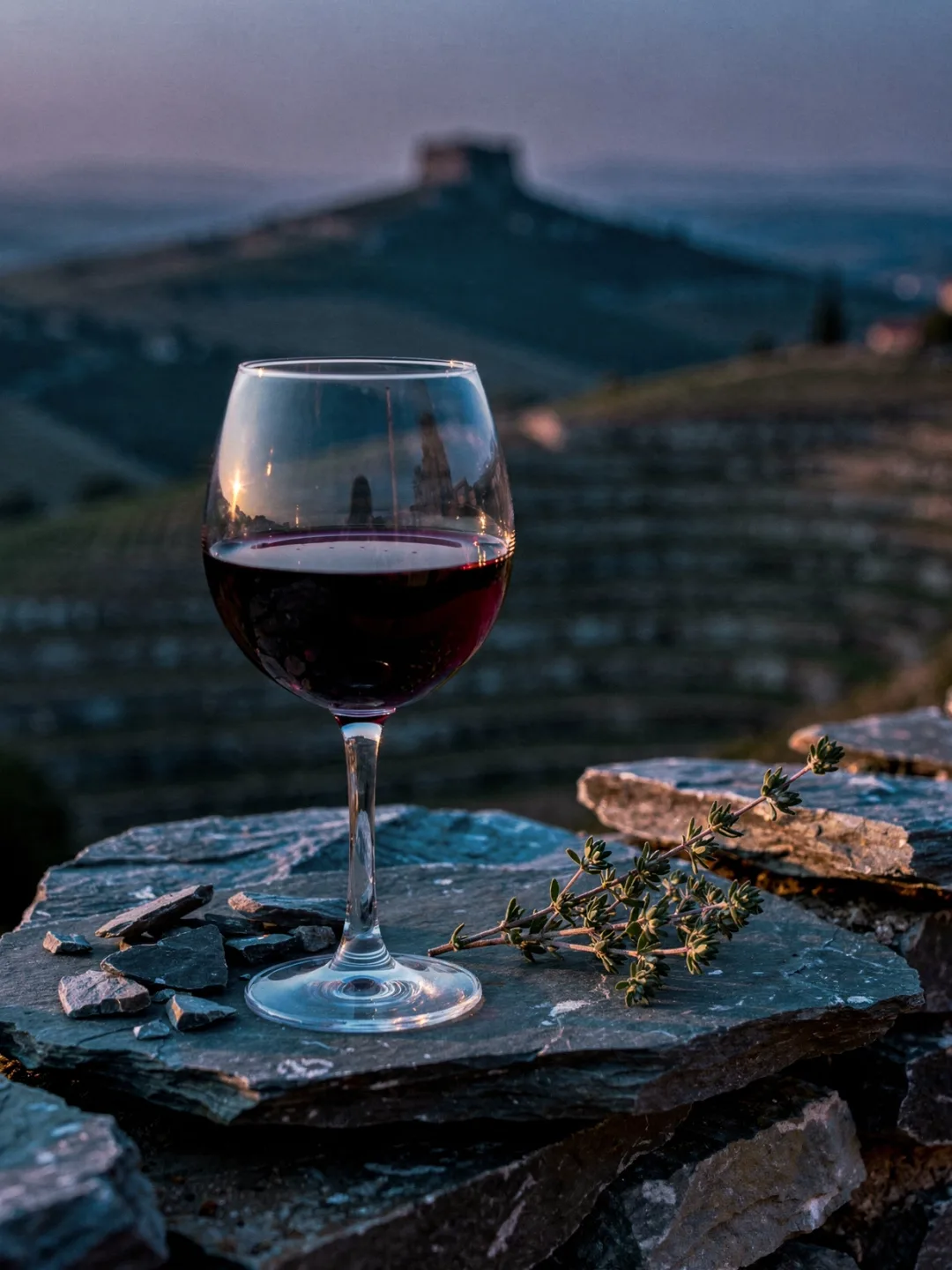
A glass changes how a wine tastes and how it performs. For the powerful reds of Faugères or Corbières—blends of Grenache, Syrah, Mourvèdre, and Carignan—the wine needs room. Together, these varieties bring plenty of tannin and alcohol, and both need to settle before reaching the nose. A wide-bowled glass lets enough air reach the wine before it hits the nose.
With Picpoul de Pinet, the opposite is true. This variety thrives on acidity and salinity, not power, and too wide a glass would let the freshness simply evaporate. A slender, upright glass with a narrow opening keeps the citrus aromas concentrated. Exactly what you need when an oyster with seawater is about to join it.
Temperature decides more than you'd think. A Faugères or Minervois tastes most vivid between fifteen and seventeen degrees Celsius. Warmer, and the alcohol becomes too assertive; cooler, and the fruit and herbs disappear. Picpoul de Pinet, on the other hand, belongs in the fridge, eight to ten degrees, or its acidity suddenly turns flabby instead of zesty.
Blanquette de Limoux calls for a flute, narrow and tall, so the fine bubbles travel a long path through the wine instead of fizzling out immediately. A young Faugères needs no decanter. A ten-year-old Corbières, however, benefits from half an hour of air. The tannins have compacted into a solid block in the bottle that only slowly releases again.
Finally, the pour. A glass should never be filled past its widest point—for a standard red wine glass, that's about a hundred and fifty milliliters. Above that, space remains where the aroma of a Faugères or Minervois can properly unfold—fill it to the brim, and you'll end up tasting only alcohol, missing the herbs entirely.