Blending and Mousse
Production
A single name rarely stands alone. A Languedoc red is almost never a single variety, but a blend from several barrels and several grapes. Grenache brings sweetness and volume, Syrah adds color and pepper, Mourvèdre contributes structure that only softens after years, and Carignan supplies acidity and backbone. The cellar master reblends these four every vintage, sometimes leaning more on Syrah in cool years, sometimes more on Grenache in hot ones.
Carignan was long considered harsh and bitter, until winemakers adopted a technique from Beaujolais: carbonic maceration. Whole, unbroken grapes go into a sealed tank under carbon dioxide instead of mechanical pressure, and fermentation begins inside each individual berry before any pressing takes place. The result is a wine with plenty of fruit and little bitterness. Carignan made this way tastes almost like ripe cherry, hardly like the rough wine known in the 1970s.
The amount a vine is allowed to bear is strictly regulated by appellation. In the Corbières, the average yield in 2023 was twenty-eight hectoliters per hectare, low compared to simple table wines, but enough for dense, concentrated wines. A single hectare of Corbières therefore rarely produces more than two thousand bottles. No more is needed.
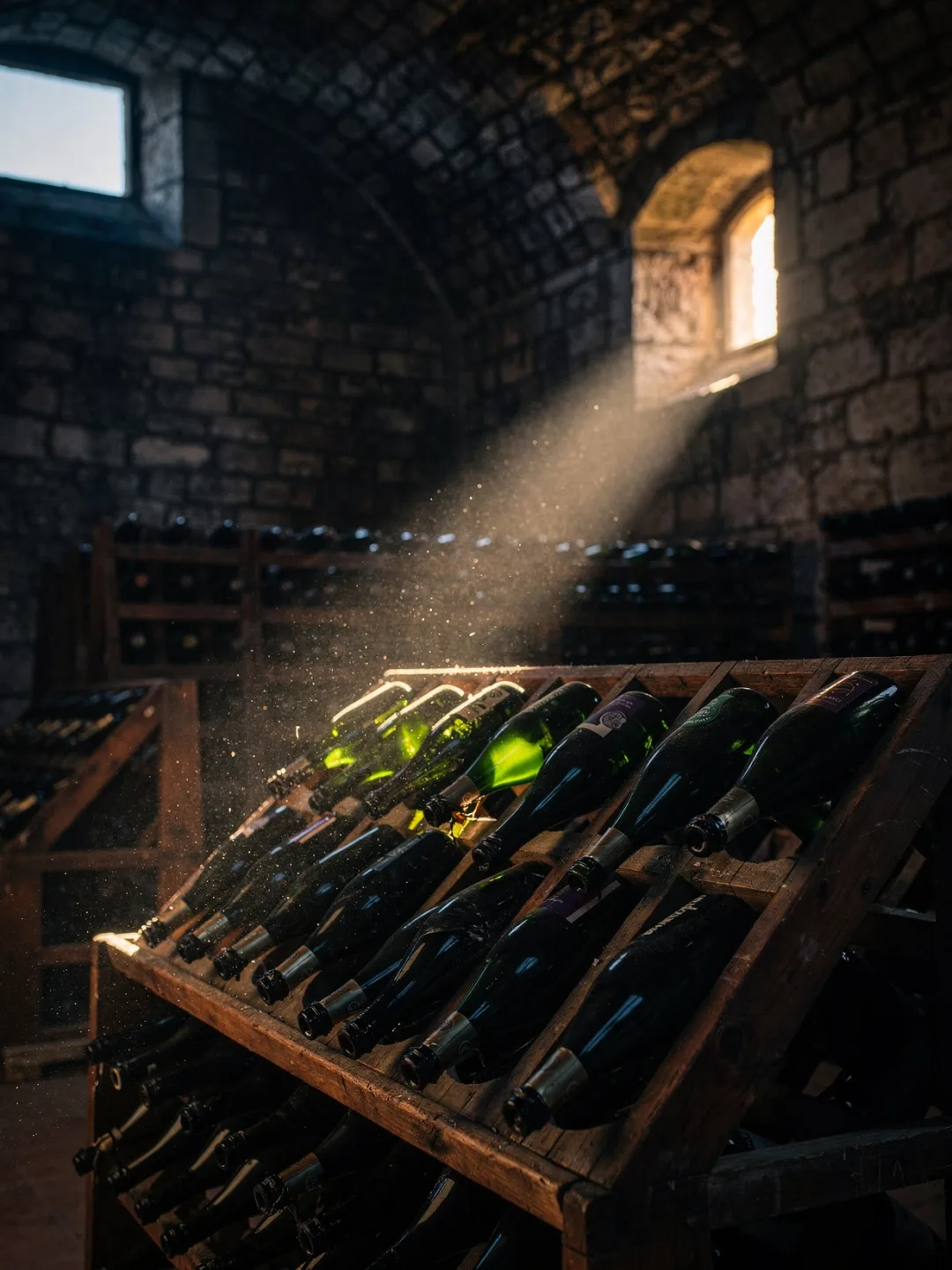
The cellar in Limoux works quite differently. For classic Blanquette, the wine first ferments quietly like any white wine, then undergoes a second fermentation in the bottle with yeast and sugar. This is the same méthode traditionnelle known from Champagne, only invented here centuries earlier. The resulting carbon dioxide has nowhere to escape and stays locked in the wine until someone pulls the cork.
There's an even older, simpler version: the méthode ancestrale. Here, the half-finished, still-sweet wine is bottled directly before the first fermentation ends, and the yeast keeps working inside the bottle. This method knows no added sugar and no second, artificially triggered fermentation. What arrives in the glass is exactly what the yeast achieved on its own.