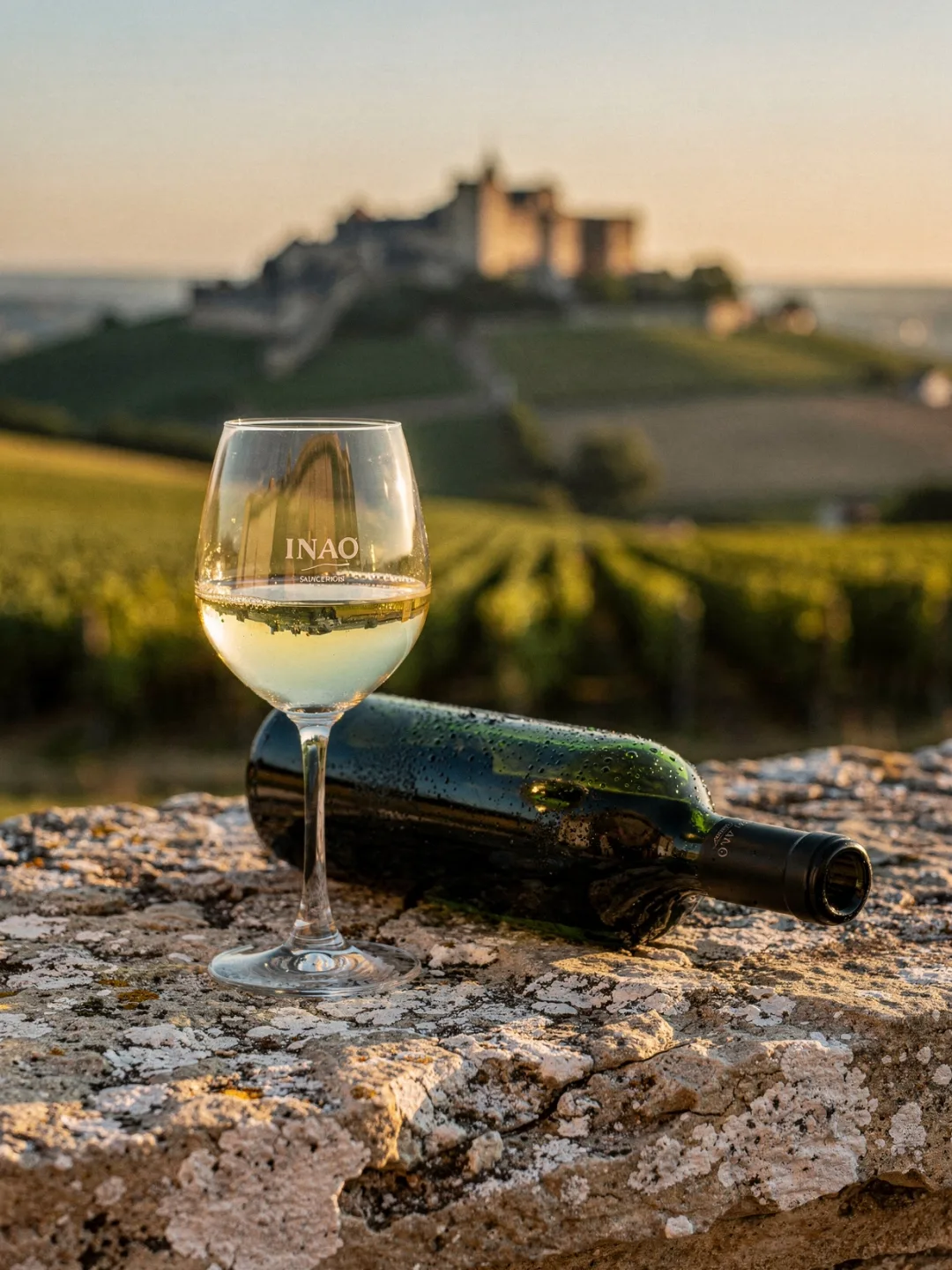
Narrow for Acidity
Glassware
A glass determines how much air reaches the wine and where its aroma travels. For Loire whites, this choice is especially delicate. Both Sauvignon Blanc and Chenin Blanc live off a sharp, precise acidity that the wrong glass can flatten out.
For Sancerre and Pouilly-Fumé, a slender, tulip-shaped glass with a narrow opening works best, as prescribed by the French tasting authority INAO for official tastings. A wide bowl would scatter gooseberry and flint before they reach the nose. The narrow shape, by contrast, concentrates exactly these fine, volatile notes and sends them upward in a focused stream.
Temperature is often overdone on the cold side. Seven to ten degrees Celsius is plenty for a young Sancerre — any colder and the wine tastes of nothing but acid, losing its fruit. A mature, several-year-old Chenin from Savennières, on the other hand, can handle a few degrees more, since its aromas only really lift out of the glass with a touch of warmth.
A different rule applies to the sweet Chenin wines from the Coteaux du Layon. They're served in a smaller glass, cooler than you'd expect for a dessert wine. Otherwise the sweetness comes across as heavy rather than lively, and the delicate honey and apricot notes owed to noble rot get lost.
Cabernet Franc from Chinon or Bourgueil doesn't need a big Bordeaux glass. These reds are built leaner than their cousins near the Atlantic. Their aroma of raspberry and violet holds up better with a slight chill, around fourteen to sixteen degrees Celsius, than with the twenty degrees at which many reds get served. Too warm, and the green bell-pepper note pushes ahead of the fruit.
Crémant de Loire, finally, belongs in a narrow flute. Only then does the mousse stay lively enough to rise all the way to the last sip — and only a half-filled glass gives it the room to do so.