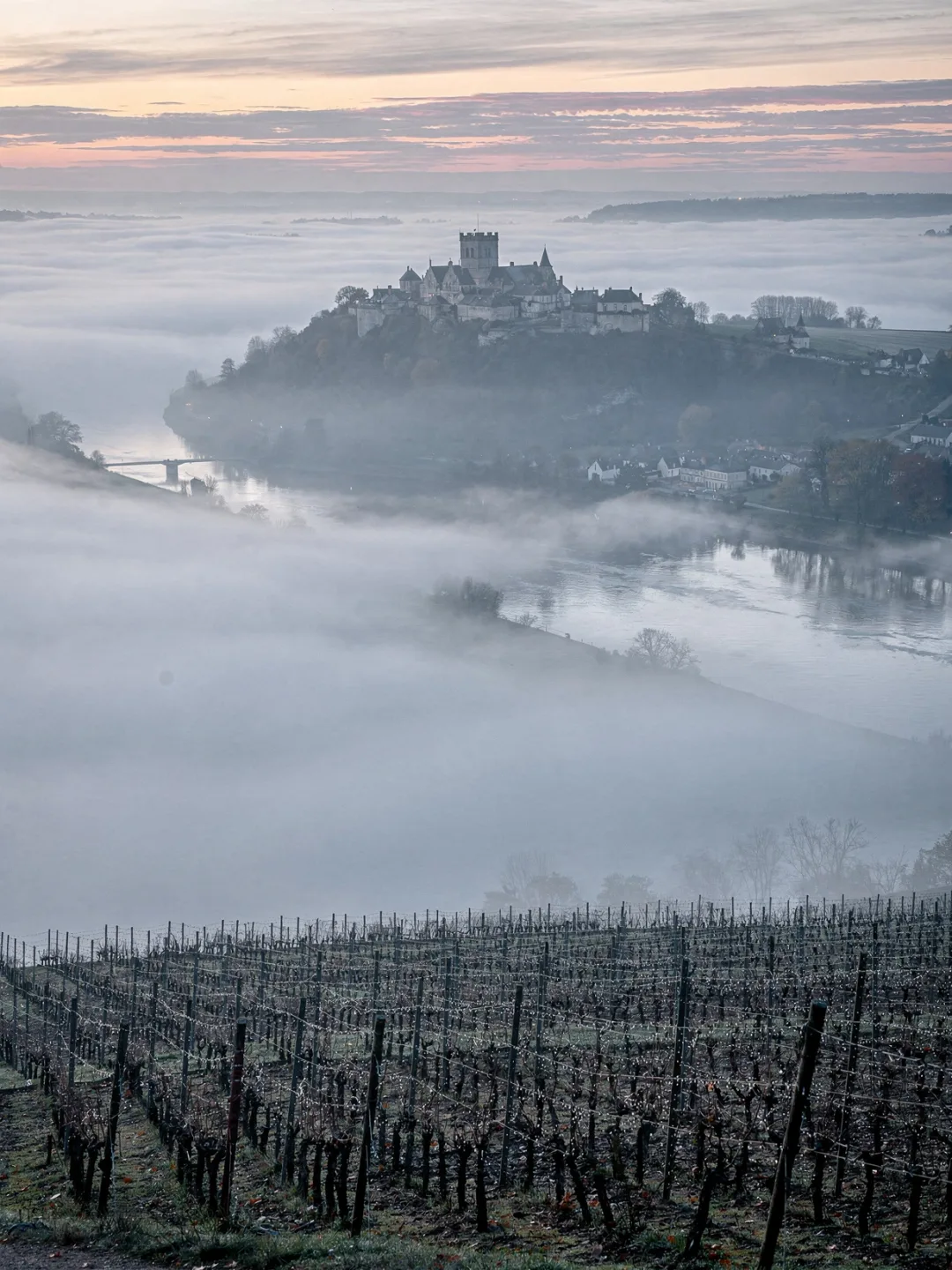
Ocean Meets Continent
Climate
At just over a thousand kilometers, the Loire is France's longest river, and the wine region follows it for nearly its entire length. That means there's no single Loire climate — there's a transition that stretches over hundreds of kilometers, from the Atlantic almost to the center of the country.
Near Nantes, the Gulf Stream shapes the weather: mild winters, moderate summers, and constant moisture from the sea. Melon thrives here without major swings up or down, in a climate that rarely sees extremes.
Further upstream, around Sancerre and Pouilly, almost none of that remains. The climate turns more continental: colder winters, hotter and drier summers. Spring frost here is a very real risk, not just a footnote in the calendar. This shift between two different weather worlds is exactly what makes the Loire a region of contrasts rather than a single climate zone.
The river itself evens out a lot of this. Large bodies of water store heat and release it slowly, which is why vineyards right along the bank are hit by frost less often than those further inland — near Pouilly-Fumé, the moderating effect of the river is considered one of the reasons the vineyards ripen at all. Anyone looking for a good plot searches first for a slope facing the river, and only then for one facing south.
In April 2021, it became clear just how close this calculation can run. Between Chinon and Saint-Nicolas-de-Bourgueil, hundreds of candles burned between the vine rows on a single cold night. Wind machines ran too, pushing warm air down from above. The young shoots had already emerged by then and would barely have survived a single degree of frost. A whole vintage can hang on one night in April.