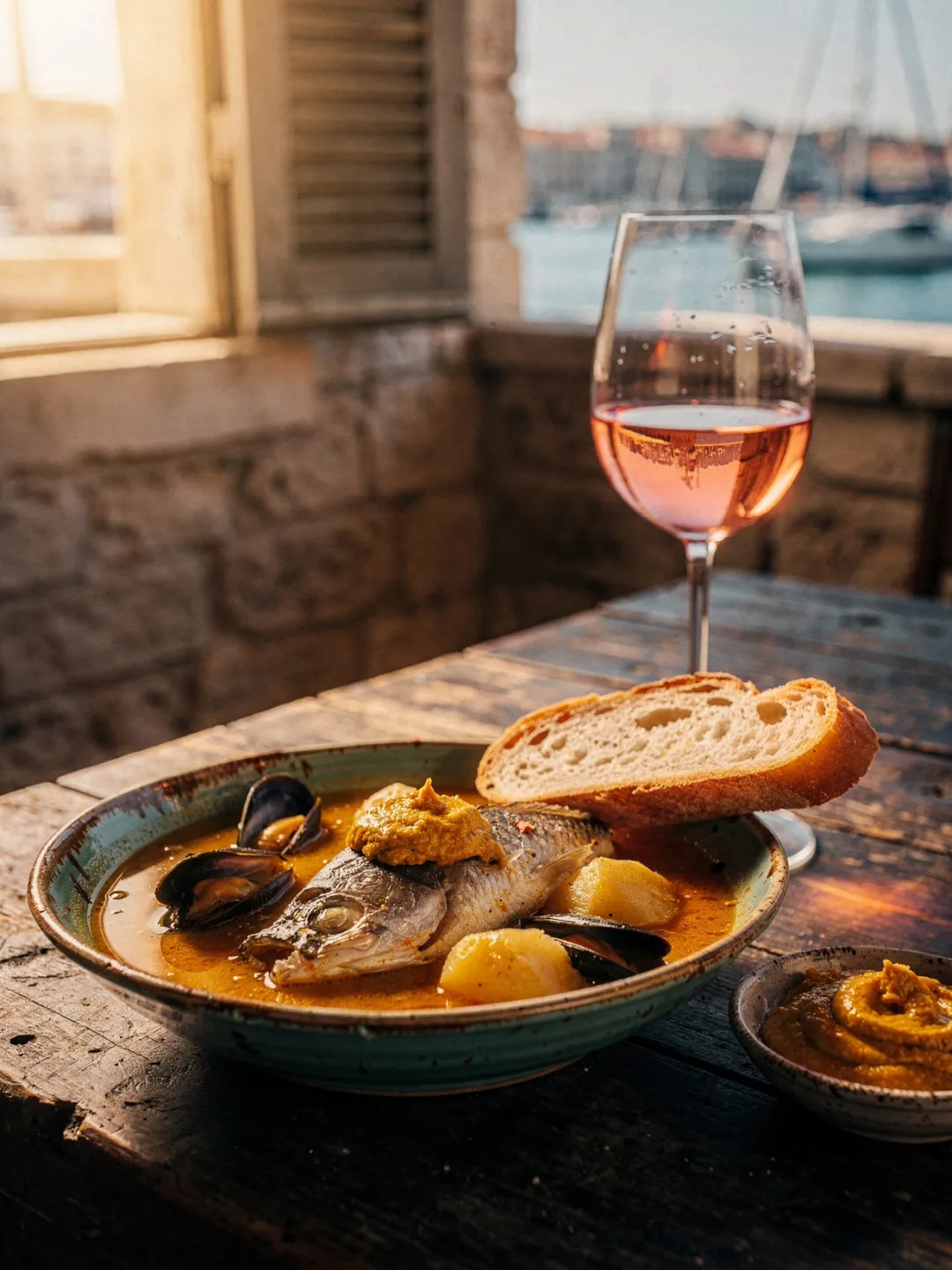
Bouillabaisse and Aïoli
Wine & Food
Provençal cuisine thrives on olive oil, garlic, and herbs, not cream or butter. Oil demands acidity. Its rosé is tailored exactly for this: light, cool, with an acidity that cuts through oil and salt instead of being overwhelmed by them.
The Grand Aïoli shows this most clearly: salt cod, egg, snails, and vegetables, all dipped into a thick mayonnaise of garlic and olive oil that would sit heavy in the stomach without a fresh, acidic wine alongside. A simple Côtes de Provence rosé turns the dish into a summer meal instead of a burden.
With bouillabaisse, the Marseille fish stew with saffron and the fiery garlic cream rouille, the choice isn't so clear-cut. White wine and rosé still compete for the spot at the table today. Both work, but a fuller-bodied rosé with a bit more structure suits it better. It often comes from the restanques near Cassis and holds its own against the saffron and the many varieties of fish.
Smaller dishes like pissaladière, a puff pastry topped with slow-cooked onions, anchovies, and black olives from Nice, don't call for anything complicated. Simple often suffices. The same goes for tapenade, a paste made from those same olives. A simple, young rosé is enough, served chilled, ideally under an open sky.
A rosé won't cut it with daube provençale, that slow-braised beef in red wine with olives and orange zest. This calls for a red Bandol with a good measure of Mourvèdre. Its tannin stands up to the braised meat, and its dark fruit picks up the orange zest without overpowering it.