On a Rosé
Tasting
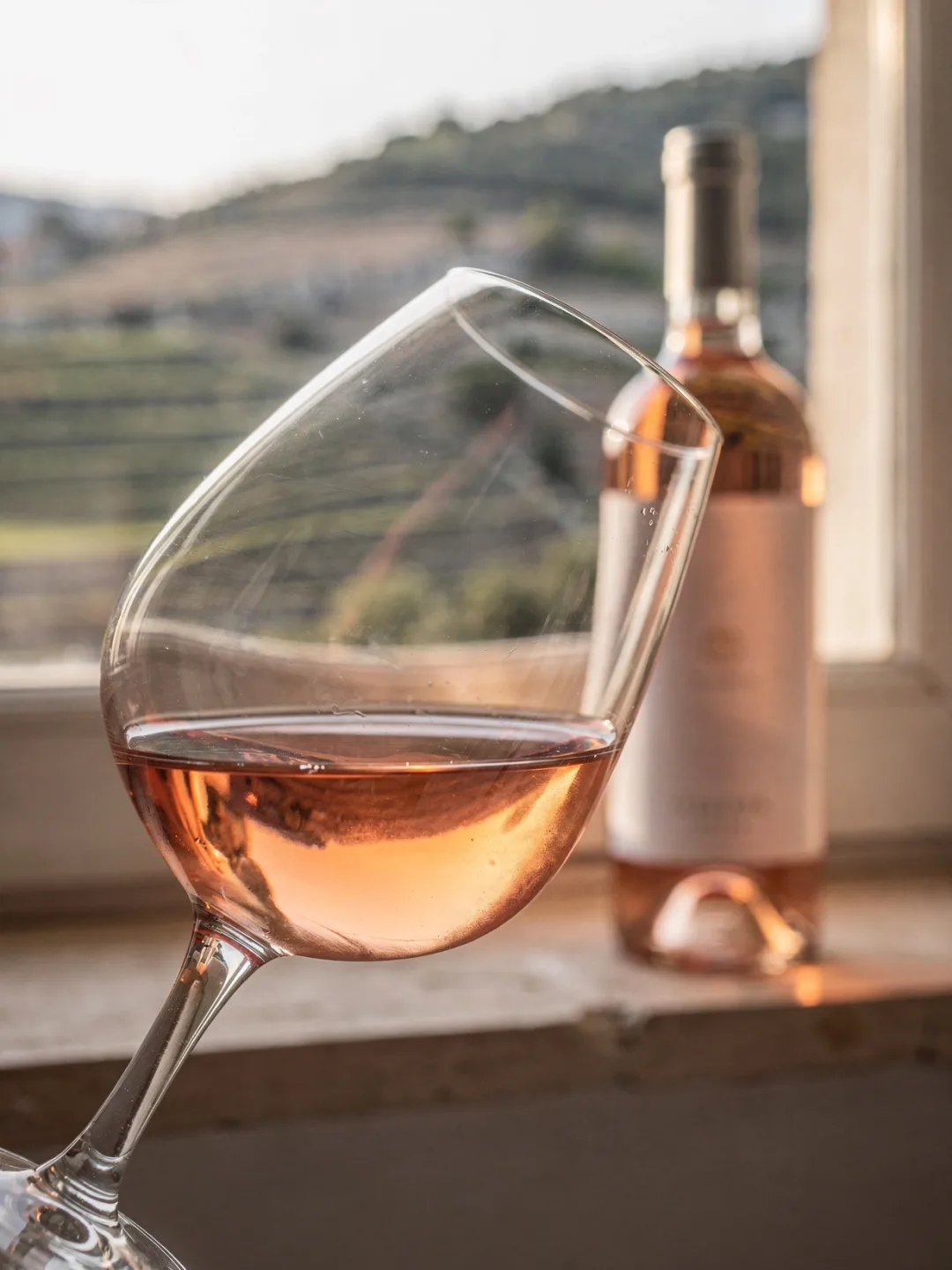
Take a glass of Provence rosé and tilt it against a sheet of white paper. What you see is paler than most people expect. The region's growers' association has even developed its own color chart with fourteen shades, from Sable and Litchi through Peach and Salmon to Cherry and Garnet. A typical Côtes de Provence usually sits toward the pale end of this scale.
Smell first, without swirling. At rest, citrus notes often rise to the top, pomelo above all, along with white peach. Then swirl, and a second picture opens up: red berries, sometimes a trace of fennel or thyme. These are herbs of the garrigue, the fragrant scrubland that grows around many vineyards and practically sends its scent into the air on hot summer days.
On the palate, pay attention to the acidity first, since it carries almost the entire weight here. A rosé made from Cinsault and Grenache has barely any tannin, that rough feeling on the gums familiar from red wine. Instead, it has a bite that keeps the wine from feeling thin despite its lightness. Without this acidity, the wine quickly tastes like sweetened water.
The finish of a good rosé is short but clean, usually three to five seconds. You shouldn't expect much more from this style. A Bandol red made largely from Mourvèdre is entirely different: there, tannin dominates, joined by dark fruit and a touch of wild herbs. The finish stretches on for twenty seconds or longer.
Tasting both side by side gives you all of Provence in two glasses. The pale, cool rosé from the coast and the dark, age-worthy red from the barren hinterland of Bandol — two extremes that the same stretch of land produces at once.