North and South
Glassware
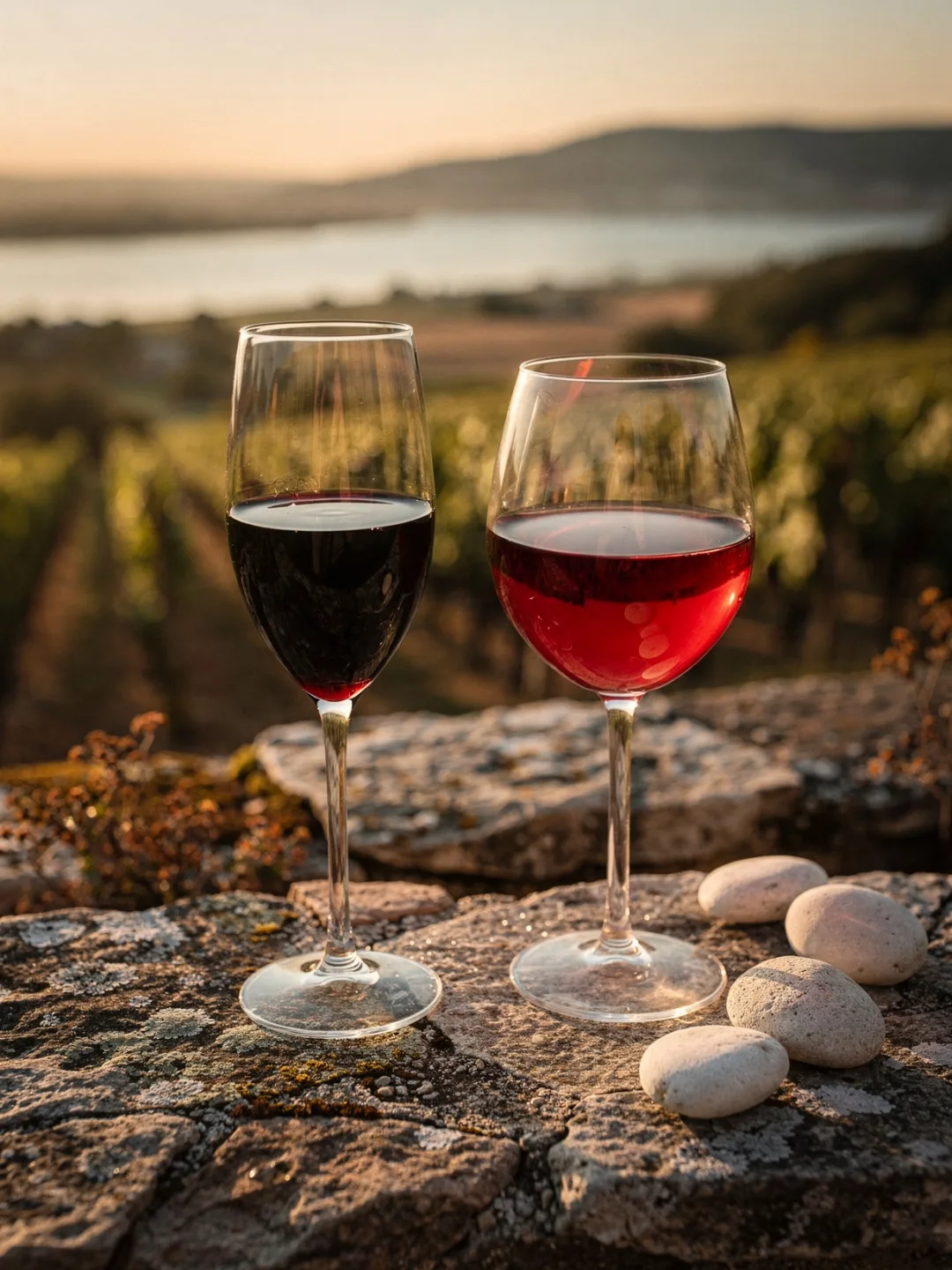
A glass for northern Syrah needs above all one thing: an opening that narrows toward the top. The scent of black pepper and violets is fleeting. A glass that's too wide simply lets it escape over the rim before the nose can catch it, whereas a tall, slender glass with a narrow opening instead concentrates the aroma and sends it upward.
Further south, you need almost the opposite. Châteauneuf-du-Pape and its neighbors often sit between thirteen and a half and fifteen and a half percent alcohol. Add to that plenty of Grenache fruit and little acidity. A glass that's too narrow makes such wines feel heavy and overly alcoholic on the nose. A wide, rounded shape like a Burgundy glass, by contrast, gives them room to breathe. It spreads the alcohol over a larger surface, allowing the cherry and herbal notes to come forward.
The two ends of the valley also part ways on temperature. A young Côte-Rôtie tastes best at sixteen to seventeen degrees Celsius. Any warmer, and its tannin quickly turns rough, the pepper practically scorching on the tongue. A mature Châteauneuf-du-Pape can tolerate a degree or two more — its southern warmth is part of its character and shouldn't be engineered away.
One question nonetheless unites both ends: decanting. A young Syrah from the north benefits from an hour of air, since its aromas start out closed. An old Châteauneuf-du-Pape with sediment needs it for a different reason: it must be separated from the deposit, or the sediment ends up in the glass. Lastly, one rule applies throughout the Rhône Valley: pour only up to the widest point of the glass, never higher, so there's room above the wine for its aroma.