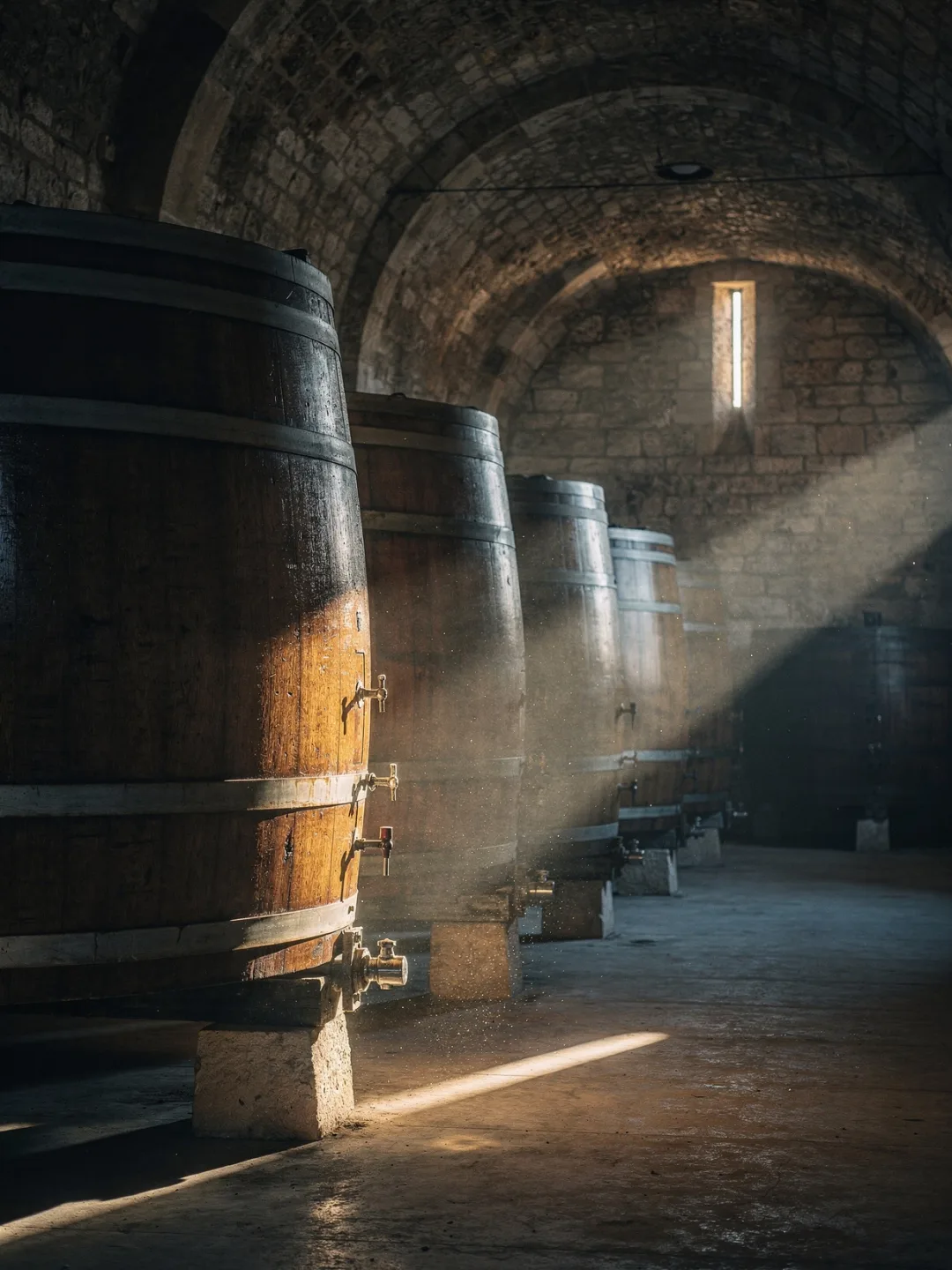
Blending in the Foudre
Winemaking
In the north, cellar work is simple. On paper, at least: only one red variety grows here, so there's no blending at all. Many winemakers still put the grapes whole into the fermentation vats, stems and all, which gives Syrah more structure and a spicy, slightly green note that suits the variety. Those in the Côte-Rôtie who add Viognier do so already during fermentation, not later as a blend. The white grape ferments together with the red, and this joint fermentation binds more color and aroma than a later blend ever could.
Afterward, the wine typically ages in old, large wooden barrels called foudres, holding between thirty and a hundred hectoliters. Unlike small new barriques, they impart almost no flavor of their own and let the Syrah come into contact with oxygen only slowly. That's exactly what it needs to shed its harsh youth. It's not meant to taste of vanilla.
In the south, almost everything revolves around blending, the assemblage. Grenache, Syrah, Mourvèdre, and other varieties age separately, often in different vessels. Only months later does the cellar master sit down with all the barrels and taste blend after blend. In Châteauneuf-du-Pape, almost anything goes, as long as the final wine reaches at least twelve and a half percent alcohol — the highest minimum of any French appellation. Adding sugar to boost strength, however, is expressly forbidden.
This freedom in blending is no accident, but a form of insurance, since Grenache ripens unpredictably — sometimes too sweet, sometimes too thin. A second or third component in the barrel evens that out. What ends up in the bottle is therefore rarely the work of a single variety. It's the result of many small decisions made at the barrel's edge — a craft more important in the Rhône Valley than almost anywhere else in France.