The Mistral Decides
Climate
Two climate zones divide the Rhône Valley, with the boundary running roughly through Montélimar. In the north, around Ampuis and Tain-l'Hermitage, the climate is markedly more continental, with cooler winters and unpredictable springs. Only on the steepest, sunniest terraces do the vines ripen properly at all, which is why the best Syrah sites stand almost vertically above the river.
Further south, the Mediterranean takes over, and Avignon averages around two thousand eight hundred hours of sunshine a year. Summers are hot and dry, winters mild and rainy. In July, daytime temperatures climb to thirty-three degrees Celsius; in January, the high stays at just twelve. The grapes ripen here almost effortlessly — sometimes even too quickly for their own balance of sugar and acidity.
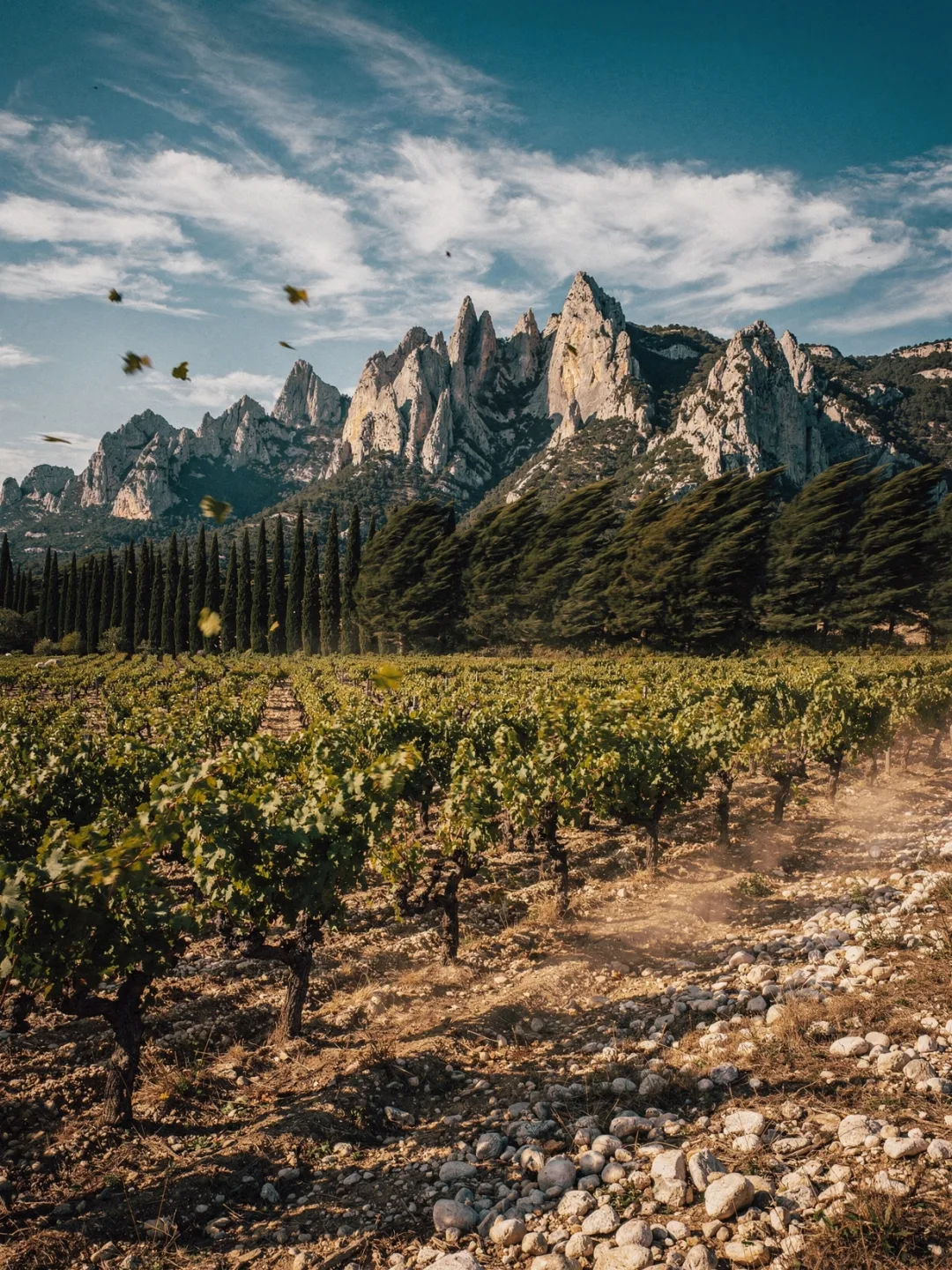
Against this over-rapid ripening, of all things, a wind helps that elsewhere is regarded as a pure nuisance: the Mistral. It blows from the north on about a hundred and fifty days a year, at speeds around seventy-four kilometers per hour, sometimes considerably more. Young vines must be tied to stakes. Otherwise it simply rips them straight out of the ground.
Most winemakers appreciate it anyway. It dries the grapes within hours after every rainfall, preventing rot and fungal disease, and it leaves behind a clear, cloudless sky after every gust. Without it, the southern Rhône would need far more spray treatments in the vineyard. With it, many estates today work almost organically, since the wind takes over a good part of the work that chemicals would otherwise have to do.