Sweet and dry
Glassware
Hardly any French region needs as many different glasses as Roussillon, because hardly any other region makes so many different wine styles from the same grapes. A young, dry Côtes du Roussillon with fourteen or fifteen percent alcohol by volume and plenty of tannin needs a large, bulbous glass. It gives the alcohol room to evaporate and draws it away from the tip of the tongue, where it would otherwise burn.
A Banyuls Rimage, the youngest, fruitiest style, is drunk almost like a regular red wine by comparison: chilled to fourteen to sixteen degrees, in a medium-sized glass that lifts the sour cherry and blackberry aromas before the sweetness overwhelms them.
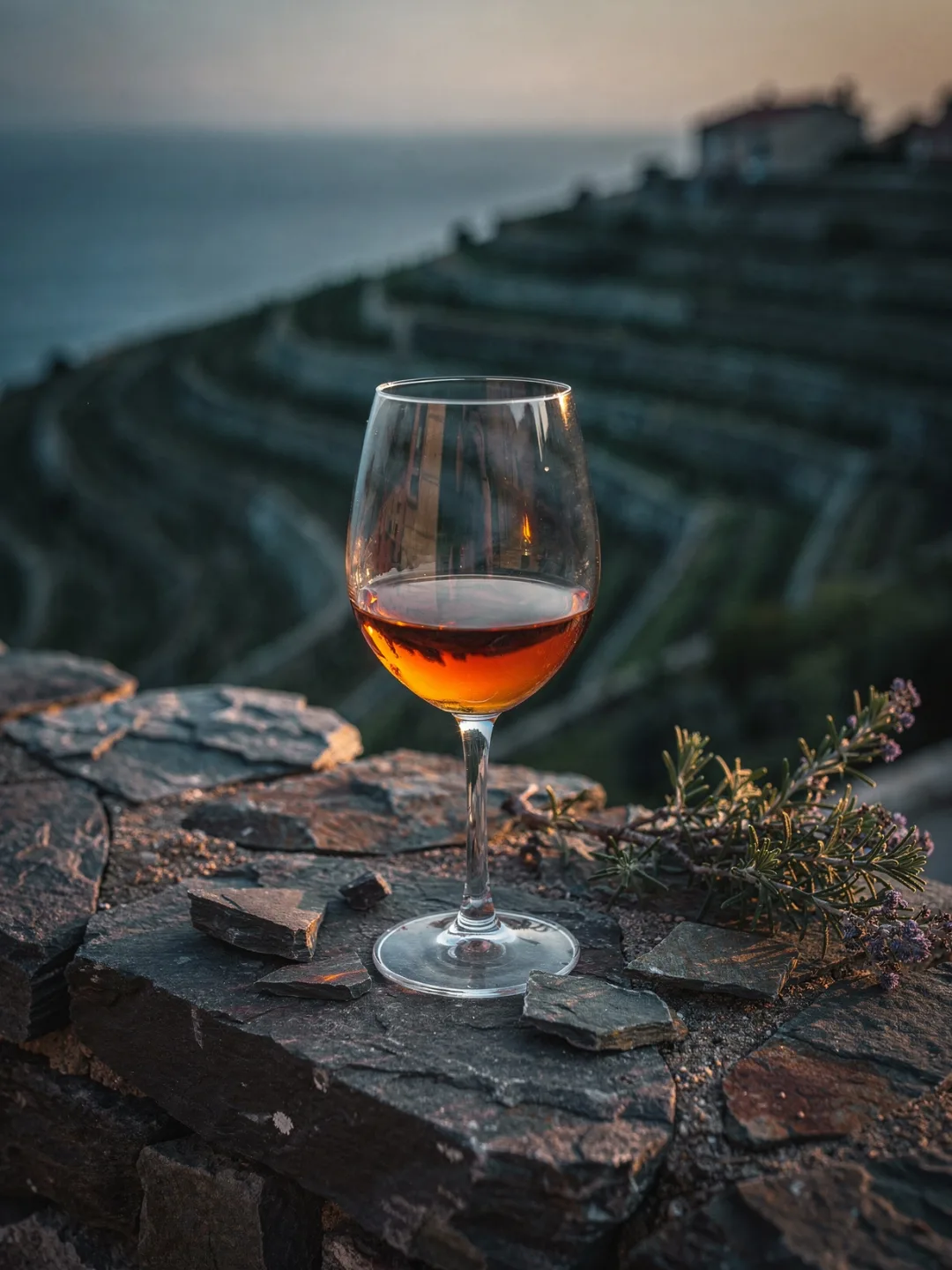
A mature Rancio is a different matter entirely. These wines have deliberately been exposed to oxygen, spending years in partially filled barrels or glass demijohns in the sun. They smell of walnut, coffee, and dried fig rather than fruit. A small glass suffices for them, barely bigger than a sherry glass, often served at room temperature. Chilling would only mask the subtle, oxidative notes. You also drink less of it. Three or four centiliters are enough, because sixteen to eighteen percent alcohol combined with sugar quickly becomes tiring.
Muscat de Rivesaltes, the sweet aperitif made from two muscat varieties, is by contrast served chilled again, around ten degrees. A small, narrow glass concentrates the intense grape aroma instead of losing it in a wide bowl. Four wines, four glasses. Anyone who reaches for a single carafe for everything is throwing away half the winemaker's work.