Mutage & Rancio
Production
Mutage begins in the middle of fermentation, not after it. As soon as the must has fermented to five or eight percent alcohol by volume and still contains plenty of sugar, the winemaker intervenes. Pure, neutral grape spirit at around 96 percent alcohol by volume is added, usually five to ten percent of the total volume. The alcohol shock kills the yeast within hours. What remains is a wine with at least 45 grams of residual sugar per liter and an alcohol content that often ends up between sixteen and eighteen percent by volume. It becomes sweet and strong at the same time, both qualities set from the very start in the must rather than added later.
From here, the paths diverge. Anyone wanting a Rimage, a fruity vintage wine, protects the must from air from this moment on: stainless steel tank or large, neutral barrels, stored cool, bottled early. The fruit — sour cherry, blackberry, licorice — is preserved this way, almost like an ordinary red wine.
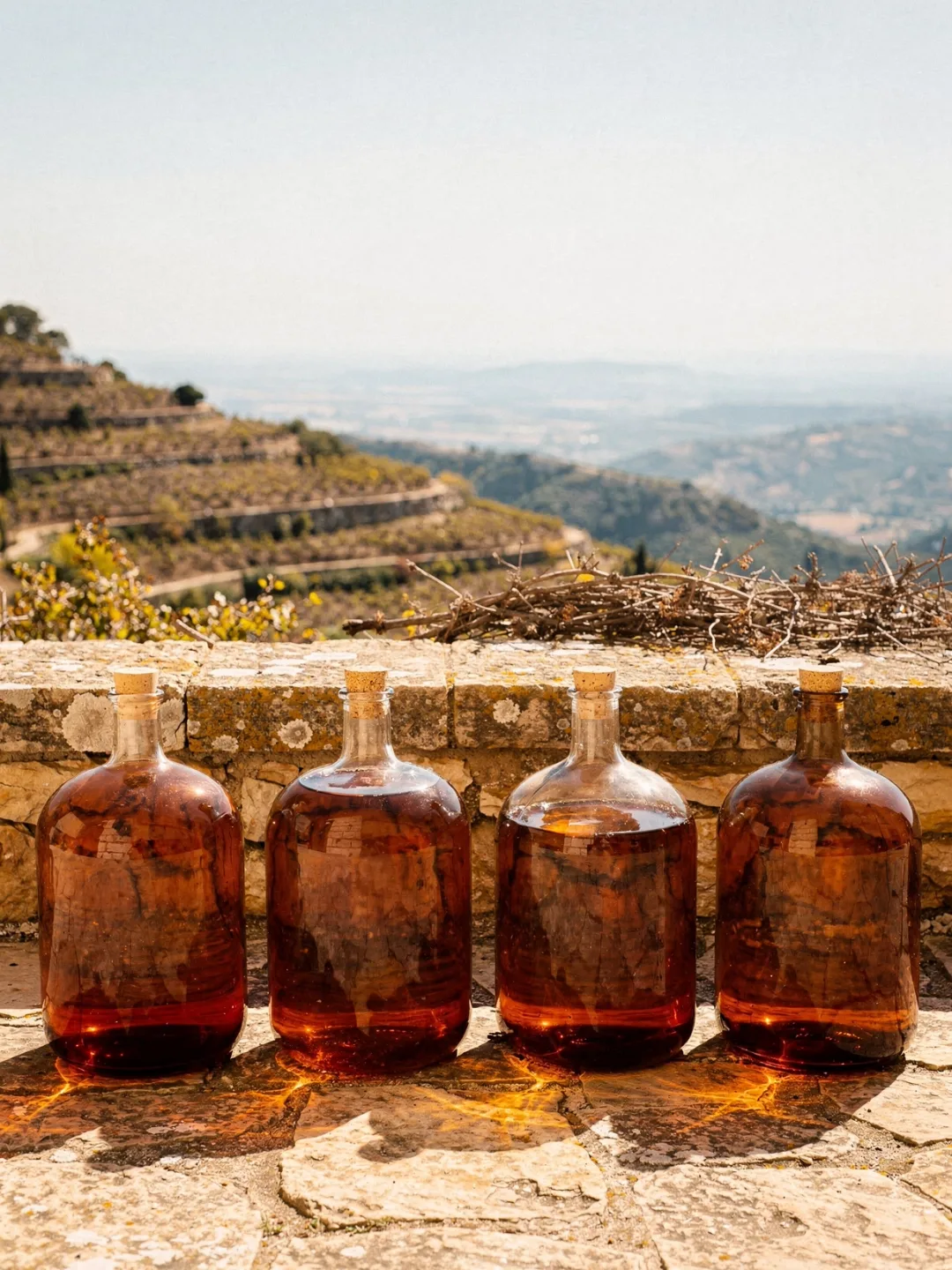
Anyone wanting a Rancio, however, does the opposite. The young wine goes into glass demijohns, known as bonbonnes, and sits outside in the full Roussillon sun for a whole summer. Heat and oxygen deliberately transform it. The fruit disappears, and in its place develop aromas of walnut, dried fig, and coffee, otherwise known only from very old sherry. A Banyuls Grand Cru must then age for at least thirty months in wood before it can even be sold. A Hors d'Âge takes it even further, to five years or more.
The dry red wines of the Côtes du Roussillon follow a calmer path. Grenache, Syrah, and Mourvèdre ferment separately or together for two to three weeks on the skins, so color and tannin can be extracted. Afterward, depending on the level, they age anywhere from a few months in stainless steel tanks to a year in oak barrels for the more ambitious Villages wines. No mutage, no sun in a glass demijohn — just the grapes, the schist, and time.