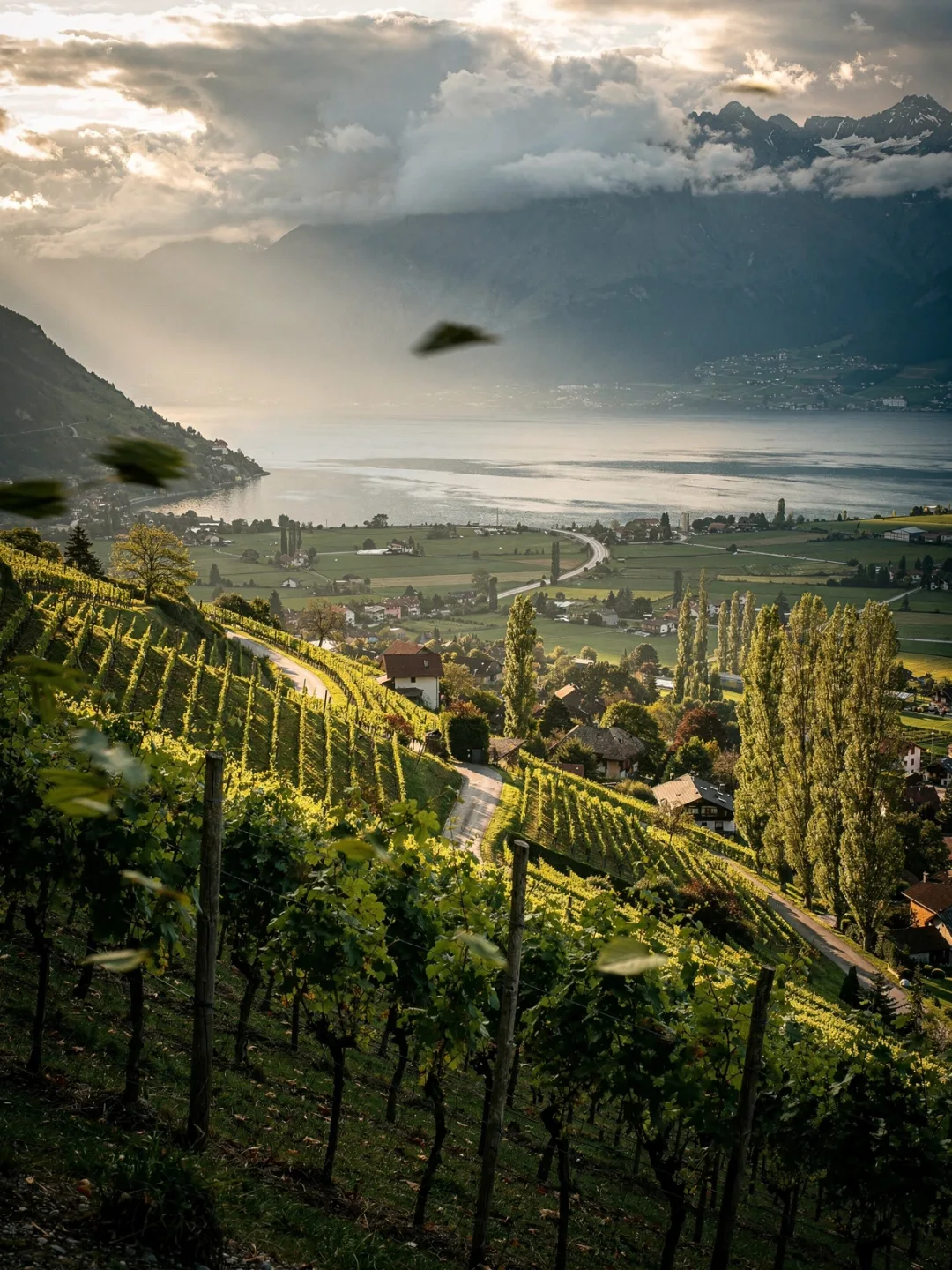
Foehn Wind and Lakeside Location
Climate
Savoie lies farther north than any Italian wine region, and yet wine ripens here reliably. The reason is called "la traverse": a foehn-like southwesterly wind that sweeps through the Combe de Savoie. It warms the air and quickly dries the grapes after rain. Without it, the risk of rot in this damp mountain country would be considerably higher.
It really is damp: between one thousand and twelve hundred millimeters of rain fall annually in the lower elevations, and often more than two thousand millimeters higher up in the mountains. Even so, the region averages around nineteen hundred hours of sunshine a year. That's more than the rainfall figures might suggest, because the sun sits above the slopes while the fog mostly settles in the valley.
Even so, without the right orientation, nothing works. Most vineyards sit between three hundred and six hundred meters, almost always on south- or southeast-facing slopes. At this altitude, every degree of incline determines whether grapes ripen or stay green. In the past, growers ventured up to a thousand meters in the side valleys of Tarentaise and Maurienne; today only a few isolated plots remain, the rest long since returned to meadow.
The great lakes act like radiators. Lac Léman, Lac du Bourget, and the smaller Lac d'Annecy store warmth in summer and release it slowly in autumn, which lowers the risk of frost in the lakeside communities. Around Crépy on Lake Geneva, this is why even a neutral variety like Chasselas ripens reliably. And yet the town sits nowhere near the southern end of any wine map.
Climate change is shifting the clock here too. Warmer autumns particularly benefit the late-ripening Mondeuse, which used to often stay green and hard when October turned too cold. Today, more winemakers than twenty years ago manage to produce a truly ripe Arbin. The early, delicate Jacquère, on the other hand, is increasingly harvested as early as the beginning of September, sometimes three weeks earlier than records from the 1980s show.