Large Bowls, Plenty of Air
Glassware
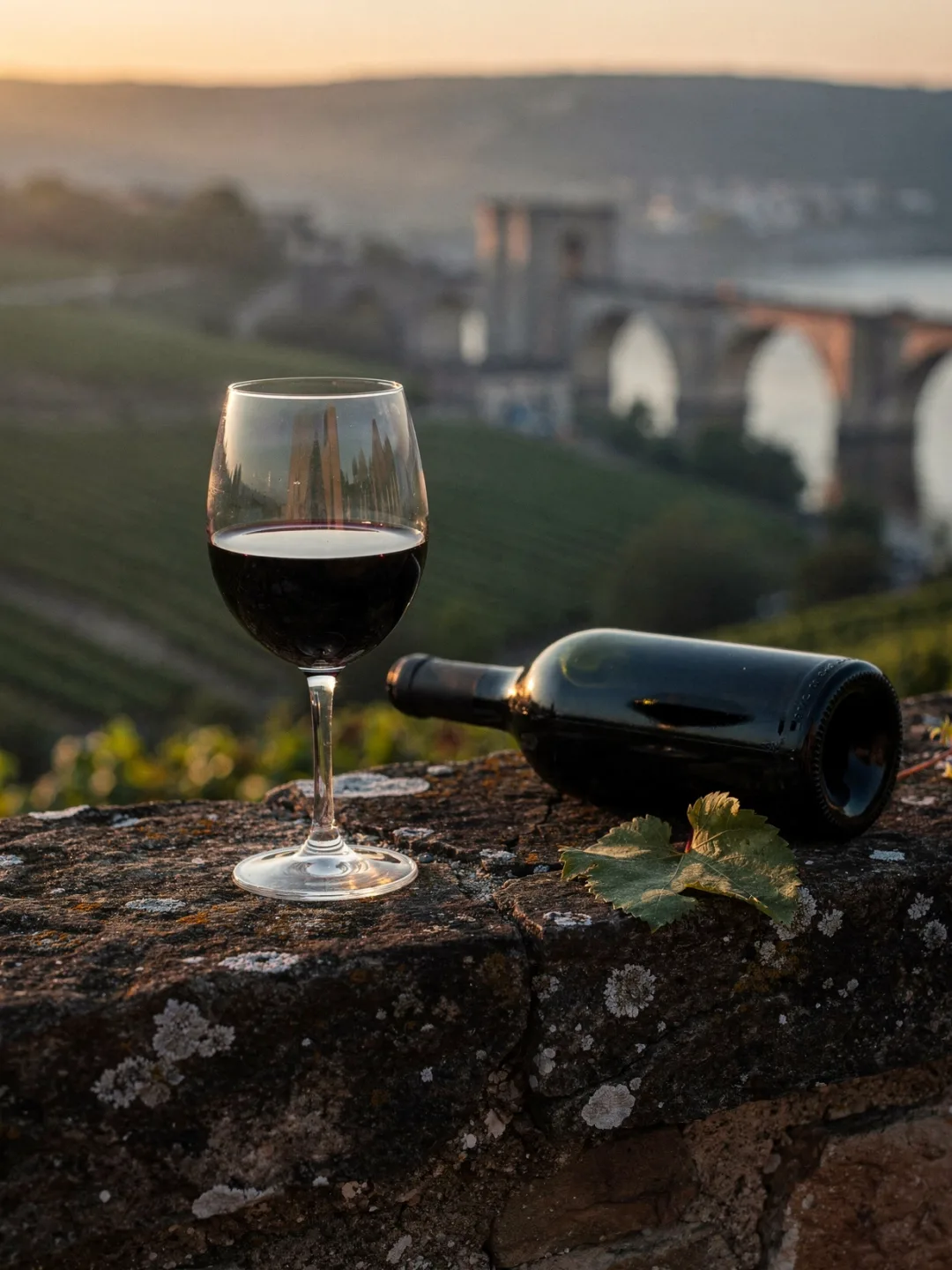
Cahors and Madiran rank among France's most tannin-rich red wines, and that's exactly why they need more room when poured than most others. A wide, tall glass with a large opening brings as much wine as possible into contact with air. Often that's enough on its own. This air noticeably softens the hard tannins even before the first sip reaches the mouth.
A narrow glass, on the other hand, worsens the problem Tannat already has: it concentrates alcohol and tannin at the tip of the tongue instead of spreading both out. It practically hurts. If you don't own a rounded Bordeaux glass, use the largest glass in the cupboard and give it a good swirl before the first sip.
When it comes to temperature, the same rule applies to both red wines as almost everywhere else: sixteen to eighteen degrees Celsius, never the overly warm room temperature of today's homes. Above twenty degrees, the tannin in a Madiran turns almost dusty, while the fruit fades into the background. A young Madiran also benefits greatly from decanting, a good hour before serving. It was precisely this problem of harsh tannins that a Madiran winemaker solved in the nineties with a cellar technique of his own.
Jurançon moelleux demands exactly the opposite: a smaller, tulip-shaped glass and a cooler temperature of eight to ten degrees. Served too cold, the sweet wine tastes of nothing but sugar. Hardly worth the effort. Too warm, and the alcohol pushes forward, overwhelming the delicate apricot and honey notes that Petit Manseng only fully develops after years.
And one more thing sets the two worlds apart: the pour. Less is more. A Cahors gets filled to the widest point of the glass, a good hundred fifty milliliters. A Jurançon moelleux, by contrast, is poured to only a narrow third—with this intense sweet wine, a small glass is enough for an entire evening.