Malbec, Tannat, Manseng
Grape Varieties
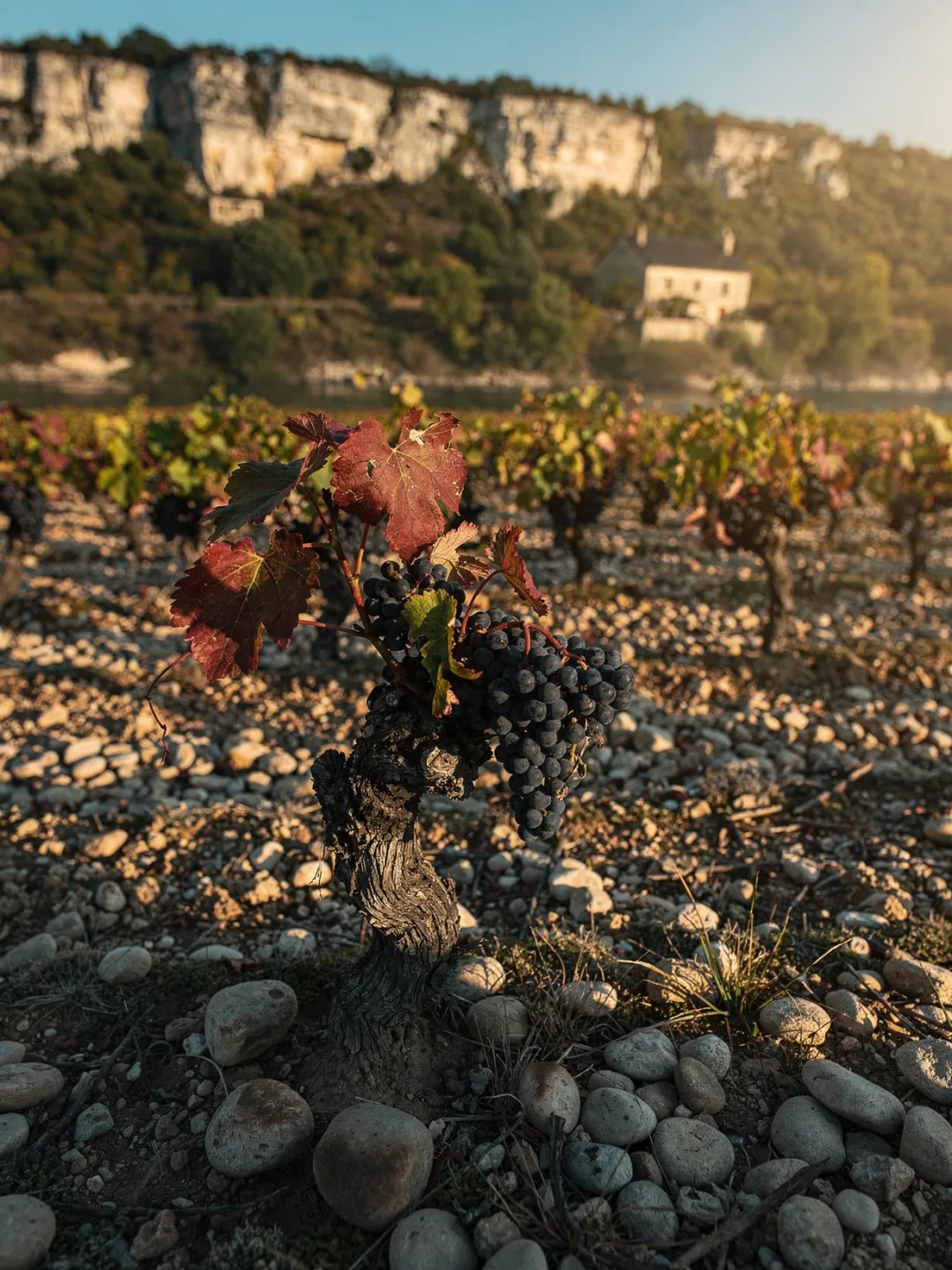
Four grape varieties give the four most important wines of the Southwest their character, and each is barely known elsewhere in the world. In Cahors it's officially called Côt, locally Auxerrois, but traded under its most famous name: Malbec. At least seventy percent of a Cahors must consist of it, the rest may be Merlot or Tannat. Malbec has thick, pigment-rich skins, which is why the wine appears almost opaque and dark in the glass.
In Madiran, an even harsher variety reigns. Tannat probably owes its name to the French word for tannin, and that's no coincidence: it ranks among the most tannin-rich red wine grapes in the world, with thick, seed-heavy berries full of polyphenols. According to the regulations, its share must lie between forty and eighty percent, supplemented by Cabernet Franc, Cabernet Sauvignon, or Fer. A young Madiran can have so much tannin that it practically dries out your gums.
Jurançon, on the other hand, lives off two white sisters. Petit Manseng has tiny berries and such a thick skin that it barely rots, but instead shrivels into a raisin on the vine. Gros Manseng delivers more volume and more acidity, but less sugar. Together they produce both dry and sweet wines under the same appellation name, distinguished only by the word on the label: sec or without any addition.
Gaillac is the region's grab bag of surprises. Among the whites, Mauzac and Len de l'Elh dominate—literally Far from the Eye, because their berries hang far from the stem. For red and rosé, Duras, Fer, and Syrah together must make up at least sixty percent, while the young Primeur is traditionally made from Gamay. Bergerac and Monbazillac, finally, rely on Sémillon, Sauvignon Blanc, and Muscadelle—the same blend that also thrives in Bordeaux, just sold under a different name.
What unites these varieties is their rarity outside their own homeland. Cabernet Sauvignon now grows on every continent, while Tannat is found almost nowhere except here and in Uruguay, where Basque emigrants brought it in the nineteenth century. Anyone who wants to understand Malbec, Tannat, or Manseng must therefore come here. Elsewhere they are, at most, a footnote.