Clay over Limestone Marl
Soils
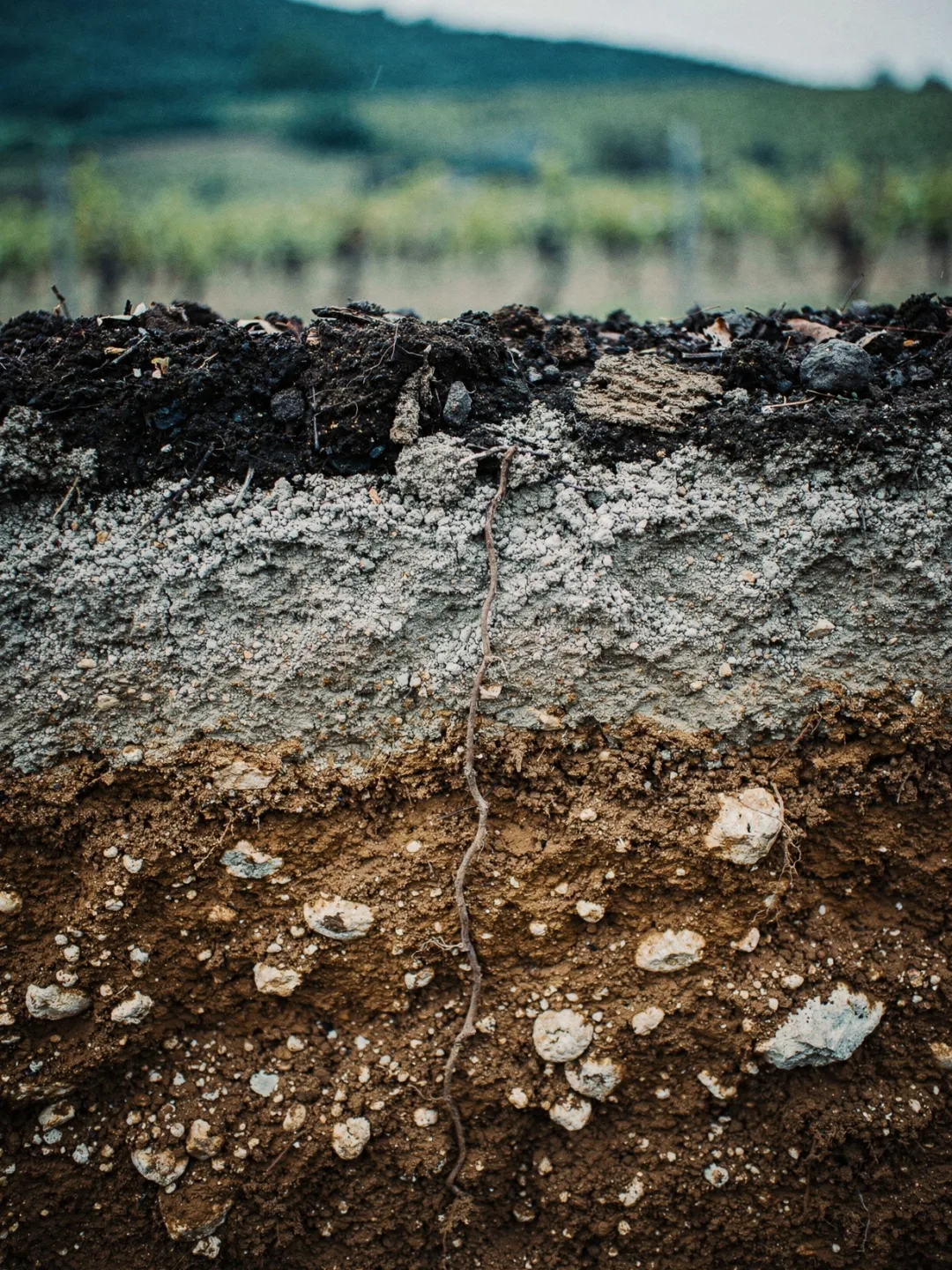
Dig a hole in a vineyard near Sviri. No rock appears here, only fine, heavy clay. This is the eastern edge of the Colchis lowlands, built up over millennia by the Rioni and the Qvirila, the two rivers that meet here.
In the top thirty centimeters lies a thin, dark layer of humus, but with a meter and a half of rain a year, it doesn't last long — whatever nutrients last autumn's leaves provided are largely washed away again by the next downpours.
Below that begins a pale, almost bleached layer of clay. Experts call these bleached soils, because constant moisture leaches iron and minerals downward. Vines find little to draw on here, with nitrogen and phosphorus below average. But it's precisely this scarcity that forces the roots to grow deeper than they would in more fertile ground.
Only at around seventy centimeters does firm, lime-rich clay begin. It is humus-calcareous and brown, with a notable lime content in places, exceeding ten percent in some sections. This layer stores the water the vine needs in August, when evaporation is almost as high as the rain still falling that month.
On the gentle hills above the valley floor, this third, lime-rich soil often lies close to the surface. That's where the best grapes for Sviri and Obcha grow. On the valley floor itself, by contrast, often only the leached middle layer extends down deep. There, wine grows for the everyday table, not for the bottle bearing an appellation name.
A thin, dark layer of leaves and root residue, quickly washed out again by a meter and a half of annual rain.
The root: The fine roots draw on whatever the last rain brought — and are usually the first to dry out again.