Width Instead of Narrowness
Glassware
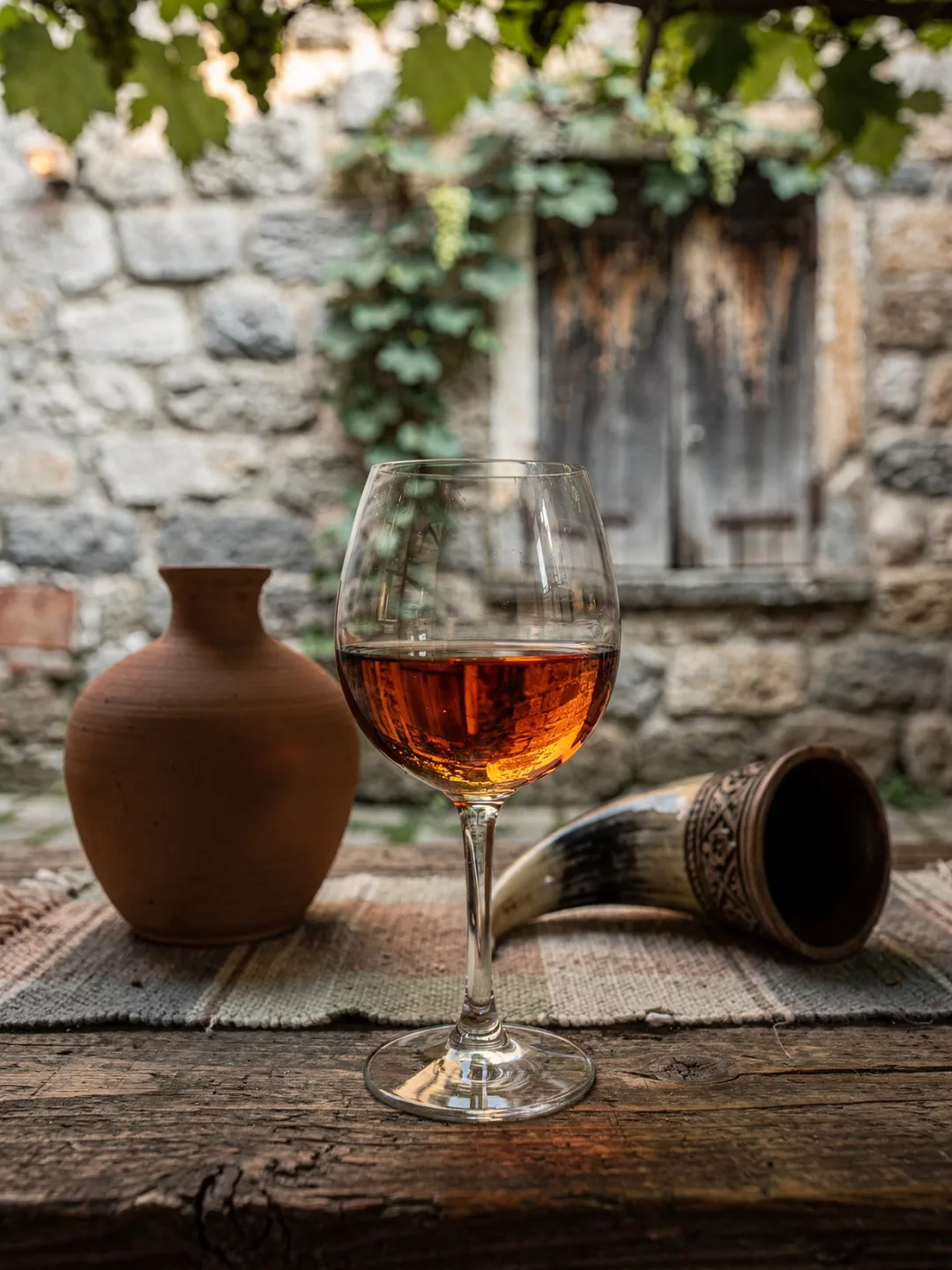
Traditionally, wine here is drunk from a Kantsi, a hollowed-out buffalo or ram's horn that can't be set down until it's empty — handy for a toast at a Georgian table, but useless for actually smelling a wine. For Tsitska, Tsolikouri and Krakhuna from the Churi, a different vessel is needed.
The reason is maceration — the time the must spends on the skins before being pressed. It gives these white wines something ordinary white wines don't have. A touch of tannin, for instance, the rough sensation in the mouth otherwise known only from red wine. A narrow, small glass traps too much of that in and pushes the acidity to the front. A glass with a wide, round bowl works better, the kind normally used for a full-bodied white Burgundy. The space above lets the heavier aromatic compounds rise without smothering the wine's freshness.
When it comes to temperature, amber wine sits between white and red. It doesn't fully belong to either. Twelve to fifteen degrees Celsius is right. That's cooler than a full-bodied red wine needs, but noticeably warmer than most white wines get straight from the fridge. Otherwise aromas like dried apricot and chamomile disappear completely behind the chill.
This doesn't apply to the rare red Otskhanuri Sapere from Obcha. It gets a normal, narrower red wine glass. Its tannins are already powerful enough and need no extra width. Only with the amber-colored whites from Tsitska, Tsolikouri and Krakhuna does the shape make the difference between a wine that tastes of nothing and one that smells of chamomile, quince and dry hay.