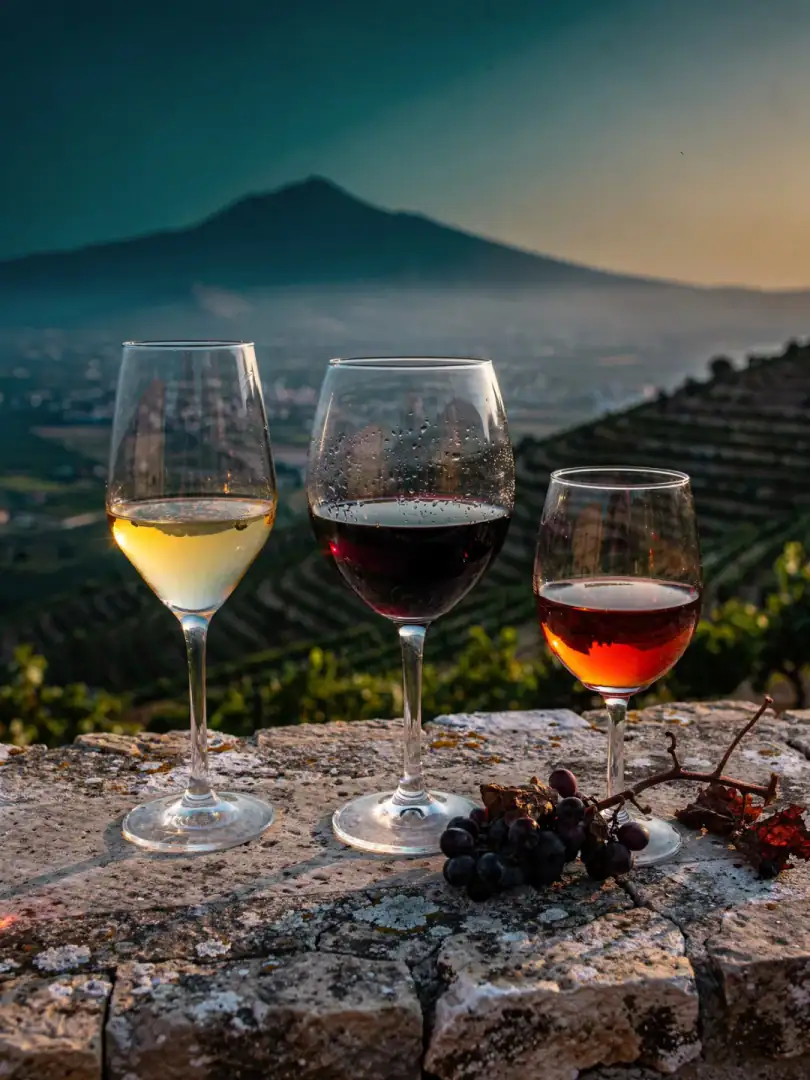
White, Red, Sweet
Glassware
A glass changes how much aroma reaches you, and with Vidiano that makes a real difference. The variety carries apricot, peach, and bergamot on the nose, delicate aromas that simply drift away in a wide glass. A glass with a full bowl narrowing toward the rim instead gathers them above the nose before they escape. The narrower the opening, the longer the aroma stays trapped.
Vilana doesn't need this effort. Its aromas are understated, citrus and green apple, and a simple, straight-sided white wine glass is entirely sufficient. An expensive glass wouldn't conjure up anything that isn't there.
With the red blend of Kotsifali and Mandilaria, the rule flips. Mandilaria brings plenty of tannin and acidity, and too small a glass presses both together, making the wine feel angular, whereas a bowl-shaped glass with plenty of air in the upper third gives it enough room to open up and soften. In it, Kotsifali's soft cherry fruit rounds off Mandilaria's sharper edges.
Many people get the temperature wrong. A Kotsifali-Mandilaria red tastes best at fourteen to sixteen degrees Celsius, cooler than a heavy red from the mainland. Crete is hot, but the wine itself doesn't handle warmth well — it pulls alcohol and acidity apart. Vilana and Vidiano belong in the glass at ten to twelve degrees, cold enough to taste fresh. But not so cold that Vidiano's apricot note freezes up.
Sweet Liatiko from Sitia or Dafnes belongs in a small glass, no more than six to eight centiliters. It's served chilled, at eight to ten degrees. It's dense, sweet, and high in alcohol, and a large glass full of it overwhelms the palate before the bottle is empty. A finger's width is enough to taste fig, raisin, and the long, warm finish, without the first sip already being too much.