Grape, Sun, Barrel
Winemaking
Not all grapes ripen at the same pace: Kotsifali comes early, Mandilaria later. Still, the two varieties stand mixed together in many old vineyards, vine next to vine, as was once common everywhere. Winemakers then harvest them on the same day to bring them to the press together. In Archanes, this is even required: the regulations there mandate co-fermentation of both varieties, not separate fermentation. Those who ferment them separately and blend afterward in the tank can control the proportions more freely. But the traditional path remains co-fermentation.
Liatiko likely takes its name from the Greek word for July, Iouliatiko. The name suggests it ripens early. Even so, it's usually harvested only in August today, because modern clones ripen later than the variety whose name once referred to July. For dry wine, everything afterward proceeds as with any other red grape.
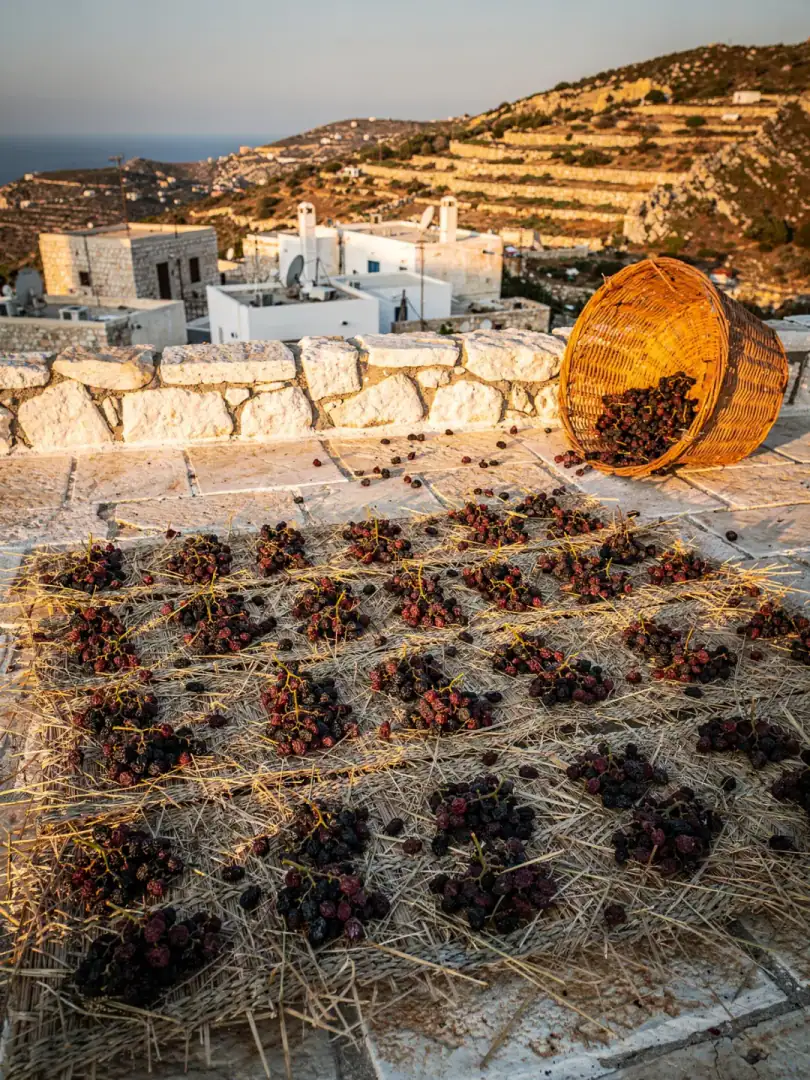
For the sweet Liatiko from Dafnes or Sitia, things go differently. After harvest, winemakers spread the grapes on straw mats or nets in the sun, sometimes for several weeks, until the berries shrivel and the sugar concentrates within them. Only then do they go to the press. What emerges is a dense, dark must with so much sugar that the yeast eventually gives up on its own, long before fermentation is complete.
For white wine, most estates rely on stainless steel rather than oak, to protect the fruit of Vilana and Vidiano. Barrique would quickly mask the delicate apricot note. Some estates still give their Vidiano a few months in used oak barrels to build texture, without the wood itself coming through in the taste. For sweet Malvasia wines from Handakas or Sitia, regulations require a minimum of twenty-four months in oak before the bottle can be sold.