Tasting a Kotsifali
Tasting
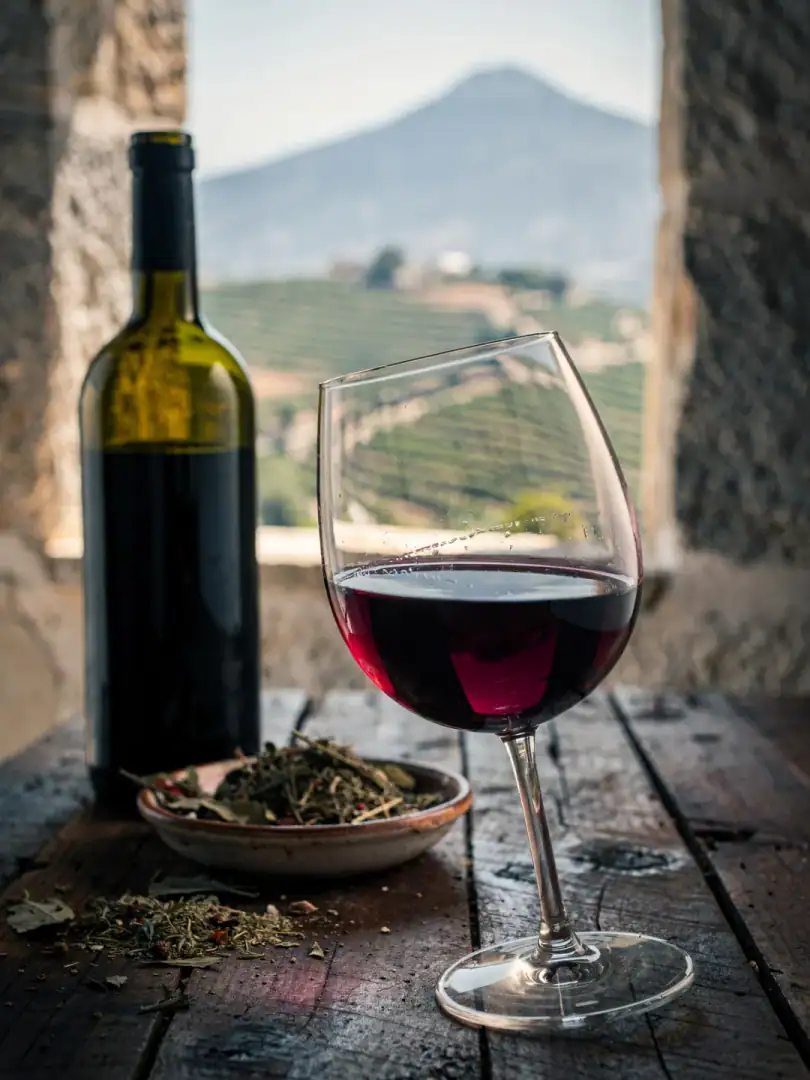
Hold a glass of Peza red at an angle over a white sheet of paper and look at the rim where the wine thins out — that's where its age shows: young, it glows violet-ruby; after a few years, the color shifts toward brick red. That it never turns quite as dark as a Cabernet is thanks to Kotsifali. The variety has barely any pigment in its skin. Even the darker Mandilaria in the blend only partly makes up for it.
Smell it twice: once without swirling, once after. In the still glass, the lighter aromas rise first: ripe cherry and a hint of clove, typical of Kotsifali. Only after swirling do the heavier molecules emerge, which take longer to release — with Mandilaria, that means dark forest berries and an earthy, almost dusty undertone reminiscent of dry herbs on a summer hillside.
In the mouth, pay attention to two separate sensations. You feel the acidity along the sides of the tongue, making the saliva flow. It's what keeps the wine fresh despite the Cretan heat — mostly Mandilaria's doing. The tannin, on the other hand, feels like a dry, slightly rough coating on the gums. Because Kotsifali brings almost none, the whole wine feels softer. Its darker relative alone wouldn't have allowed for that.
Finally, count: how long does the flavor linger after you swallow? Two seconds counts as short, fifteen as long, and professionals call this the finish. In a good Archanes red, it often lingers surprisingly long. In the end, a hint of clove remains, which could just as easily come from the glass as from memory.