Meltemi and Elevation
Climate
The Meltemi blows from the north across the Aegean almost daily in summer. On Crete's north coast, it hits the vineyards directly and dries the leaves within a few hours of every rain. Fungal diseases need moist leaves. They find little foothold here, which is why a striking number of estates in Dafnes and Archanes now farm organically without much extra effort.
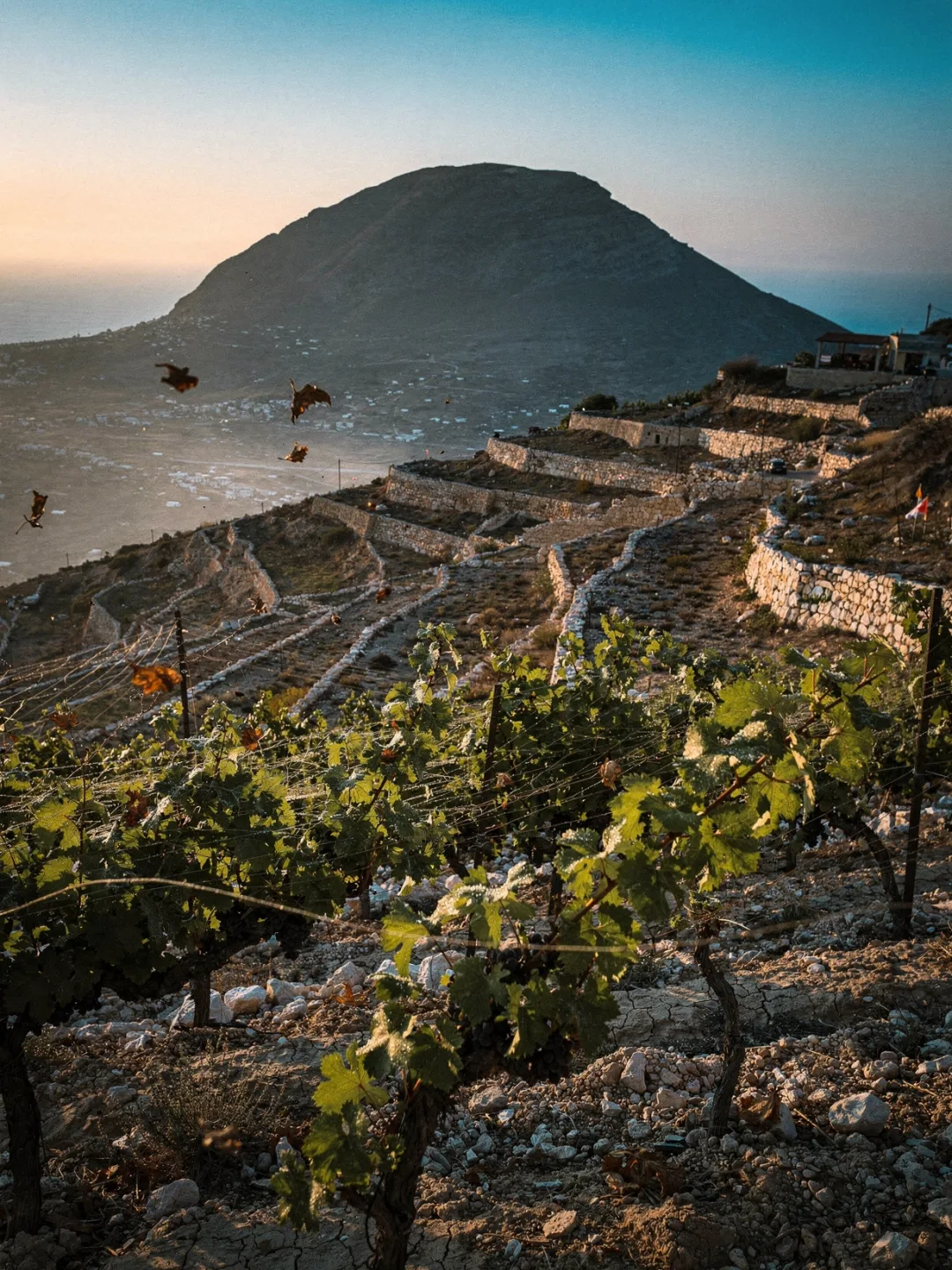
Elevation matters here more than the map suggests. Peza requires sites above three hundred meters for its white wines. The zone's highest vineyards climb as far as eight hundred. Archanes sits in between, at three hundred to four hundred fifty meters, on the slopes around Mount Youchtas, which from the west looks like a sleeping face — according to legend, that of Zeus, whose tomb is said to lie up there.
What elevation truly delivers becomes clear at night. In the higher vineyards around Archanes, the thermometer climbs to thirty-four degrees Celsius during August days. At night it drops to eighteen. This wide swing between day and night preserves acidity in the grape, while down on the plain, with steady heat, it fades faster. A wine from the valley therefore often tastes round and tired, one from the slope fresh and taut.
In the southeast, around Sitia and Ierapetra, it's even hotter. There, the Libyan Sea warms the coast, not the cooler Aegean. Harvest on Crete often begins as early as mid-August, one of the earliest picking seasons anywhere in Europe. Some winemakers bring in their Vilana before the height of summer. Liatiko for the sweet wine, by contrast, is deliberately left hanging until the sun has baked the last sugar into it over many weeks.