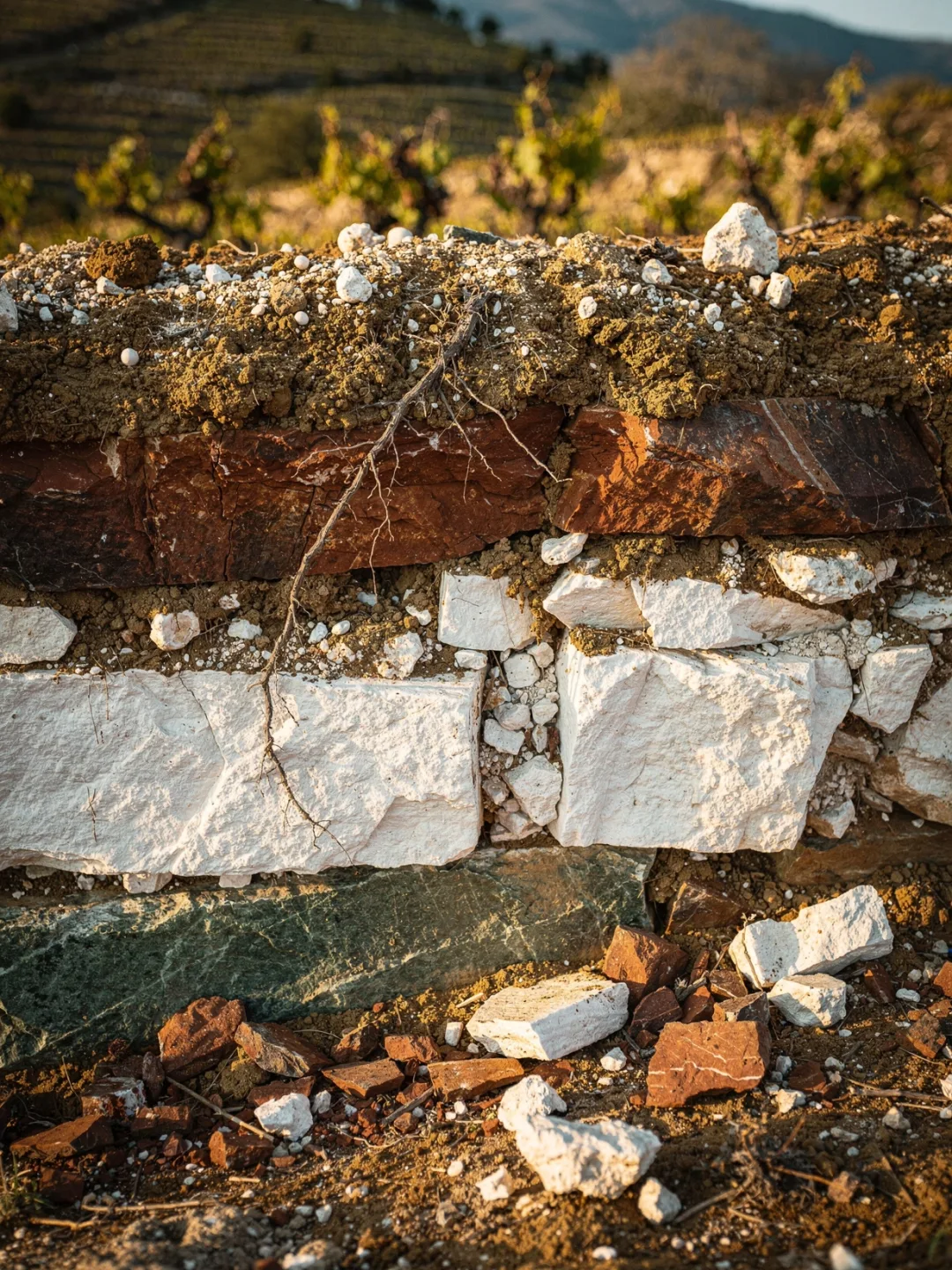
Limestone, Schist, Serpentinite
Soils
Dig a hole in a vineyard near Giannakochori, and you won't hit one soil — you'll hit several at once. Soil scientists from the University of Thessaloniki have divided the zone into thirteen subsoils. Here, volcanic rock, limestone, and river gravel alternate within a tight space — sometimes brecciated limestone, sometimes red schist, sometimes greenish serpentinite from an ancient seabed.
At the surface, the earth is mostly brown to ochre, medium to heavy, well-draining and rich in active limestone. This limestone is the true director behind the glass. It binds potassium in the soil, and potassium is the element the vine uses to neutralize its own acidity. Where limestone is abundant, the root gets less potassium, and the wine stays noticeably more acidic. Xinomavro is especially sensitive to this: it's considered a potassium-loving variety. Deficiency shows up immediately in the leaves, long before it can be tasted in the wine.
Beneath this top layer, things turn stony. Around Lefkadia and Kopanos lie beds of red schist alongside brecciated limestone. They're hard enough that roots must force their way between the plates. Further north, near Stenimachos and Trilofos, flysch from an ancient seabed mixes in. This fine-grained, layered rock holds water differently than the limestone beside it.
In some sites, especially toward Polla Nera, serpentinite appears instead — a greenish-gray rock from the ocean's crust, once thrust upward here. Where it dominates, limestone is nearly absent, the soil turns acidic, and iron and magnesium take over instead of calcium. Wines from there taste earthier and show less of the high acidity usually associated with Xinomavro.
This diversity within such a small area has consequences. Growers in Naoussa have always vinified single sites like Ramnista separately. Two vineyards, three hundred meters apart, can sit on completely different rock. They taste accordingly, without anything changed in the cellar.
Brown to ochre-colored, medium-heavy earth with a high proportion of active limestone. Well-draining, low in available potassium.
The root: This is where the fine roots sit. The limestone binds potassium that the vine needs to regulate acidity — one reason for Xinomavro's high acidity.