Vermio as a Shield
Climate
Lay a weather map over Naoussa and you'll see two climate zones that don't really belong together. By the Köppen scale, the area is Mediterranean-temperate with distinctly continental traits — a label rare enough to be worth mentioning. In summer the thermometer climbs to as high as 35 degrees Celsius; in winter, snow occasionally falls on the vineyards.
Right between these two extremes lies the explanation for why Xinomavro is allowed to hang on the vine so long. About 650 millimeters of rain fall each year, most of it in autumn and winter — just in time for the roots, but not for the ripening grapes. More than two thousand hours of sunshine and over two thousand five hundred degree-days come together. They ensure the berries still ripen fully before the cold arrives.
Altitude and orientation turn the same zone into six different climates. The vineyards of Trilofos and Stenimachos sit only one hundred to one hundred fifty meters above sea level. They count among the hottest sites in the zone. During ripening, temperatures here exceed 30 degrees on more than fifty days. Head instead toward Fyteia or the mountain sites above Arkochori, and already at over 350 meters you find noticeably cooler, damper air, with the highest rainfall of the whole zone throughout the entire growing season.
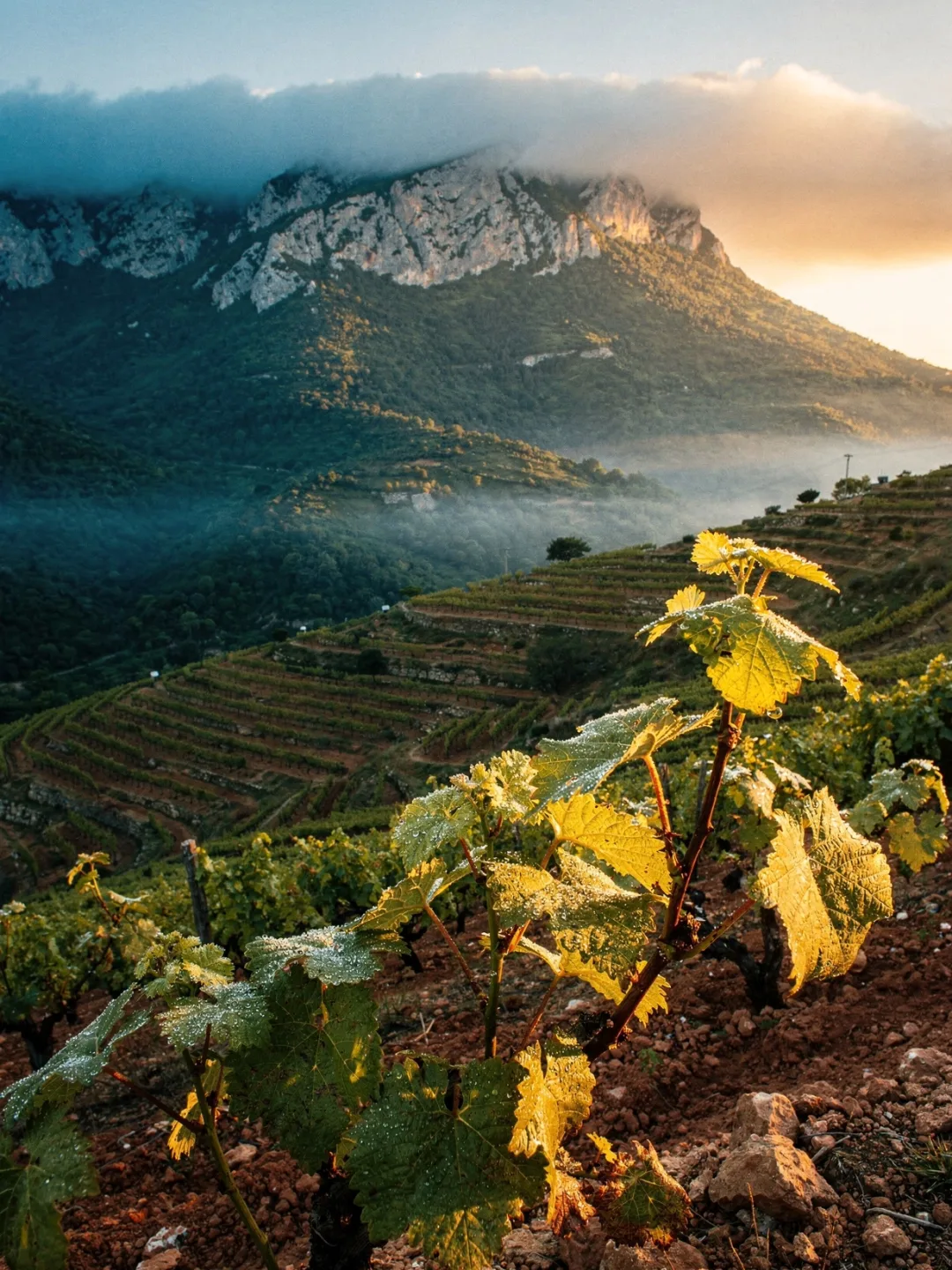
The Vermio mountain range at the vines' back is more than mere scenery. It blocks cold northerly winds and lets the southeast-facing slopes catch the sun almost undisturbed. This exact combination is what a late-ripening variety like Xinomavro needs. Without this shelter, the grape would never even make it past September.
And September is the decisive month. Xinomavro reaches ripeness only a few days before autumn temperatures noticeably drop. This narrow window shifts year by year with climate change: where harvest once began in early October, it now often starts in mid-September. Growers at higher elevations are grateful for every meter their vines sit above the valley floor.