A tulip, not a balloon
Glassware
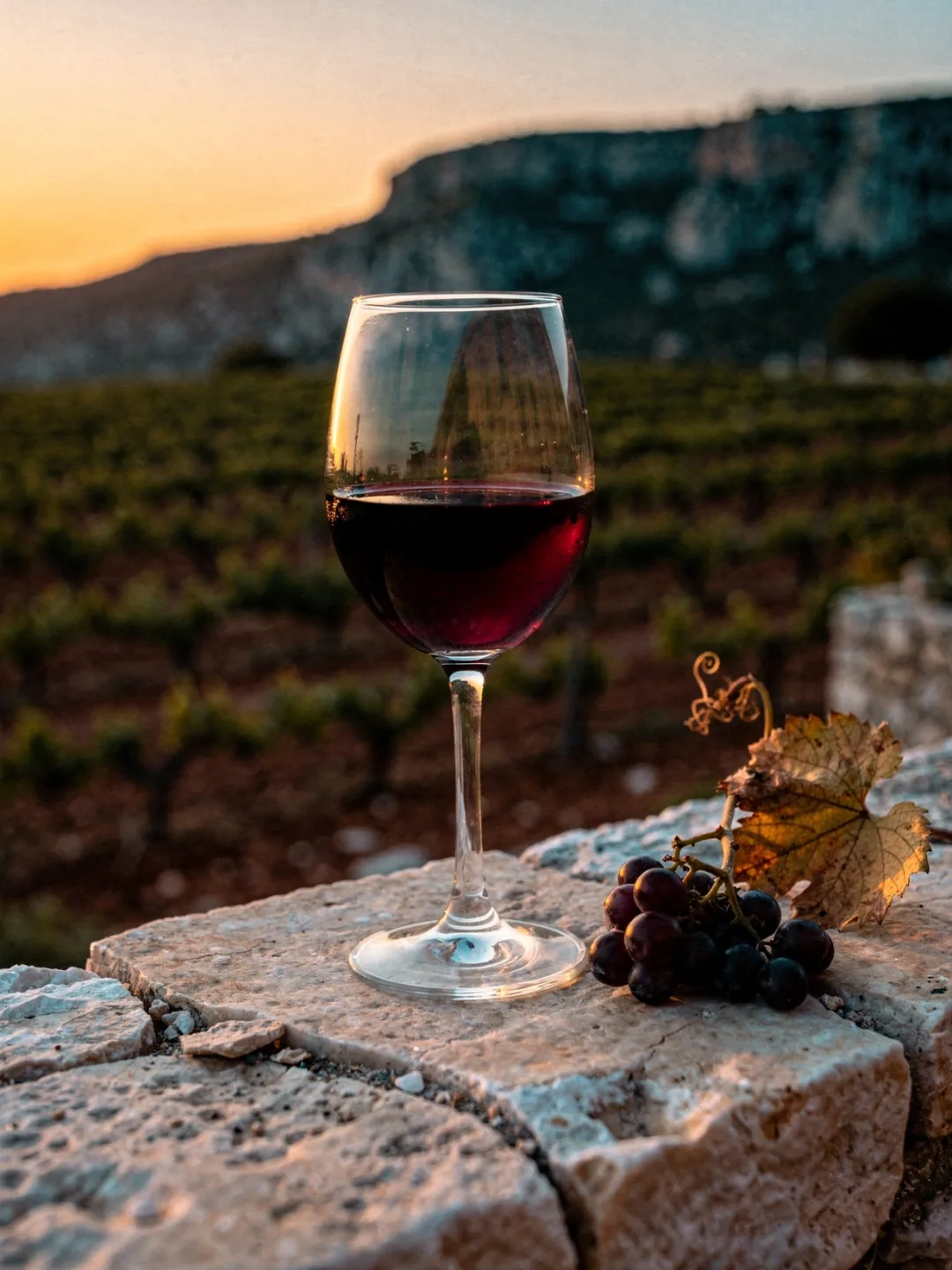
A glass changes what actually comes through from a wine. It determines how much air the wine gets and where its aroma flows. With Agiorgitiko, this stands out especially, since the variety brings plenty of fruit, moderate acidity, and a round, almost soft tannin — the velvety grip in the mouth that red wine gets from the grape skins.
A very wide glass, the kind used for a very acidic wine, would practically dilute this fruit. The aromas would dissipate too quickly. A glass too narrow, on the other hand, traps precisely the delicate violet and spice notes that define an aged Nemea. A medium-tall, slightly rounded glass with an opening that narrows again at the top strikes the balance: room for the fruit, a funnel for the aroma.
When it comes to temperature, the two worlds of Nemea diverge sharply. A young Agiorgitiko fermented with a short maceration time tastes best lightly chilled, at fourteen to sixteen degrees Celsius, almost like a robust rosé. An aged reserve, however, needs sixteen to eighteen degrees. Served colder, it seals in exactly the plum and tobacco notes you open it for in the first place.
A young wine from the steel tank needs no decanting. A reserve that has aged three or four years, usually half of that in oak, benefits instead from half an hour to a full hour of air before it reaches the glass. A gentle decanting also helps. Over the years, a fine sediment settles at the bottom of the bottle.
Never pour more than up to the widest point of the glass, roughly a tenth of the bottle. The rest stays air, where the aroma gathers before it even reaches the nose.