Steel tank or barrique
Production
The skin stays in the tank during fermentation. This makes all the difference between a pale rosé and a deep, dark Agiorgitiko. Press the grapes almost immediately, and little color or tannin remains in the wine; let the skins sit with the must for weeks, and you draw out both in full strength.
For the light, fruity style, some winemakers turn to carbonic maceration, in which whole, unbroken grapes ferment inside their own skins under carbon dioxide before any pressing takes place at all. The resulting wine tastes intensely of strawberry and cherry, almost without tannin. Such wines often reach the market just weeks after harvest.
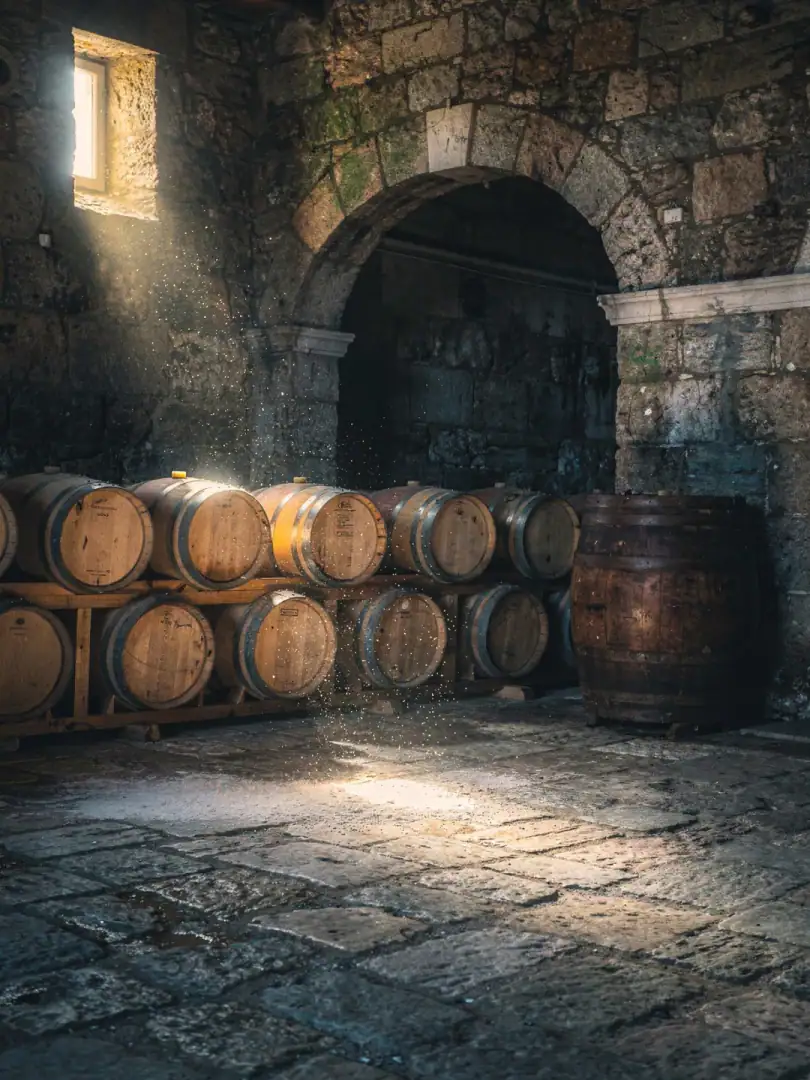
For the more serious wines, maceration lasts two to four weeks, after which the wine goes into barrel. Where large, old wooden casks once stood, imparting little aroma, the wines today often age instead in smaller barriques of French or American oak, each holding just 225 liters. This brings noticeably more vanilla and toasted notes into the finished wine. Whether that suits Agiorgitiko remains a point of debate among winemakers to this day.
Greek wine law recognizes two protected tiers for such aged red wines. A Nemea may be called Reserve if it has aged a total of three years, of which at least six months in oak and a further six in bottle. Grande Reserve requires four years total, with at least two years each in barrel and in bottle. Some estates exceed these minimums in practice.
Both paths exist side by side. The region's large cooperative has for decades bottled simple, everyday Nemea wines for the daily table. Smaller estates, like those in Koutsi or Gymno, have shown since the nineties just how long the same Agiorgitiko can age in the cellar without tiring.