Altitude beats heat
Climate
Nemea lies far enough from the coast that summers here turn drier and hotter than along the nearby Gulf of Corinth. Rain falls almost exclusively between autumn and spring. Between June and August, weeks often pass without a single drop.
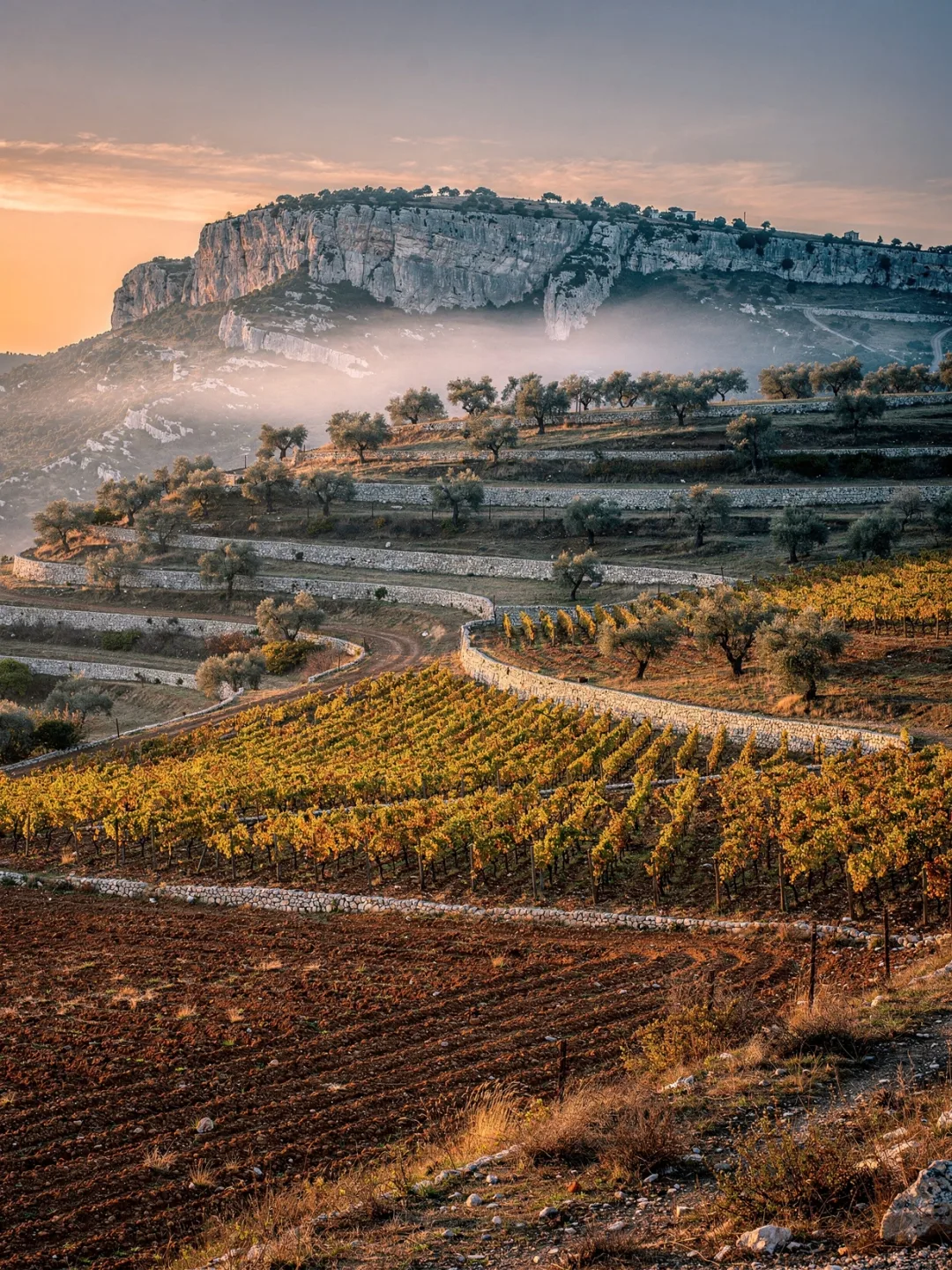
Within this heat, altitude makes all the difference. The vineyards sit between roughly 230 and 900 meters, and winemakers distinguish three tiers. Below lies the warm valley around Ancient Nemea, in the middle the hillside zone up to 650 meters, and above that the cooler high plateau around Asprokambos. Between the lowest and highest sites, a full five degrees can separate an August day. You feel it immediately in the midday heat.
Up on the plateau, the night matters most. During the day, the grape ripens under blazing sun, but as soon as darkness falls, the temperature on the high plateau drops quickly. This exact swing locks in the acidity in the berry, which heat would otherwise simply break down. Without this nighttime coolness, as in the valley below, Agiorgitiko ripens faster, but flatter in flavor.
That is why the harvest in Nemea never begins on a single day. Down around Ancient Nemea and Gymno, winemakers often pick as early as the first half of September, while the same variety on the plateau around Asprokambos still hangs on the vine three, sometimes four weeks longer. Over short distances, this creates a patchwork of microclimates, where two slopes just ten minutes apart on foot are harvested in entirely different vintages.