Wind, drought, dew
Climate
Santorini is one of the driest wine regions in Europe. Average annual rainfall here is only around three hundred liters per square meter, sometimes considerably less, and almost all of it falls in winter. From June to August, weeks can pass without a single drop. The island has no river, no stream, no flowing water of any kind.
Instead, the Meltemi blows. From May to September, this north wind sweeps across the Cyclades. On Santorini, afternoon gusts can reach up to eighty kilometers per hour — enough to shred unprotected shoots. What sounds like pure damage actually helps the vine: the wind keeps the leaves dry, giving fungal diseases almost no chance to take hold. As a result, hardly any producer on the island needs fungicides.
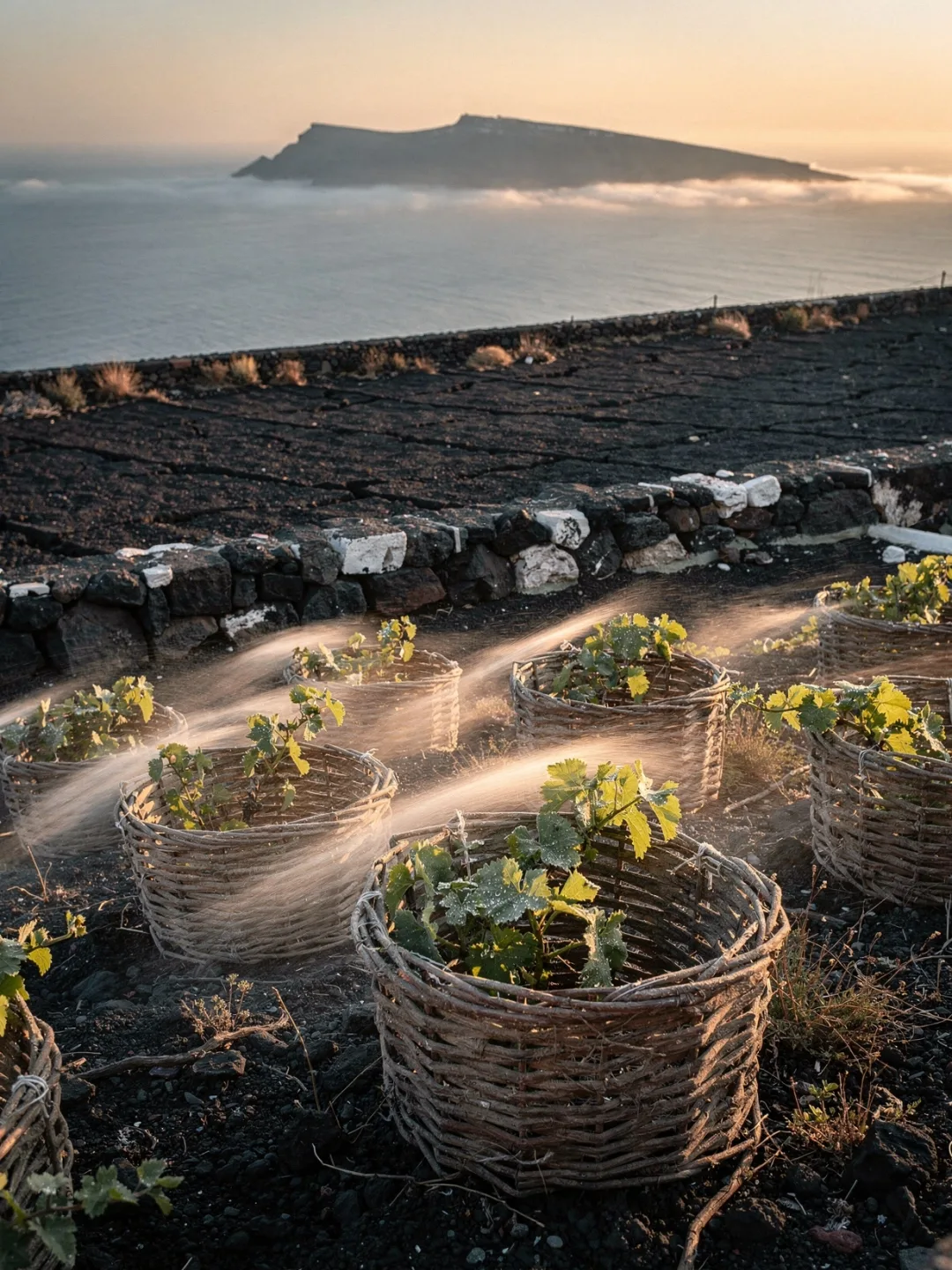
Generations ago, winegrowers here wove their own solution to the wind. They train the young shoots of the Assyrtiko vine into a flat basket called a kouloura, which rests directly on the ground. The grapes ripen sheltered inside this nest. At night, sea moisture condenses on the kouloura's leaves and drips inward — for many of the old, unstaked vines, this is the only source of water between rainfalls.
This nightly moisture is no accident. Average relative humidity here exceeds seventy percent. The gap between the day's heat and the cooler night creates dew, which the porous volcanic ash soaks up like a sponge. The island practically never sees frost, hail is rare, and the weather remains remarkably predictable year after year. Only one thing is changing: winegrowers now report drier, hotter summers, and nights with noticeably less dew than thirty years ago.