Assyrtiko & Aidani
Grape Varieties
On no other Greek island does a single grape variety dominate so completely. Assyrtiko now covers the majority of the vineyard area. Since a 2022 change to the appellation rules, a dry Santorini wine must consist of at least eighty-five percent Assyrtiko — previously the threshold was seventy-five percent. Single-varietal bottlings are now even more common than the law actually requires.
Its defining trait is acidity. Most white grape varieties lose acidity as they ripen, but Assyrtiko pushes back: it reaches high sugar levels while still tasting razor-sharp, a contradiction winemakers around the world envy. Young, it smells mainly of lime with a salty edge reminiscent of seawater. After a few years in bottle, this develops into a smoky, almost petrol-like note more commonly associated with aged Riesling.
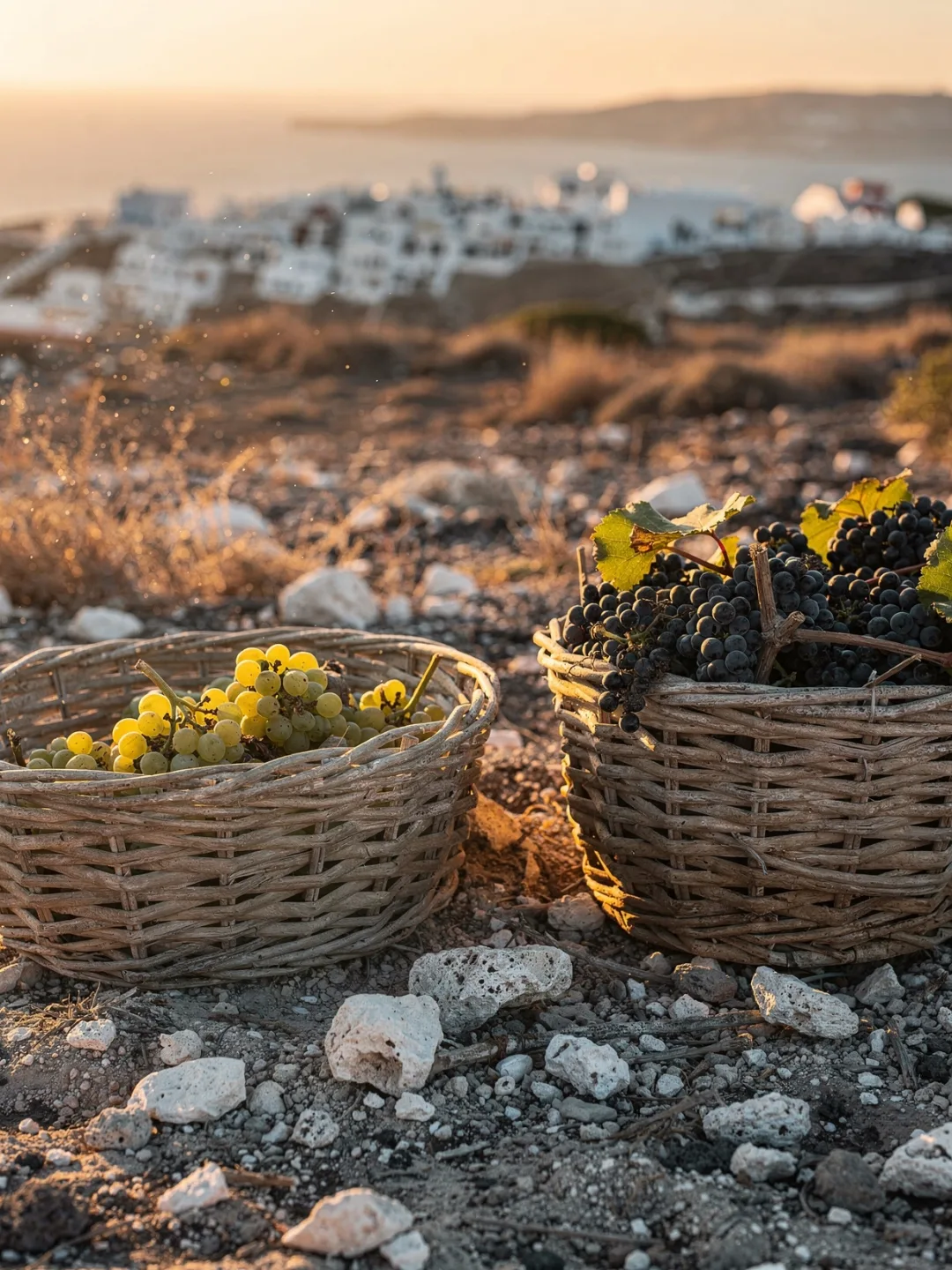
Two companions are almost always planted alongside it. Aidani smells of white blossom and ripe apricot, bringing exactly the richness that Assyrtiko lacks. It's one of only two varieties permitted in sweet Vinsanto. Athiri is the calmer of the two: less acidity, more body, and to this day capped at a maximum of fifteen percent in dry wine.
When it comes to red wine, the choice is much thinner. Mandilaria produces powerful, tannic wines with dark fruit, sold under the protected designation Cyclades, since the Santorini appellation applies exclusively to white wine. Mavrotragano is planted even more rarely. Around the year 2000, it covered less than two percent of the vineyard area and had practically disappeared. It was only Haridimos Hatzidakis with the 1997 vintage and Paris Sigalas with the 1998 vintage who independently released the first dry bottlings. Between them, they brought back a variety that had stood on the brink of extinction.