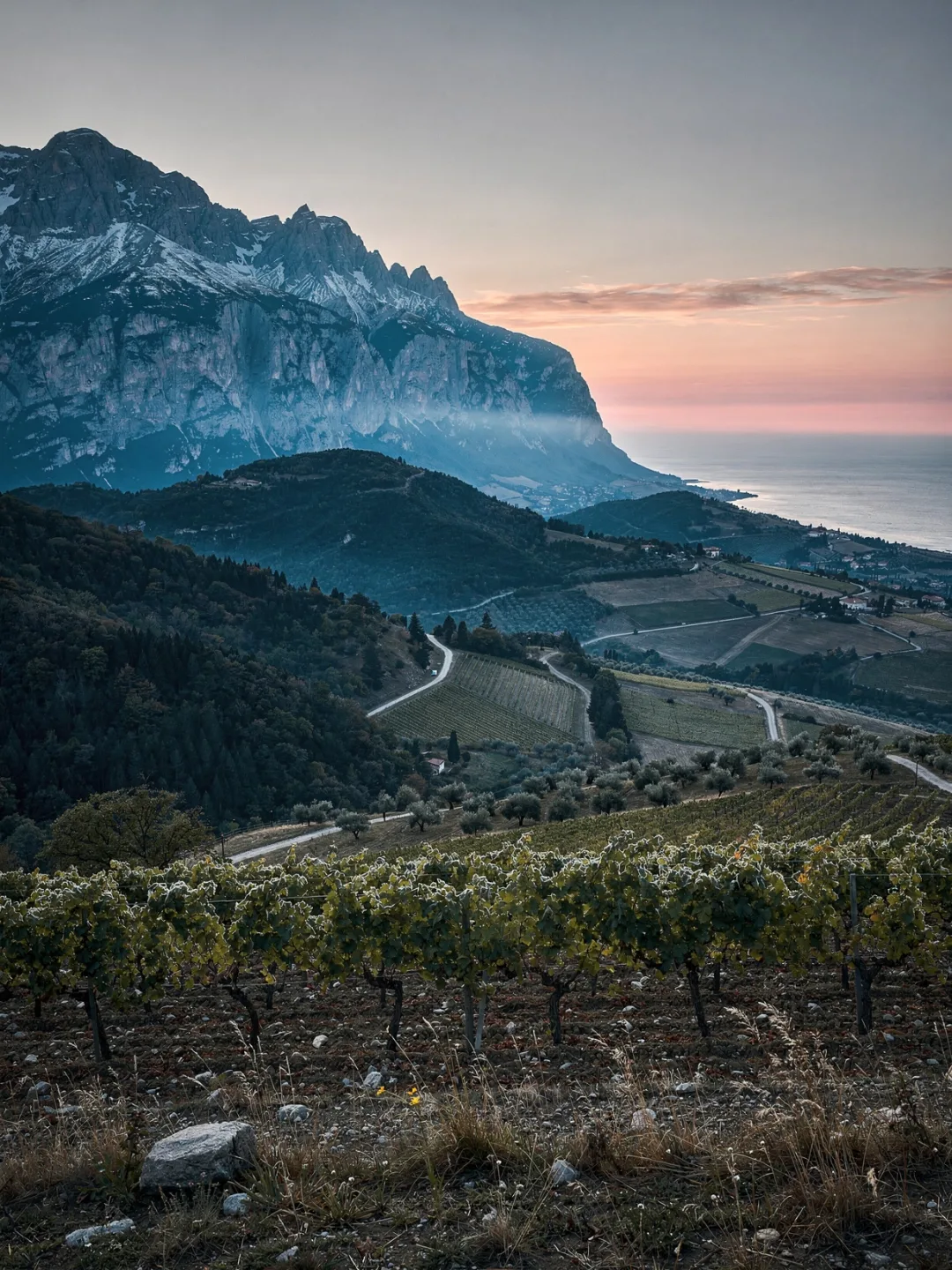
Coast & Mountains
Climate
In Abruzzo, the mountains stand close to the sea. The Gran Sasso, at nearly three thousand meters the highest peak of the Apennines, lies barely fifty kilometers as the crow flies from the Adriatic. The Maiella beside it shields the coast, together with the Gran Sasso, from cold air masses coming from the west, keeping conditions mild and Mediterranean there, while the climate inland grows increasingly continental with every meter of elevation.
Both zones see a lot of tension between day and night. The proximity of the massifs pushes cool air down into the valleys as soon as the sun sets. This coolness preserves the acidity in the grapes. Whatever sugar builds up during the day stays fresh overnight instead of flattening out. Without this shift, Trebbiano and Pecorino would lose their vibrancy.
An extreme case lies inland, in the valley of the Tirino. Ofena, at around five hundred meters, is popularly known simply as the oven of Abruzzo, because summer heat gets trapped between the mountains as if in a bowl. It is precisely there that the Cataldi Madonna winery grows some of the region's most concentrated Pecorino and Montepulciano wines. Scorching heat by day, cool air descending from the Gran Sasso by night — the grapes ripen under stress, and stress makes for concentrated wine.
From the coast to the highest vineyards inland lies barely a hundred kilometers, yet an enormous difference in elevation. Vineyard sites stretch from sea level up past five hundred meters, with noticeable effects on ripeness and acidity. Growing grapes close to the mountains gains freshness. Growing too close to the sea risks rot after rain, from the humid Adriatic air.