Foehn Wind and Mountain Air
Climate
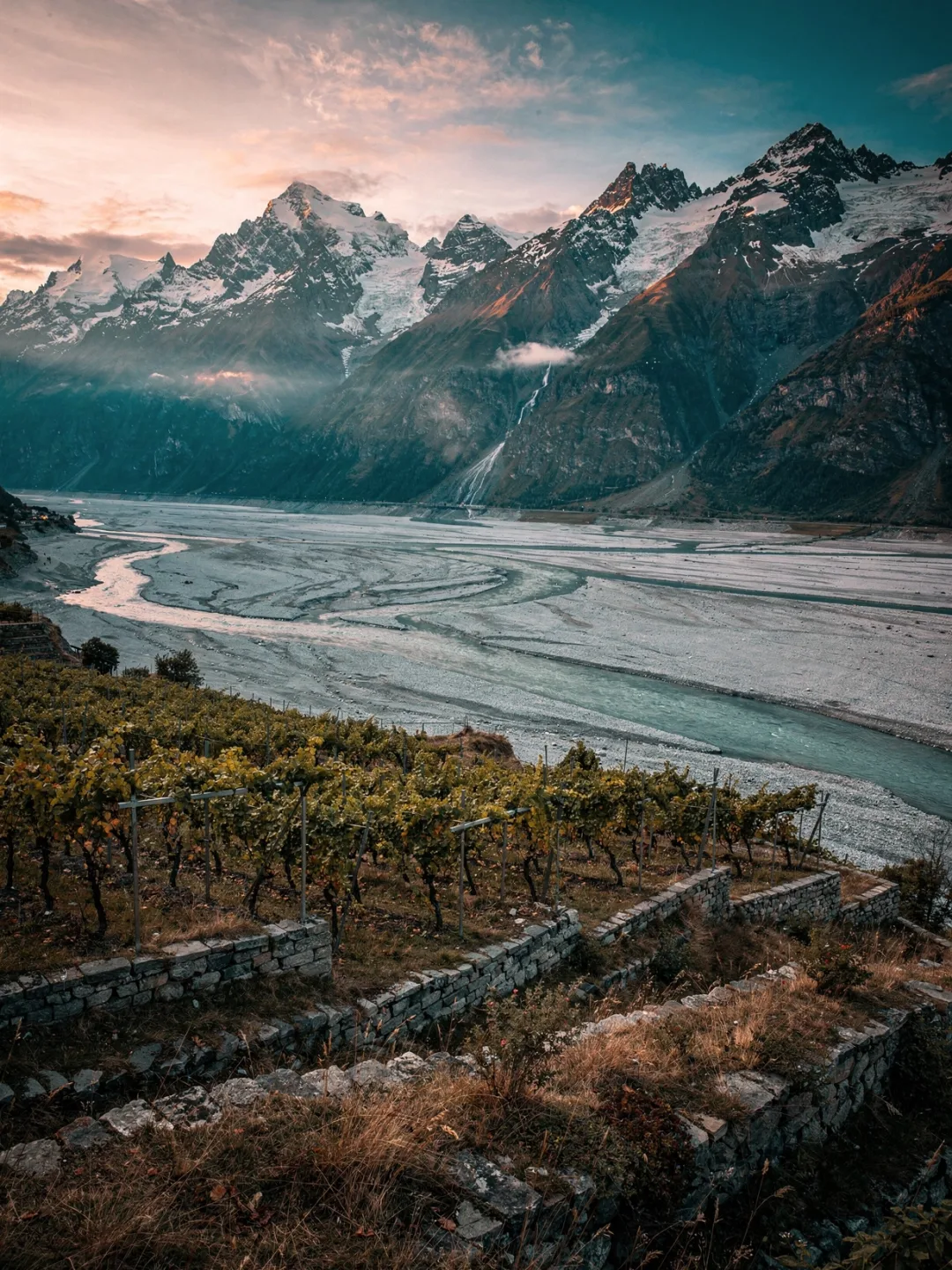
The Aosta Valley is one of the driest corners of the Alps. The reason lies in its location: mountains on every side. Moist air from the west drops its rain on the French peaks before reaching the valley, and the foehn, a warm, descending wind, dries out the rest. In Aosta itself, barely five hundred fifty millimeters of rain fall each year.
This dryness is both a blessing and a risk. Fungal diseases struggle here, which saves on spraying and keeps the grapes healthy until harvest. At the same time, many vines have to make do without artificial irrigation, so old vines drive their roots deep into the permeable, stony soil. Those that root shallow simply go thirsty.
Elevation determines the rest. From the lowest vineyard near Donnas, barely three hundred meters above sea level, to the vineyards around Morgex at twelve hundred meters, there's a difference of nearly nine hundred meters in elevation. With every step up, the temperature drops noticeably, and near Mont Blanc, grapes therefore ripen under completely different conditions than down in the broader valley floor.
The difference between day and night amplifies this effect. In summer, the thermometer often climbs to twenty-eight degrees Celsius during the day. At night it drops noticeably, as cold air sinks down from the glaciers into the valley, and this coolness locks in the aromas and slows the loss of acidity that heat would otherwise accelerate.
Late frost, however, remains the biggest worry. Because the vines on the slopes bud early, a single cold April morning can wipe out an entire plot's harvest. The low pergola bassa, the valley's traditional training system, keeps the grapes closer to the warm, heat-storing stone walls of the terraces. It's a simple trick against a risk that returns every year.