Primitivo Needs Air
Glasses
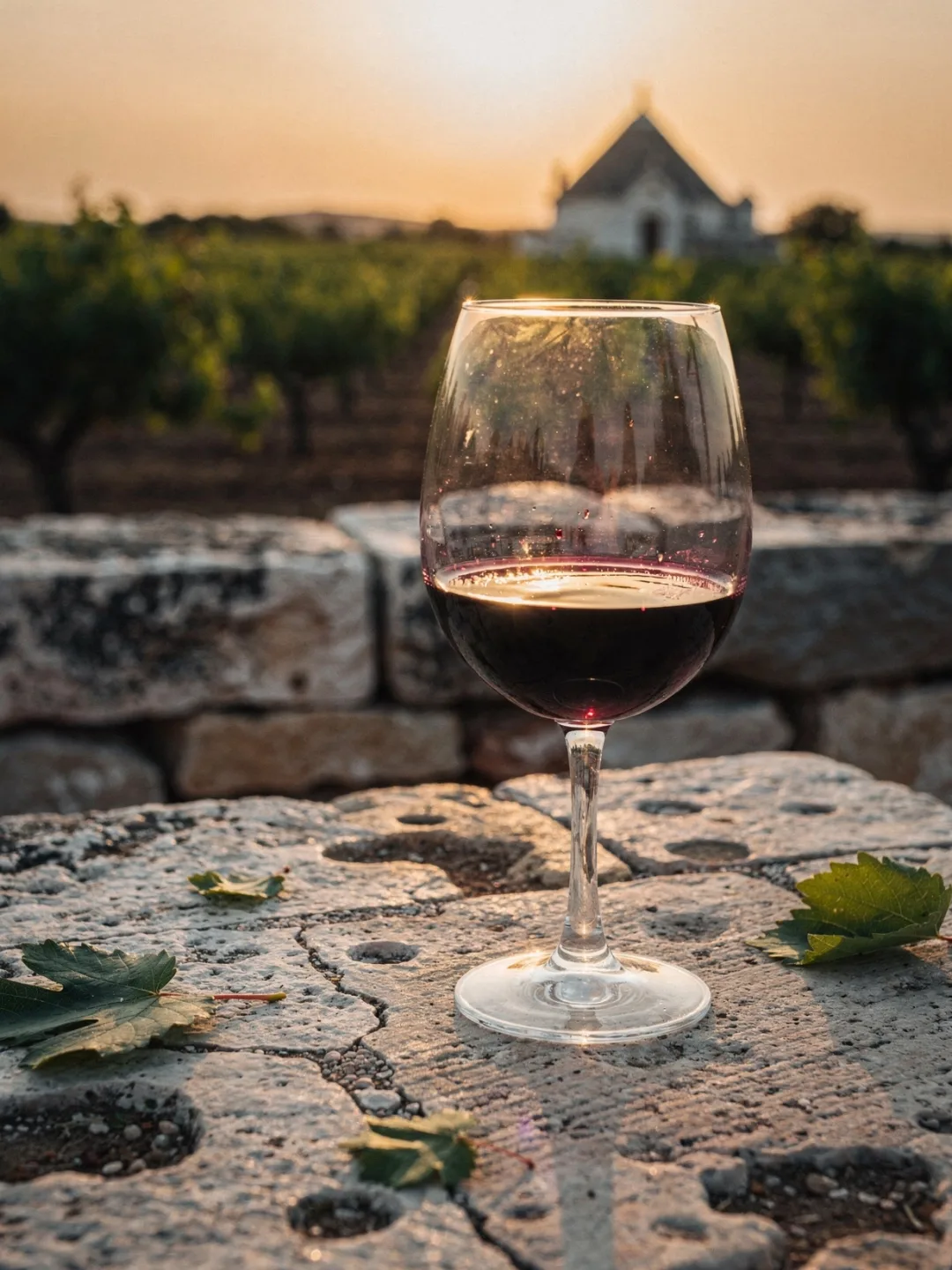
Primitivo demands more from a glass than most red wines, for a single reason: alcohol. By law, a dry Primitivo di Manduria may not fall below 13.5 percent alcohol by volume, and many bottlings reach fifteen or sixteen. A glass that's too narrow concentrates this alcohol right at the nose, and what you smell is mostly heat rather than fruit.
A wide-bowled glass with a generous curve works better. It lets the vapors spread out before converging again at the narrower opening on top. That way the fruit arrives first – blackberry, dried fig, a hint of licorice – while the alcohol recedes into the background. With Negroamaro, which is less sweet and a touch more austere, a standard Bordeaux glass is usually enough.
Temperature is where a lot goes wrong, precisely because these wines seem so powerful. Sixteen to eighteen degrees Celsius is right, not room temperature, since every degree above that makes the alcohol more noticeable and the fruit flatter. Fifteen minutes in the fridge is plenty for a young Primitivo.
Five Roses, the rosé made from Negroamaro, calls for a different glass: slimmer, more tulip-shaped, well chilled to ten to twelve degrees Celsius, so the delicate fruit notes aren't overwhelmed by too much warmth. The pale Locorotondo made from Verdeca and Bianco d'Alessano also belongs in a narrow white wine glass, served cold. Its light, almost saline freshness tolerates neither a cramped bouquet nor warmth.
The pour matters too. A glass of Primitivo should be filled only up to its widest point, never higher. Otherwise there's no room left for the alcohol to disperse above the surface instead of rising straight to the nose. Fill to the rim, and what you end up drinking is mostly heat.